
March 22, 2026 • 6 min read

Table of Content
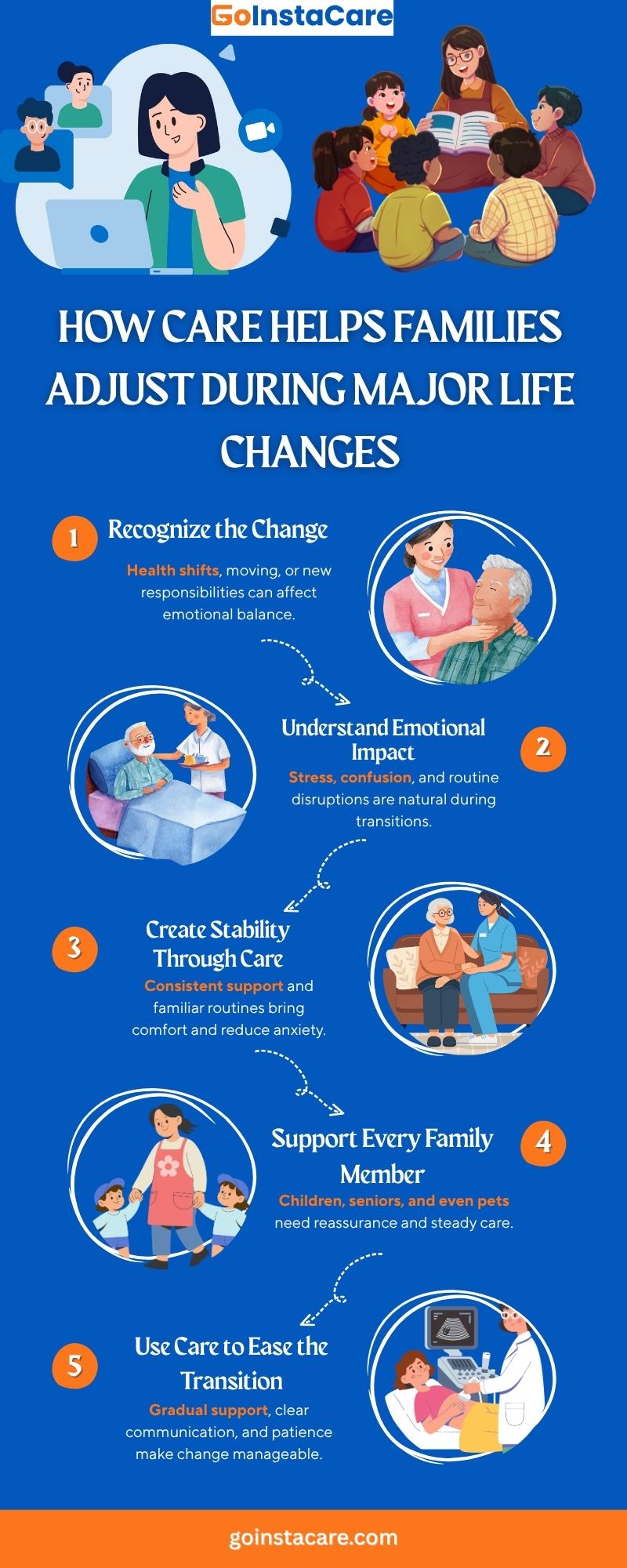
Significant life changes can leave families feeling overwhelmed. Health changes, new responsibilities, moving, or changes in family roles can sometimes bring on stress and uncertainty. Even good changes can be stressful for families as they become adjusted to new routines and expectations.
During these changes, caring becomes a steady presence. Families may get back on track with constant support, consistent routines, and caring people. Care helps things stay the same even when they change, and it makes you feel better when life is unpredictable. Care helps families adjust more slowly by giving them emotional support and practical help. This makes changes feel more manageable and less isolating.
There are many kinds of significant life changes, and each can affect families emotionally. Families may need to adjust their routines, obligations, and expectations as they learn to help one another.
New family members also make things different. A new baby, a new caregiver, or even a pet can change how you live your life every day. These times can bring happiness, but they also require change, patience, and more help.
Moving or relocating can be hard. It might be painful and make you feel like you've lost something when you leave places, schools, neighbours, or habits that you know well. Changes in work or daily life, such as new schedules or more responsibilities, can also throw off the balance in a family.
Changes that come with aging, such as needing more care or changing your lifestyle, often happen slowly but can be very hard to deal with. When families are aware of these changes, they can better understand the importance of continuous care during transitions.
Life changes can often affect the emotional balance at home in quiet but profound ways. More stress and uncertainty can lead to tension, worry, and emotional exhaustion. When you don't know what's going to happen in the future, everyday tasks can seem more complex and more burdensome.
Breaking up old routines is also a factor. Consistent schedules provide you with a sense of comfort and certainty. When these patterns change, people may feel uneasy or anxious as they become adjusted to the new rhythms.
Pets, kids, and older adults often show emotional reactions first. Kids could get bored or stop talking to other people. Older adults may be scared or bewildered. Pets may behave differently or need more care. These replies show that people crave comfort and stability. Families may show compassion, caring, and continual support when they understand these emotional ups and downs.
Care is critical when several things are changing at once because it provides stability. During times of uncertainty, families feel less anxious when they have regular routines and help from people they know.
Care also helps people feel better emotionally. People and families feel better knowing that an individual is dependable and providing focus. This emotional support makes you feel less anxious and more assured of yourself as you get used to things.
When family members share tasks, caring makes things easier for everyone. Stress goes reduced when more than an individual does routine tasks. Consistent care makes it easier for all individuals to deal with developments.
Children who receive constant care feel secure and valued. When things are strange, sticking to your habits and getting attention from an individual you care could assist.
Care that helps seniors adjust with compassion and respect is good for them. Kids feel safe and valued when they get consistent help and emotional support, even when their routines or health needs change.
People with special needs often depend on things being the same. Stable care during change reduces stress and helps people stay emotionally stable. Pets also react intensely to changes. They are maintained by familiar care, rituals, and attention, which allow them to feel less anxious and less likely to act out. With careful attention, each family member gets the help they need to make the transition smoothly.
When things are changing at home, it's essential to have consistent and comfortable assistance. When life is unpredictable, knowing that you will get care at the same time every day offers your mind something to hold on to. People feel less anxious and more in charge of their day when they know what will happen next. Simple routines like established mealtimes, regular walks, or cozy bedtimes can help kids and older people feel safe.
Routines can help things get back to normal when everything else feels out of control. They show that life is still going on as usual. Familiar locations, voices, and caregivers provide emotional comfort because they don't need to change constantly. This is especially important when things are changing, like moving, getting sick, or having a family member leave.
People could develop peace of mind gradually by sticking to the same practices. They help you sleep better and stay calm. Familiar support does not remove change; instead, it supports understanding and adaptability.
Care can assist families by making changes to their homes easier and less anxious. If they get additional support, everybody can adapt without feeling stressed. This gives family members time to become comfortable with it and trust each other. This relaxed method of doing things makes it easier to make improvements and less challenging.
It is equally essential to be truthful about improvements. Children feel important and feel that they are valued because everyone knows what their task is to do. Caregivers can also be patient and understanding when interactions is clear.
Caregivers not only assist with physical responsibilities but they also help families to deal with change without getting anxious.
According to GoInstaCare, providing careful and reliable care turns into an essential component in times of change. When things change quickly, families need more than just help with tasks. They need an individual to be there for them and patience. Reliable care helps people feel healthy by bringing back routine and emotional security at home. Families find it easier to deal with big changes when they have familiar people and dependable care. GoInstaCare believes that care is a means for people to connect that reduces stress and allows families to focus on improving stronger and continuing to grow together with confidence and peace of mind.
Significant life changes throw off routines and responsibilities, making things more uncertain. Families deal with anxiety, loss, and changes in responsibilities all at once, which makes it hard to keep things in balance and talk to each other at home.
By bringing back routine, providing reliable assistance, and reducing uncertainty, care supports stability. When families are going through a new or stressful adjustment, having the same providers can help them feel safe and anchored.
Care that is flexible and kind works best while things are changing. Child care, geriatric care, needs-specific support, pet care, and assistance at home can all change as your family's requirements change.
Families can gradually provide care and choose routines that are already comfortable to them. Getting caregivers involved early helps establish trust and keeps stress levels down during times of change.
Yes, continuous care helps people feel less overwhelmed by sharing responsibilities, keeping a schedule, and providing emotional stability. It helps families get used to changes without feeling alone.
Care gives families a steady way to deal with change, but it doesn't stop it. When life changes, constant and caring care can help reduce stress, confusion, and emotional overload. It gives you structure when your habits break down and confidence when solutions aren't clear. Families don't have to accomplish everything on their own if they get the right help. Care takes away uncertainty, brings things back into balance, and gives people a chance to change without feeling rushed. Over time, this steady presence builds trust and makes people feel safe emotionally. Families learn to adapt quietly, knowing that help will always be there, even when things change.
Cities
Houston
Dallas
Austin
San Antonio
Miami
Chicago
Find Here