
August 19, 2025 • 6 min read

Table of Content
A felon may or may not be able to work as a caregiver, depending on the type of conviction, state law, and the hiring agency or program rules. People convicted of non-violent crimes can still be caregivers, especially if the crime was recent and there is proof that the person has changed. However, offenses that involve abuse, neglect, fraud, or exploitation, especially those that include children or other vulnerable people, usually lead to disqualification. Background checks on strict caregivers often look at references, job history, and criminal records. If you know these rules before you apply, you can figure out if you qualify and save time.
Not all offenders are immediately barred from working as caregivers. It all depends on the details of the crime and where you live. States have a big say in this. After more tests, some states let people with past, non-violent crimes work in specific caring settings. The most significant thing is the sort of crime. Violent crimes, charges of abuse, or financial exploitation usually mean immediate disqualification.
If the client or their family is okay with the caregiver's past, in-home care services could be more flexible. Depending on the rules in each state, assisted living facilities may not be able to hire criminals because they often have stricter licensing requirements. Nursing homes, especially those with Medicaid or Medicare, usually have the most rigorous rules and background check requirements.
Because rules vary from state to state, people with a criminal record need to look into the laws in their state and the company policies they're applying to and provide proof of their job experience, rehabilitation, and strong character references before applying. This method may make you more likely to be considered for a caregiver job.
To keep vulnerable clients safe, caregivers usually have to go through several levels of background checks before they can start working. One of the most common types of criminal background checks is when the FBI and the state use fingerprints. It searches national and state databases for any felony or misdemeanor convictions. Employers can use this to determine if a job applicant has a history of breaking the law that could put their clients in danger.
Another essential screening technique is the Abuse Registry Check. Many states keep databases of confirmed cases of child abuse, elder abuse, or neglect up to date. Being on one of these lists almost always means that a person can't work in a field that involves caring for others.
Many businesses want to check your work history and to check you for drug test. Drug testing for a caregiver offers you safe and reliable care. These background checks give agencies and families a better idea for a well-suited applicant for a caregiving job.
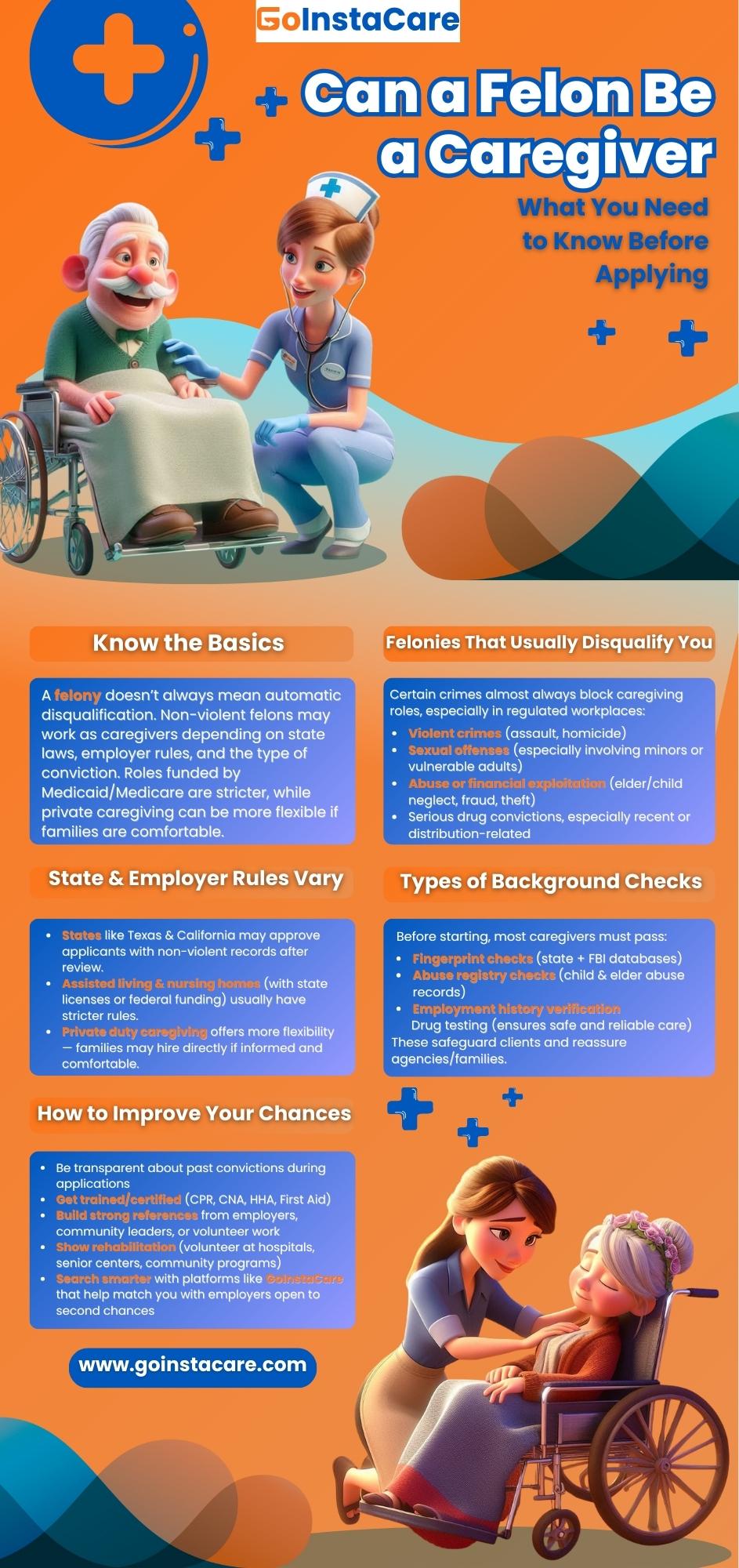
Violent crimes such as assault, battery, or homicide.
Sexual offenses, including crimes involving minors or vulnerable adults.
Financial exploitation or elder abuse, especially in cases involving fraud or theft from dependents.
Felony drug convictions in some states, particularly if they are recent or involve distribution.
Condition | Details |
If enough time has passed, | Many states allow caregivers to work after 5–10 years without new offenses, depending on the felony type. |
If offense is unrelated to caregiving duties, | Non-violent or non-financial crimes may be considered if they do not pose a direct risk to clients. |
After expungement or successful appeal, | Clearing or overturning the conviction can remove hiring barriers in many caregiving roles |
When working in private settings, | Direct hire by families (non-agency care) may offer more flexibility if the family is informed and comfortable. |
States and businesses may have different policies around employing as caregivers. Some places, like Texas and California will hire caregivers after a full review about them especially for people who have committed non-violent crimes. This means that those with a specific background and qualifications may be allowed.
Because of federal and state laws, occupations that are paid for by Medicaid programs often have stricter background check rules. People are not allowed to apply for these jobs, no matter how long ago they were convicted.
However, there may be fewer legal restrictions on private duty caregiver jobs, where an individual or family hires the caregiver directly. When deciding whether to hire someone in these cases, the type of crime and the family's comfort level are often considered.
There are no standard rules; therefore, checking with the state licensing board or local caring groups before hiring them is essential. This ensures you know the local eligibility requirements and can gather the necessary papers to improve your chances of being considered.
The first step to getting a job as a caregiver with a felony record is to be honest and transparent about your experience during the application process. You may be automatically disqualified if you try to hide past crimes after the background check.
Getting certified and trained is also a smart thing to do. Taking classes like CPR/First Aid, Home Health Aide (HHA), or Certified Nursing Assistant (CNA) helps you improve your skills and shows potential employers that you are committed to providing safe, professional care.
You should also get strong character references from past employers, community leaders, or volunteer groups. Volunteering at hospitals, senior centers, or community programs can show that you are responsible for providing care.
To find care options, use trusted websites for Instant Quality Care for Your Loved Ones. If you use these websites that meet your skills and experience, you will have a better chance of finding organisations that hire people without criminal records.
A person with a criminal record may be allowed to work as a caregiver, depending on the crime, state laws, and company policies. However, there are stricter regulations for roles involving vulnerable adults or children.
In regulated workplaces where safety and trust are essential for the well-being of vulnerable clients, applicants with a history of violence, sexual offenses, elder abuse, financial exploitation, or certain drug-related offenses are often not allowed to work in care professions.
You can work as a private caregiver with a record if the client or family is well-informed and comfortable, since private arrangements sometimes have fewer legal requirements than agency or Medicaid-funded positions.
Some private caregiving agreements may not involve formal background checks that depend on state legislation. But most caregiver positions do require background checks, especially those with agencies, assisted living facilities, and Medicaid-funded jobs.
You could apply to be a caregiver in many states 5 to 10 years after a felony, depending on the type of crime, the rehabilitation efforts, and the requirements of the employer or licensing board for caregiving jobs.
Even if some felony records make it impossible to give care, many people can qualify after rehabilitation, having their records meet specific standards. It's essential to read the regulations and standards for employers in your state before you apply. Look for companies that give you an opportunity. GoInstaCare helps you find reliable caregiving jobs so that you can have an excellent profession.
Cities
Houston
Dallas
Austin
San Antonio
Miami
Chicago
Find Here
Companies