
December 31, 2025 • 7 min read

Table of Content
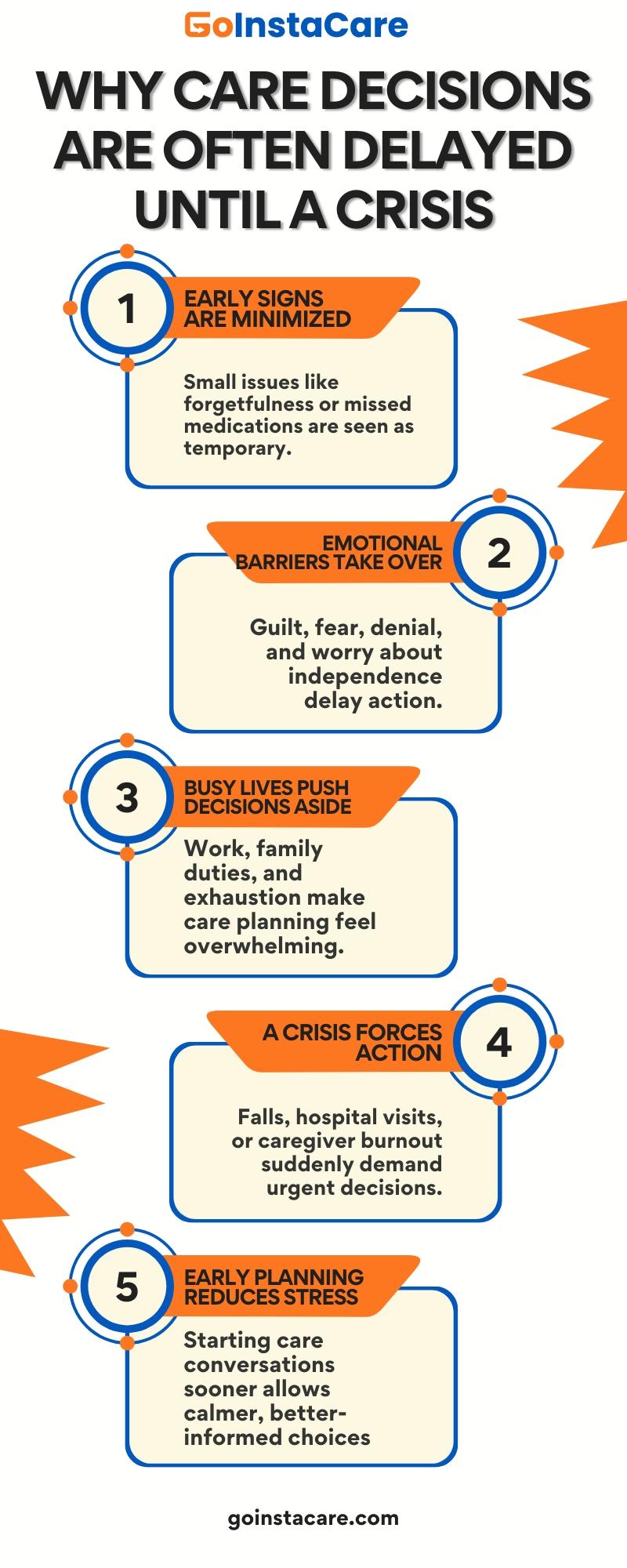
Before anything bad happens, a lot of families already know that something is wrong. The first signs are modest ones. Missing medicines, forgetfulness, tiredness, or emotional detachment are all signs that a person needs more care. Families know about these changes, but they might think they are only temporary or can be handled.
People sometimes put off making decisions about care because they are afraid of how they will feel. Some people could see accepting help as a sign that they are a bad caregiver or that they are losing their independence. Families are hesitant to ask for help even when they need it because they feel guilty, anxious, and unsure. This waiting often continues until a crisis forces action. When families understand these emotional barriers, they can avoid unnecessary stress later on by realizing that asking for help early is an act of care, not giving up.
Many families put off making decisions regarding care because they think things will get better on their own. It's tempting to imagine that early indicators of getting worse are only transient because they frequently show up slowly. Families may change their habits, give additional aid, or disregard warning signals in the hopes that things would revert to normal without help from outside sources.
Uncertainty comes from being afraid of change or disturbance. It could be a complete change to get treatment. Families are worried about having to deal with changes all the time, new caretakers, and having their privacy invaded. Change may be scary, even when you need to be careful.
This delay becomes worse because of emotional connection and denial. Families have a hard time accepting that their loved one's needs have altered. Even when there is evidence that a parent or partner isn't doing well, people nevertheless think they are. It might be hard and emotionally demanding to admit that you need support. This link makes it hard to move from worry to action. By understanding these sentiments, families may realize that love, not neglect, is frequently what keeps people from getting treatment, and that early support may make things easier for everyone.
A lot of families fail to relocate because they're anxious about doing a lot. They are afraid that they are making things more difficult than they actually are currently.
People can hesitate because they have concerns about their freedom and dignity. Families are worried that their loved one could lose part of their independence if they agree to assistance. If you have always valued your independence, the idea of obtaining help from another individual may seem more irritating than valuable.
People don't know the kind of support they need that makes the duration of wait worse. Families frequently have no idea where to begin or what kind of support they require. People could choose to ignore the absence of clarity even when they see emotional and physical signs that they require assistance.
Care decisions are frequently neglected due to hectic lives. There is little time for introspection due to the pressures of work, child-rearing, and everyday obligations. Families may be aware of issues but put them off because they think they will deal with them later.
Warning flags are further obscured by emotional weariness. Caregivers who are worn out or overburdened may normalize stress or fail to notice little changes. Weariness can cause awareness to wane, making it more difficult to discern when assistance is actually required.
Over time, a cycle of delay is created by the mix of responsibility and fatigue. Families continue to manage day by day until a catastrophe compels them to make quick decisions. Families may better grasp that delayed care is frequently about capacity rather than indifference and that early preparation can ease strain before emergencies happen by understanding how activity impacts awareness.
A crisis point often happens when there is an unforeseen health or safety problem. If someone falls, goes to the hospital, runs out of medicine, or has a medical emergency, families need to respond quickly. All of a sudden, something that was possible became important and too much to handle.
Another common reason is that family caregivers are emotionally drained. Caregivers may become physically and mentally exhausted from long-term stress, lack of sleep, and emotional strain. Families know they can't handle things on their own anymore when they reach their breaking point.
At this stage, decisions are made too quickly. People make decisions quickly, often in a hurry or under stress, and they don't have time to think about all the options. This rush might make you feel stressed and guilty. Families may better understand the benefits of early planning when they know what crisis points are and when decisions can be made on purpose instead of on a whim.
Delaying treatment often makes things less clear when it's time to make decisions. Families may not know what to do or what the best options are if they wait too long. Stress makes it harder to think clearly and prepare wisely.
When your feelings are high, stress goes up. As things get worse, feelings of guilt, worry, and dread grow stronger. When family members don't agree or feel like they have too much on their plate, it may make things even harder for relationships. When you're under a lot of stress, it's harder to make decisions and have conversations.
When there aren't many options, stress goes up during crises. If families need to act quickly, they might not have as many choices. This might lead to quick decisions that don't meet the needs or wants of a loved one. Families can stay in charge, reduce mental stress, and make care decisions with more confidence if they act sooner.
Families may plan care thoughtfully and step by step with the support of early conversations. When problems are spoken about before they happen, everyone may have a better understanding of what they need, want, and anticipate. This strategy helps you relax and provides you with time to think of useful alternatives that don't make you feel stressed.
Gradual planning helps people feel better emotionally. When families share care decisions, they don't have to face the burden alone. Open conversation helps people understand each other better and makes them feel less guilty or doubtful. When people feel heard and valued, their trust in you grows.
Also, talking about care early on helps make it seem like support instead of loss. Families find emotional balance, clarity, and confidence. Assessing early care requirements lets families put wellness ahead of emergency response, which helps everyone involved.
It is simpler to make care decisions when aid starts before a crisis. GoInstaCare helps families find early warning signs and look into their care options with compassion and clarity. Families have more time to think, prepare, and choose the best type of help for their loved one when they are given instructions during calm moments.
This quick strategy helps you avoid making hasty judgments and eases mental stress in an emergency. When there is regular help and good communication, families feel less alone and more sure of themselves. GoInstaCare lets families go forward with confidence instead of waiting for an emergency by focusing on proactive care planning.
Families want problems to go away, are afraid of change, want to be independent, and don't know what to do, so they don't worry about them until something bad happens and everyone has to make quick, stressful decisions.
Fear of losing independence, guilt, denial, doubt, and fear about breaking patterns sometimes keep people from taking action, even when families know that getting aid would make things safer and better.
Families may begin early by gently discussing their thoughts, including loved ones in conversations, asking for help, and framing care as a collaborative effort rather than a burden.
Waiting too long can make you make decisions too quickly, make caregivers tired, restrict your care alternatives, raise your stress level, and make decisions that don't match your requirements or preferences.
Early support distributes accountability, enhances planning transparency, alleviates mental stress, and enables families to select care deliberately, assuredly, and serenely before the onset of crises.
Care planning does not mean that you have failed. It is an act of obligation, caring, and planning. Families feel less stressed and more sure of themselves when they perceive support as something they can do rather than something that happens to them. Early preparedness protects everyone's safety, dignity, and mental health.
When you wait for a catastrophe, you often have fewer options and greater stress. When families make smart care decisions early on, they can stay in charge and act decisively. GoInstaCare helps families go forward with confidence instead of haste by giving them calm direction and compassionate care planning at this time.
Cities
Houston
Dallas
Austin
San Antonio
Miami
Chicago
Find Here