
January 05, 2026 • 5 min read

Table of Content
The core of any meaningful relationship is trust. For kids, older adults, and families getting care, trust makes them feel safe, comfortable, and emotionally at peace. It allows individuals to relax, say what they need, and get help without worrying or being afraid. But it doesn't happen immediately. It grows slowly via regular, pleasant interactions that look respectful and trustworthy. Little things we do every day, including being on time, listening carefully, and behaving softly, affect how we feel about care. These little conversations will help people feel more connected and confident. When caregivers understand that trust is built by presence rather than promises, care becomes more meaningful, stable, and emotionally secure for everyone involved.
Trust is the emotional care of caregiving. Trust makes people feel safe, which lets youngsters, older people, and even pets relax, talk to other people, and ask for help without being afraid. When there is trust, care appears more like help than an invasion of privacy. Without it, even support that is meant to be helpful might feel scary or too much. Emotional safety comes from knowing that someone will be polite, respect boundaries, and be consistent in both calm and difficult situations.
Trust also affects how individuals deal with everyday care. Kids are more likely to do what you ask when they feel understood. Seniors are more willing to accept help when their dignity is respected. When pets see something they know and are patient, they don't make a sound. When there is less resistance, fear, and emotional detachment, everyday interactions become more meaningful and smooth. This mental stability eventually leads to better overall health. It helps people feel emotionally stable, loved, and valued. Trust is not only a bonus; it is necessary for caring to work.
Small everyday events are the private talks that occur naturally when you care about an individual. These situations may seem easy but they really show respect and trust. People feel more stable and less worried about whatever may occur in the future.
Listening closely is also highly essential during these times. Caregivers create trust when they take their time and stay composed. It is also very important to respect traditions and personal preferences. People are liberated and dignified when their choices are respected and make them feel safe. They show that care is provided with presence and a true understanding.
Consistency builds trust in a way that seems natural and comfortable. When individuals know what to expect, it makes them less worried and confused. When therapy is given in a predictable way, it makes people feel stable and emotionally safe. Instead of being a cause of stress, regularity becomes a source of safety.
Also, it's important to hear and see familiar voices and faces. Seeing the same caregiver regularly helps you feel more comfortable and recognized over time. It helps youngsters, older adults, and pets relax and feel understood. Keeping little promises makes this confidence even stronger. Being on time, doing tasks as promised, or coming back on time are all easy ways to show that you can be trusted. These activities that happen again and over again gently support the sense that caring is consistent, polite, and safe for your feelings.
When caregivers are emotionally in sync with each other, they may connect on more than work and daily tasks. By looking at changes in behavior, body language, and facial expressions, caregivers may learn how people show their feelings without using words. Because of this information, they may respond in a way that is sensitive instead of presumptuous.
When caregivers maintain calm when situations get emotional and shows that they care about people and safety. It is just as essential to know when to leave an individual alone. Respecting an individual's need for quiet shows that you care about them. This carefully planned strategy eventually makes people feel safe and appreciated. When caregivers communicate about their requirements and emotions, they establish trust.
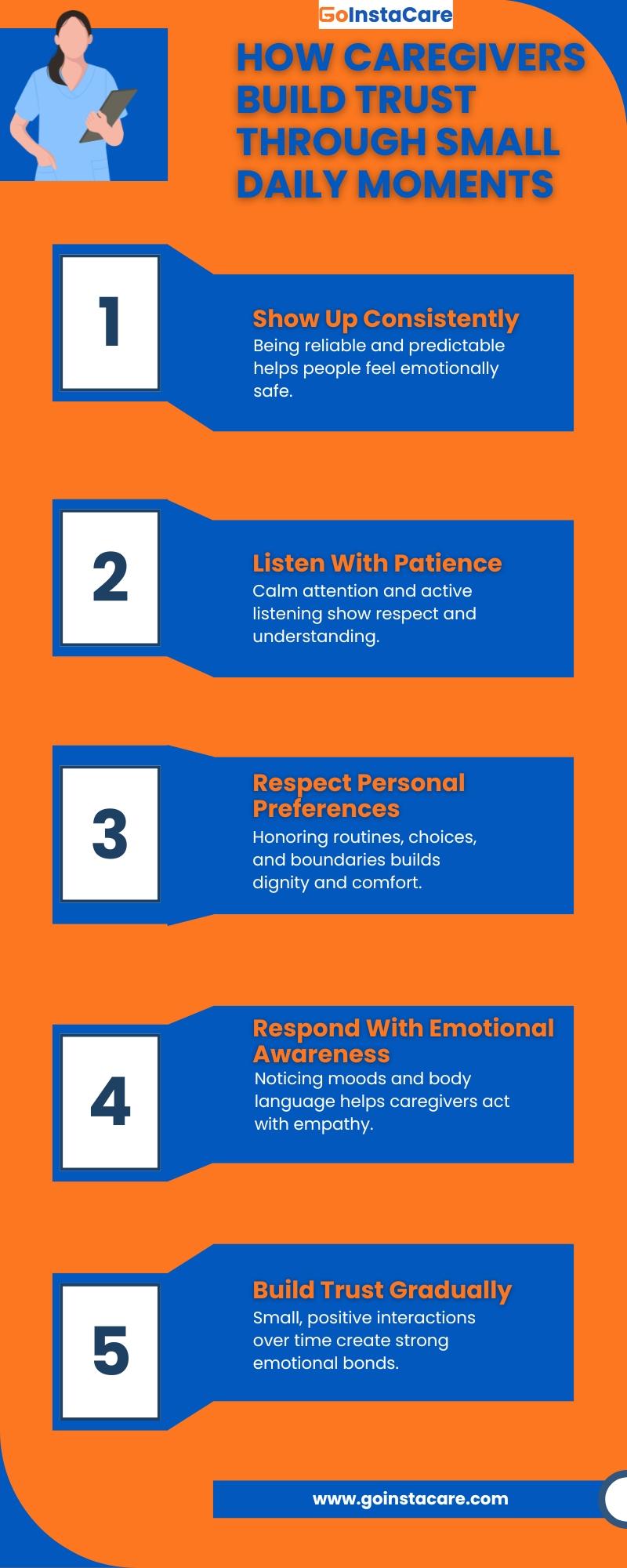
Excellent interactions create trust gradually. These small changes suggest that people are beginning to feel protected emotionally.
People could talk to one another about what they like or follow the regulations without being anxious. This slowly makes the emotional bond stronger. Care doesn't appear to be in the path. Having a caregiver there makes things better. This gradual development shows that people trust you because you are trustworthy and emotionally engaged.
Families are very important for developing confidence between caregivers and the people they care about. Getting rid of stress can help relationships flourish. Patience allows emotional comfort to develop trust.
This process is made stronger by interaction with caregivers. Families and caregivers can develop trust when they work and understand each other. This relationship creates a calm environment where care feels safe and emotionally stable.
GoInstaCare chooses caregivers based on how trustworthy they possess and how effectively they get connected to others. People feel more emotionally secure when they visit individuals they know and get constant interaction. Caregivers provide care that feels more genuine by knowing about preferences and few emotional signs. This constancy makes families feel less stressed and more confident. GoInstaCare develops trust through emotional care by emphasizing on professional matching and stability over time.
Trust makes people feel safe emotionally, lowers their fear, and lets them take care without feeling uncomfortable. It also lets them talk about their needs openly and feel respected, protected, and emotionally supported.
Small things like being consistent, patient, and calm every day show reliability and care over time. This helps trust build organically, without any pressure or force.
Signs include calm body language, less resistance, more collaboration, familiarity with routines, and an increasing readiness to connect emotionally with the caregiver.
Trust grows at varying rates for each person and is based on things like consistency, emotional sensitivity, and prior experiences. It usually grows slowly over weeks or months.
Families may help their kids be patient, stick to routines, share information with caregivers, and let relationships grow organically without hurrying emotional ties.
Being around and trustworthy are all ways to build trust over time. It becomes more effective if caregivers are dependable and understanding. Small acts of kindness can help relationships develop and make individuals feel safe emotionally. This strong base helps every individual including people and caregivers. Caregiving turns into a trusting connection based on comfort through detailed preparation.
Cities
Houston
Dallas
Austin
San Antonio
Miami
Chicago
Find Here