
January 24, 2026 • 7 min read

Table of Content
Children are very conscious of how people feel around them. They can tell when someone is tense even if they don't say anything. Kids want to feel safe and comfortable at home, so changes in how adults feel might be scary. A lot of kids may feel it in their bodies and emotions, but they don't have the words to explain what they perceive. Adult stress often affects kids without them even knowing it, changing how they act, how they feel, and how safe they feel. Families may deal with stress in a more conscious and caring way when they know how sensitive their kids are. This makes the home a secure and emotionally supportive place for kids.
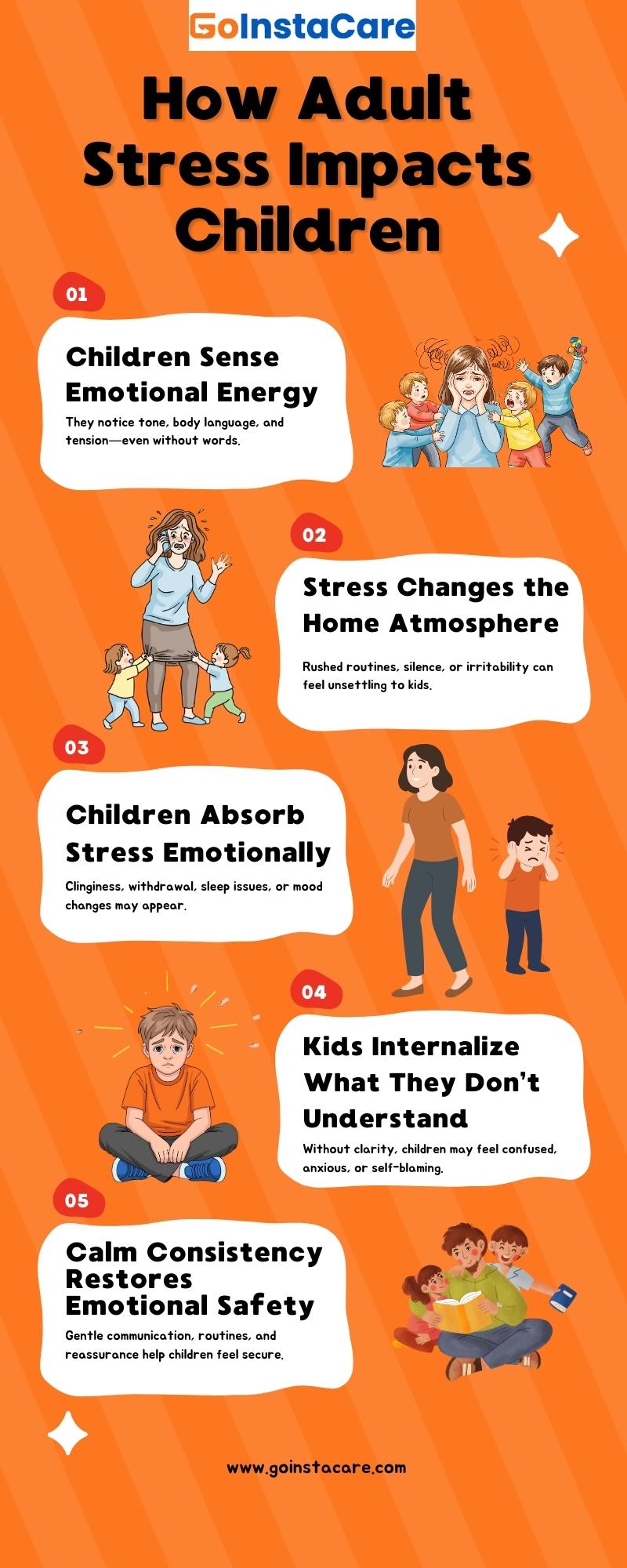
Children learn about the world largely by watching. Babies can understand words, they notice changes in body language, pay attention to the tone of speech, and look at people's faces to see how they feel. Long silences, quick acts, deep sighs, and loud words can all tell you how someone feels. Even small energy changes that show something is wrong or confusing might be picked up on by a toddler. Kids often pick up on these signs without knowing why, which can make them feel anxious or confused.
Children can pick up on emotional cues even when they aren't explained. Adults who are stressed out could act differently around the house, answer questions, or talk to people. Kids often take on feelings that aren't theirs as they silently soak up this atmosphere. Children may come up with interpretations that are scarier than the real scenario if they are under a lot of stress but don't say anything about it. Families may help kids feel safe by being kind, aware, and honest about their feelings. This is especially important because kids are quite good at picking up on emotional signs.
Adult stress often shows itself in small, everyday ways at home. When hectic routines replace unhurried moments, mornings and evenings can feel tight or rushed. Children can sense when they are being pressured to spend time together or when their routines suddenly shift. Even if it isn't explained, this transition can be upsetting.
Stress can sometimes make you feel calm for a long time or very angry for a short time. Even if no words are spoken or escaping feelings are signs that a situation is wrong. The entire house can feel less noisy than it usually appears to be. People may talk less and not feel as emotionally close to each other. Children experience their homes differently because of these changes. They might not know where it originated but they might sense the emotional impact of the behave.
Children who are under a lot of stress from adults may show changes in their behavior or emotions. Once calm children can become upset, anxious, or too silent. These alterations do not indicate wrongdoing; instead, they reflect emotional confusion. Kids may have trouble putting their feelings into words, but their conduct shows that they are upset.
Another common sign is becoming more clingy or less interested. Some youngsters pull away emotionally, while others want constant praise. Sleep problems like trouble falling asleep, nightmares, or waking up often may also happen. When you don't understand your feelings, they can build up and cause you to act out. Kids use these emotions to deal with stress, but they don't know how. Families can respond with understanding, comfort, and emotional support if they know what to look for.
Children respond to stress in different ways because they are still learning how emotions work. People often feel really strong feelings but can't put them into words because they don't have a lot of emotional language. As a result, stress becomes confusing and overwhelming, even when it's not theirs.
A lot of kids also tend to take responsibility for the changes in their feelings that happen around them. They may assume they are at fault or that it is their job to fix the problem. They have a hard time telling the difference between their own feelings and those of adults, especially when they are among family. Kids often feel the same stress that adults do. When families know this, they may respond with confidence, which makes kids feel safe, relieved, and emotionally supported.
Long-term stress may have a small effect on a child's mental health. When tension builds up around them, kids could feel anxious or insecure without knowing why. Even in places that are designed to make them feel safe, they may not feel safe.
This emotional burden often makes it hard to focus and relax. Kids may seem bored, restless, or unable to enjoy play and quiet moments fully. They may eventually feel emotionally unstable without knowing why. Long-term stress can change how kids see their surroundings and their relationships. When families are aware of these effects, they may help a child feel safe within by being understanding, reassuring, and emotionally stable.
Parents may help their children deal with stress by putting stability ahead of perfection. When you tell your kids to stay calm in tough situations, it provides them with a sense of stability. Safety is more than just words; kind reactions and softer tones also show it.
People also feel better when their daily routines aren't change. Children feel safe when they do habits they know even when their emotions are spread out everywhere. Providing comfort and emotional support is just as essential. Children feel safe and like they're recognized when they sit together and communicate regarding how they are feeling. These little things show children that love does not fade away when they're anxious and their feelings are still protected in the house.
Caregivers help children get back to emotional balance by giving them steady, calm support. Their consistent presence brings consolation during times of emotional turmoil. By sticking to familiar patterns and being kind, caregivers can create a safe and predictable sense of normalcy.
Consistency also helps in controlling your emotions. When caregivers are kind and emotionally present, kids learn that their feelings can change without fear. When caregivers interact with children in a peaceful way over and over again, the children feel supported instead of overwhelmed. In this secure emotional environment, children may feel relaxed and trust when things are difficult.
Children need extra care when circumstances are difficult at home so they can feel safe and secure. GoInstaCare caregivers focus on emotional stability and being there all the time to help children feel better. Caregivers assist in reducing emotional stress by committing to routines and giving reliable support. Children are more secure when they get constant care. GoInstaCare provides children compassionate care that helps them be emotionally stable when situations are hard.
Children should pay attention to the way you talk, how you move, your energy, and how far away you are emotionally. Even without words, these indicators show that someone is stressed and change how safe or secure they feel.
If a child is stressed out, they may show signs like mood swings, clinginess or withdrawal, trouble sleeping, emotional outbursts, or trouble focusing.
Yes, stress in adults can make children more anxious, insecure, and emotionally confused, even if the stress isn't directed at them.
Parents may make their children feel safe even when things are stressful by being there for them, keeping routines, showing calm behavior, and being there for them emotionally.
Extra assistance may be needed when stress-related changes last longer, get worse, or get in the way of daily life. This means the child needs more emotional stability and comfort.
Children do well when they feel loved and safe at home. Even stress can make a child feel less safe so it is important to be caring. Parents can make little changes to their behavior by being calm and emotionally present that can make the child feel safe. When children feel safe, they may relax and express themselves more freely. You don't have to be perfect to make children feel safe; all you need is strength and continual attention that allows them to know they are loved and safe.
Cities
Houston
Dallas
Austin
San Antonio
Miami
Chicago
Find Here