
November 07, 2025 • 4 min read

Table of Content
Why are some elders honored as living libraries of wisdom while others grow old in silence and solitude? Aging is not just a medical process. In some cultures, a person's worth is based on their independence and ability to take care of themselves. In others, older people still have a lot of control over everyday life and decisions. Our shared views on aging says a lot about what we really believe when family ties get weaker. This thought encourages us to reconsider our view of aging not as a sign of decline but as a representation of community and humanity.
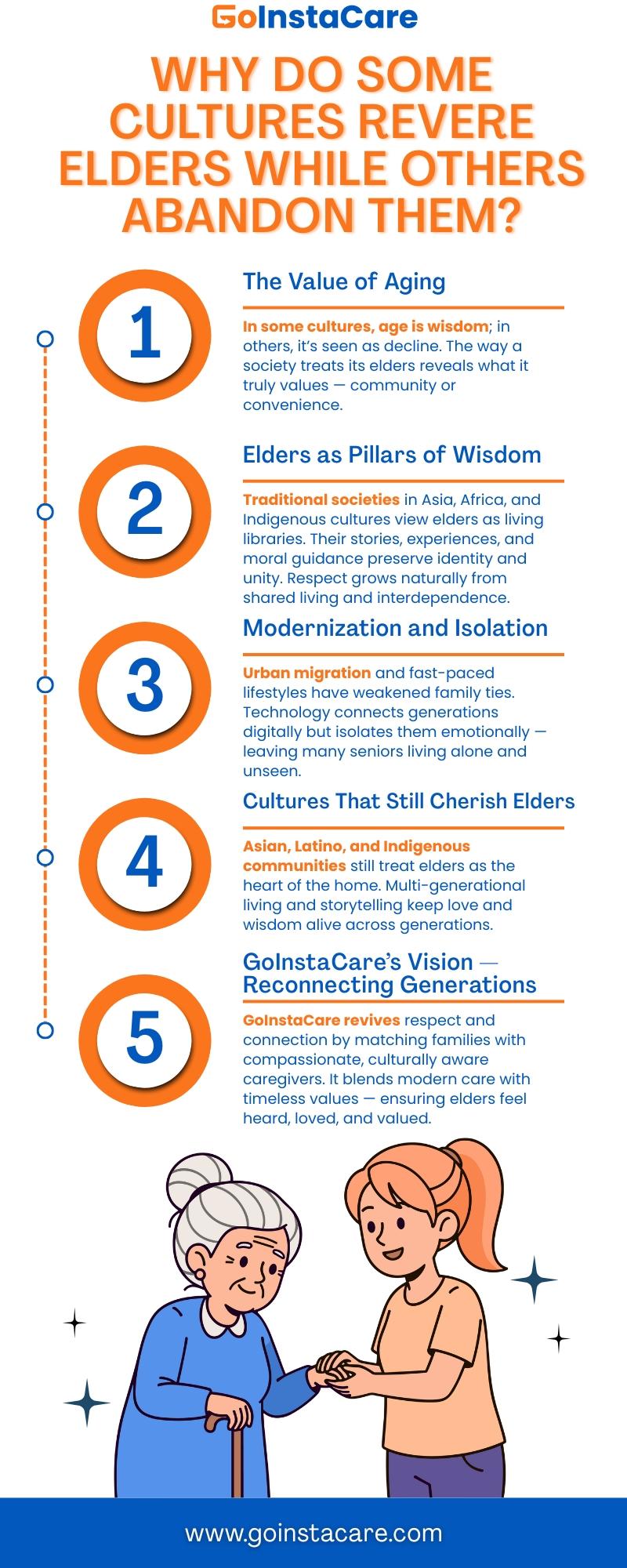
Elders were more than just family members in many traditional communities in Asia, Africa, and Indigenous cultures; they were living repositories of knowledge and wisdom. Community identity was shaped by the stories they passed down, the moral guidance they provided, and the ancestral information they preserved. As educators and storytellers, they made sure that beliefs and customs persisted through the ages, and their authority stemmed from experience rather than rank. Due to their shared living conditions, they were able to maintain a strong bond with their families and pass on knowledge to future generations. Respect for seniors was a natural byproduct of community living and a shared appreciation of age and wisdom in these societies, not a duty.
Migration and technological progress have transformed the way families live and are more significant. As cities developed and occupations made people want to travel and moved away from their elders. In a lot of industrialized countries, people became more individualistic and less dependent on each other. People also grew to value privacy more than interaction. Technology has brought people together but it has also made age inequalities worse by replacing real conversations with online conversations. Because of this, older parents who live alone but are emotionally distant from each other are going through a quiet pandemic of elder loneliness. What was supposed to be a shared process of aging has turned into a lonely one because people are becoming increasingly fast-paced and independent these days.
Neglect often begins imperceptibly, not due to malice but rather due to a culture that prioritizes productivity. In societies that prioritize efficiency over empathy, retired older individuals become less visible. Aging becomes linked with obscurity due to systematic neglect rather than deliberate abandonment. Many older people feel hopeless, lonely, and as though their lives have no purpose. They question when their opinions stopped being important. They see that the world around them is moving quicker and taking less care. When people put comfort and simplicity, they risk losing their understanding.
Seniors continue to be the focal point of home life in many Asian and Latino households, with children and grandchildren appreciating their presence and wisdom. Intergenerational cohabitation fosters empathy, tolerance, and a sense of community where aging is embraced rather than concealed. In a similar vein, elders are revered in Indigenous and African traditions as sacred conduits between the past and the future, and their dignity is upheld through rituals, storytelling, and community duties. These cultures see aging as a time of growth when spirituality and wisdom make the group stronger. They believe in the most fundamental truth about people that caring for others keeps them connected and that connection keeps life alive.
GoInstaCare brings back the profound admiration and human connection that were once so important in caring for seniors. It ensures older people get both emotional and physical support by connecting families with compassionate caregivers. Families are matched with caregivers who really share their beliefs, and cultural norms through advanced AI-driven matching. GoInstaCare connects people of all ages that transforms caring into a shared act of love through high-quality care for your loved ones.
Some cultures value seniors because they see this as a sign of knowledge. Seniors can still be a big part of the family life because of connections to the community.
Modernization has made society less respectful of old age and more prone to redundancy. As cities grew, families moved away, and production replaced wisdom as a value; many older people felt alone and unseen.
Families can show more respect for their seniors by spending time with them and listening to their stories. Small acts of inclusion help rebuild emotional relationships and dignity.
GoInstaCare connects families with verified caregivers who put emotional support and care first. Its AI-powered strategy ensures older people get care that is tailored to their requirements and respects their freedom.
Respect for seniors is the most important part of a caring community and it is simply recalling past events. As life moves quickly these days it is easy to forget how much love and knowledge seniors possess. But when families and caregivers choose kindness, they help people of all ages to understand each other. Respect for seniors reflects who we are today and who we aim to be; it is not a part of the past.
Cities
Houston
Dallas
Austin
San Antonio
Miami
Chicago
Find Here
Companies