
August 08, 2025 • 7 min read

Table of Content
The Blue Cross Blue Shield might pay for family caregivers only if the plan and state regulations allow it. Some BCBS plans include home care benefits through Medicare Advantage or long-term care insurance. However, the caregiver must usually have a license or work for a company that is allowed to provide care to be covered. Unless the plan has set up help programs, a spouse or family member who informally cares for someone is often unpaid. To find out if your coverage covers a family caregiver, you need to look at the details of your plan or talk to a BCBS representative. Knowing what is covered lets families plan for the right therapy without paying for anything unexpected.
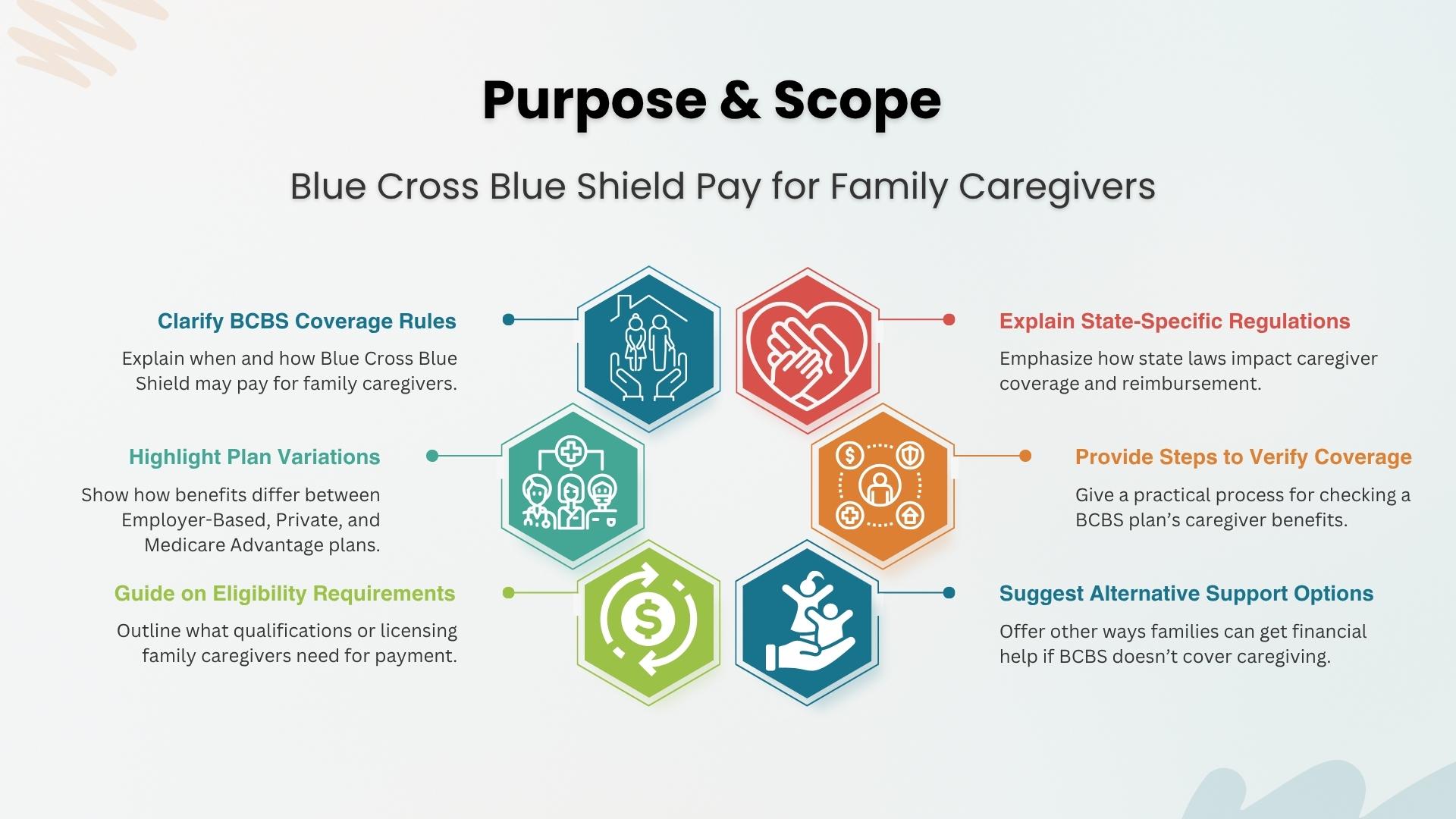
Each Blue Cross Blue Shield (BCBS) plan is different since BCBS is a network of independent businesses nationwide. State legislation and provider agreements affect each plan. This structure allows for flexibility, which may confound families seeking caregiver support. Even though the names of the plans may look the same, the BCBS company may offer different benefits in each state.
For example, a BCBS Illinois plan may have substantially different benefits than a BCBS North Carolina plan. Because of this, it's essential to look at what your local BCBS organization offers instead of only depending on national standards.
Plan Type | Caregiver Benefits | Notes |
Employer-Based Plans | Basic in-home care occasionally included | Rarely pay family caregivers directly |
Private BCBS Plans | Varies by tier; some may consist of optional home care benefits | Higher-tier plans might cover agency-based caregivers |
Medicare Advantage Plans | Often include caregiver-related benefits like training or support | May reimburse family caregivers if hired through approved agencies |
BCBS plans don't usually cover caregiving, especially when family members do it. Many plans offer professional in-home services from registered caregivers, but spouses and adult children who don't work for a certified agency can't get paid.
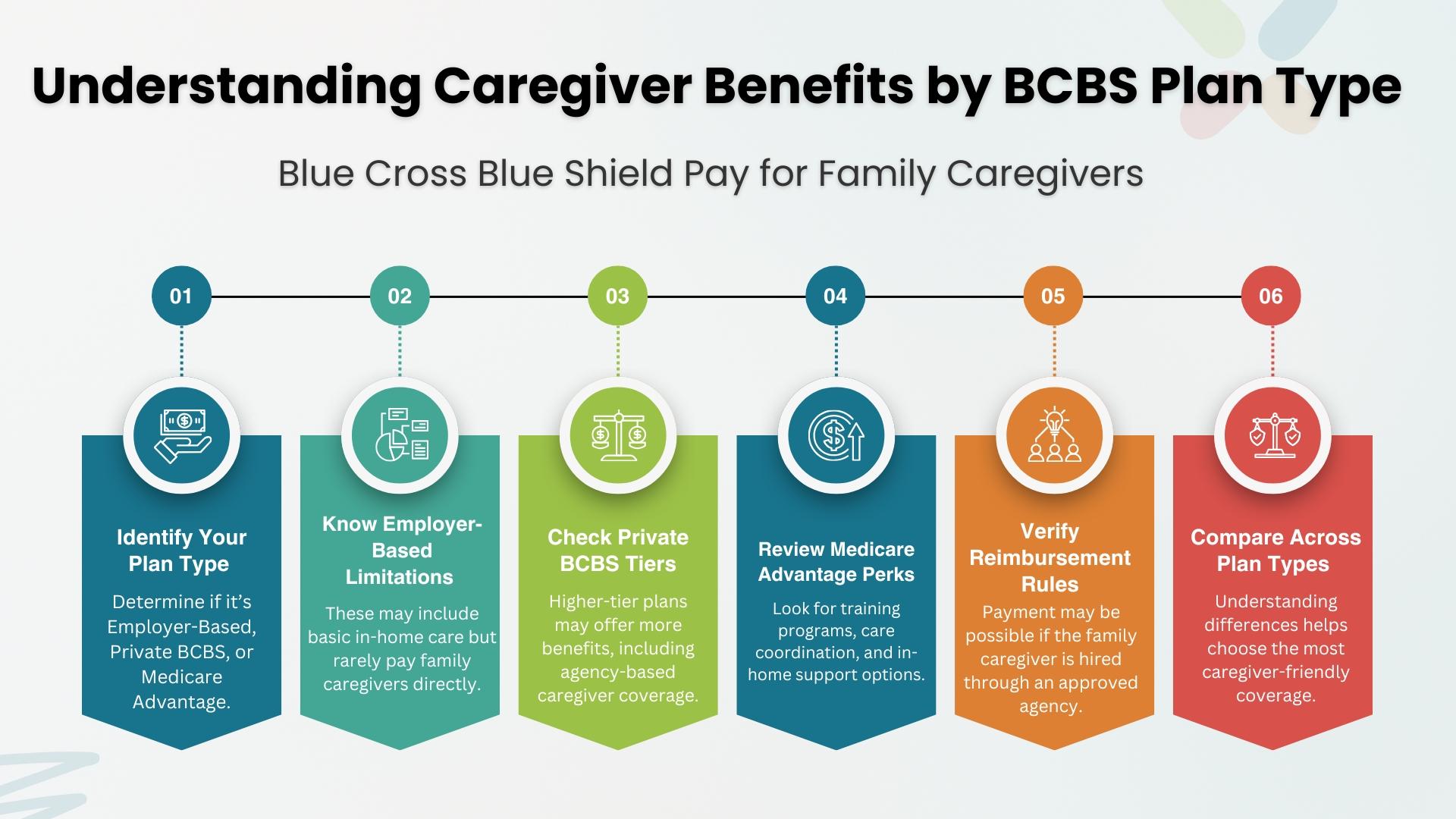
Benefits usually only apply when there is a documented need and a doctor's opinion, even when care is necessary. Plans that don't cover long-term care typically don't pay for ongoing caregiver services. So, unless you have a specific BCBS policy that says in-home caregiving help is covered, you can't be confident that a family caregiver would be paid. This is especially true for Medicare Advantage or supplemental programs.
Family members are not always qualified for reimbursement as caregivers under most Blue Cross Blue Shield insurance plans. However, there are some situations in which restricted coverage could be relevant. Specific plans may cover services if a licensed organization employs the family member or satisfies state standards for in-home care workers.
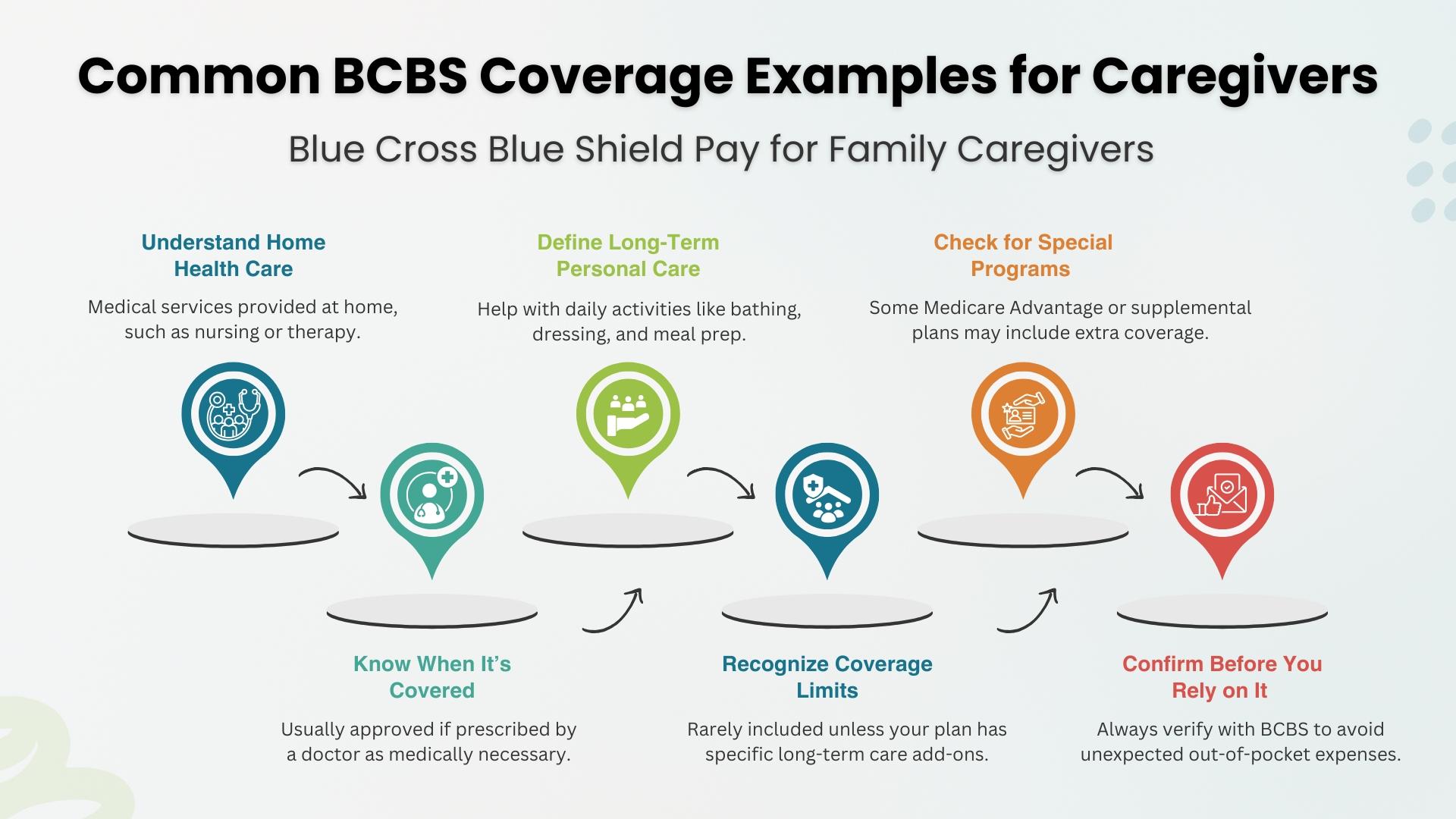
Usually, payment is determined by whether the treatment is necessary and included in a doctor's ordered care plan. Unless included in a structured benefit, informal caregiving, like assistance with meals or errands, is typically not covered.
When it comes to caring, BCBS Medicare Advantage plans provide greater flexibility. Some offer personal care coordination, caregiver education, or in-home support services as necessary benefits.
Additionally, certain states have Medicaid waiver programs that may provide family caregiver payments when paired with specific BCBS plans. It's essential to read the Summary of Benefits because not all plans or locations offer these alternatives.
Care Type | Description | Common BCBS Coverage Status |
Home Health Care | Medical care at home (nursing, therapy) | Often covered if prescribed by a doctor |
Long-Term Personal Care | Help with daily tasks (bathing, dressing) | Rarely covered unless part of a specific plan add-ons |
The first thing you should do to find out if your Blue Cross Blue Shield plan covers family caregivers is look at the Summary of Benefits. This paper lists the services covered, how often they can be used, and any requirements to share the cost. Look for words like "home health aide," "in-home support," or "personal care services." These reveal whether or not caregiving is covered. If you're on a Medicare Advantage plan, consider every item, especially the extra or additional benefits section. Some plans may hide things beneath broader headings.
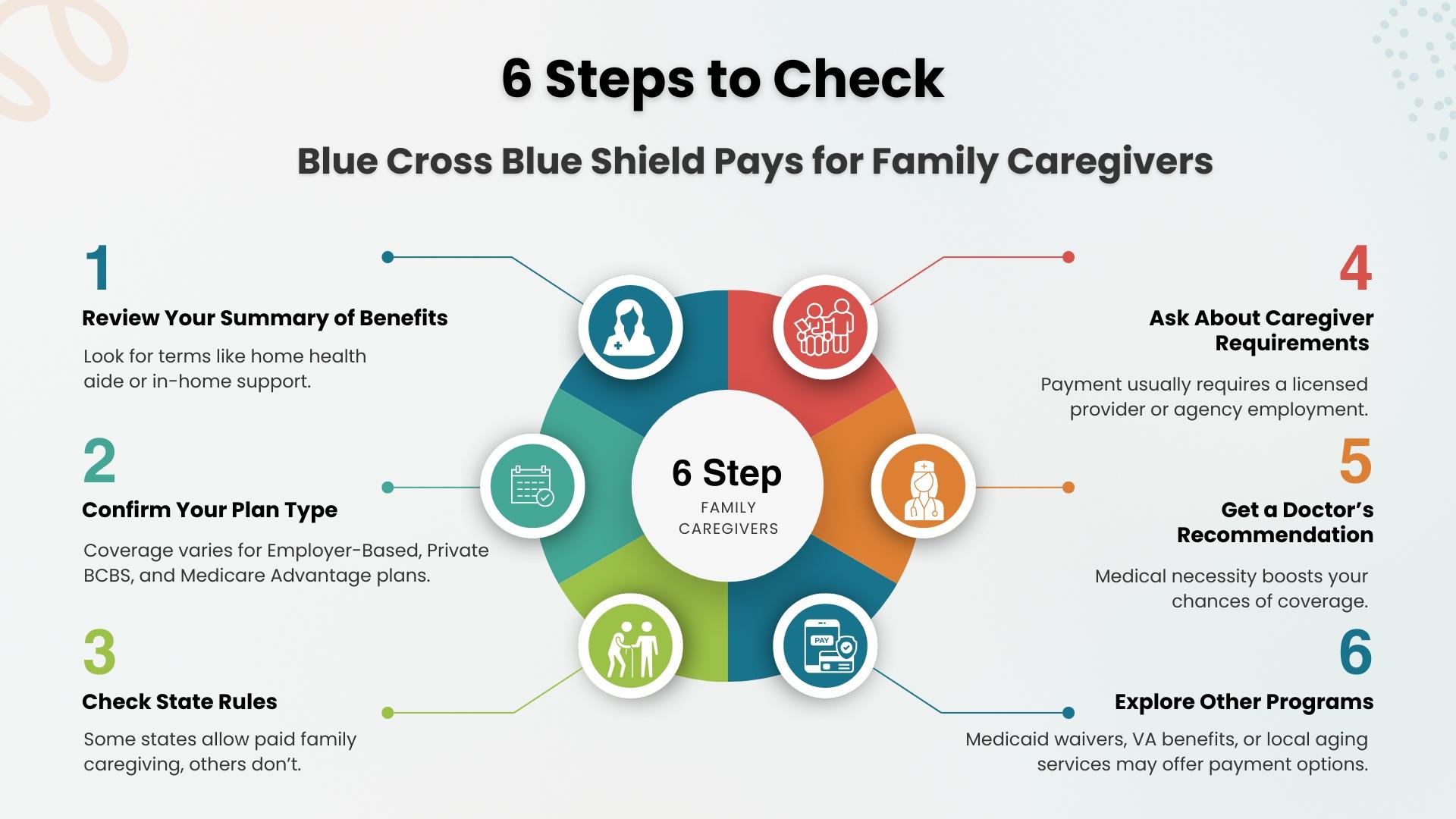
Then, to be clear, call Blue Cross Blue Shield customer service. The people who work at each state's BCBS branch know about the rules and plan differences in that state. Check to see if your plan covers in-home care or pays for caregivers. Be specific about whether the caregiver is a family member, an agency, or a licensed provider. If you qualify, their response may help you learn more about what's covered and how to file claims correctly. Specific plans also give you care coordinators who can help you choose the best service options.
Other programs might be available if your Blue Cross Blue Shield plan doesn't cover family caregivers. Through several state-run waiver programs, Medicaid pays family members to care for people in their homes. In most cases, the caregiver must sign up with a home care organization or undergo training to get these waivers. Medicaid often has more flexible alternatives than private insurance, but the rules for who may get it and how much they have to pay vary from state to state.
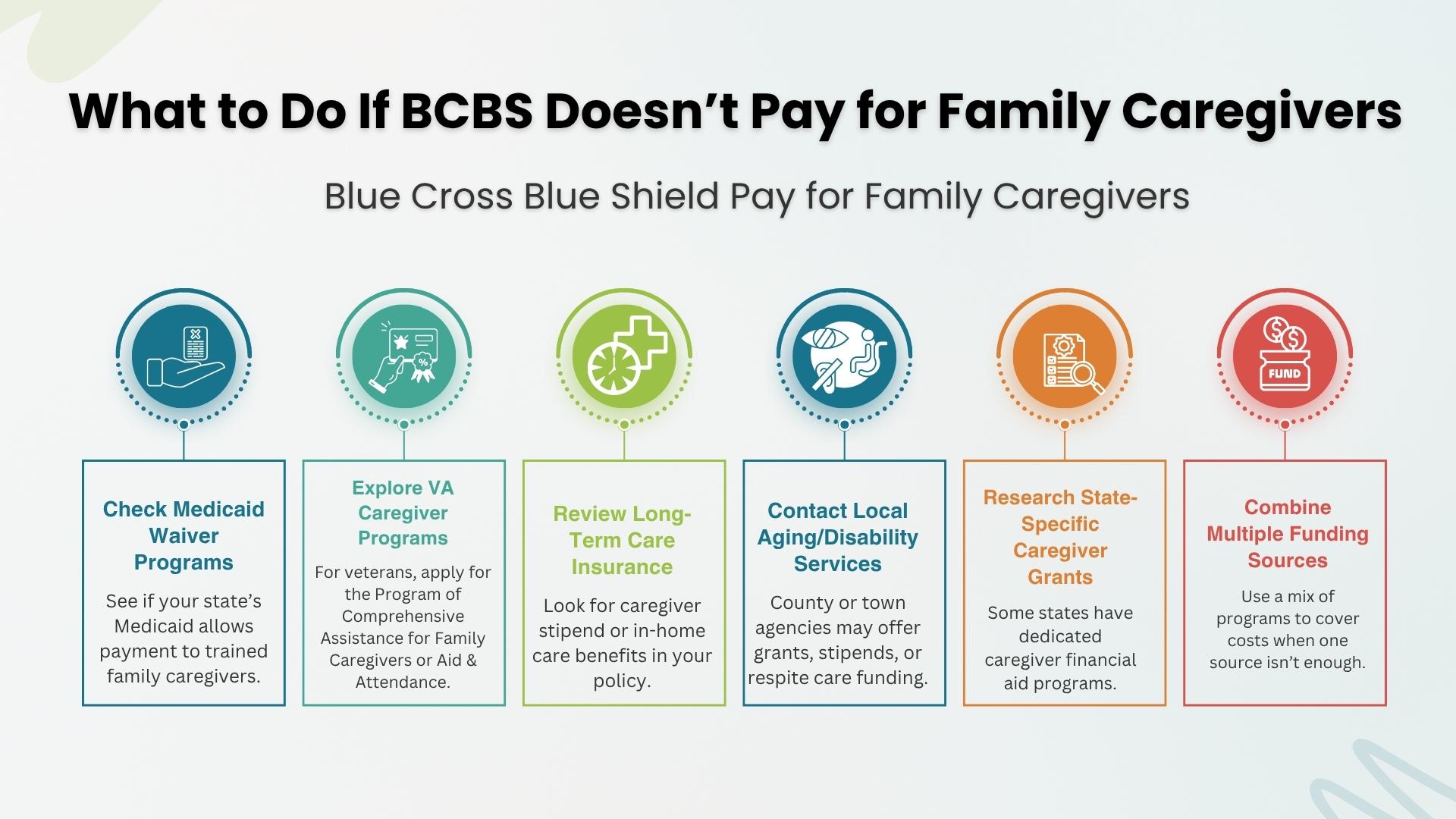
Veterans Affairs (VA) benefits also aid in taking care of someone. Veterans can get caregiver training and monthly pay through the VA's Aid and Attendance program or the Program of Comprehensive Assistance for Family Caregivers. These programs help kids, spouses, or other family members who care for people at home.
Look into long-term care insurance or government programs in your area. Some counties and towns employ ageing and disability services to pay for in-home help or caregiver salaries. These alternatives can provide steady help when BCBS isn't enough, especially for families that need to care for someone with a long-term or chronic illness at home.
Family caregivers can get help with money through Blue Cross Blue Shield or other programs by following these essential steps:
Gather proper documentation and create a care plan: Most state and insurance programs demand complete records that show what kind of care was given, how often it was needed, and by whom. A well-organized care plan helps show that you need help at home.
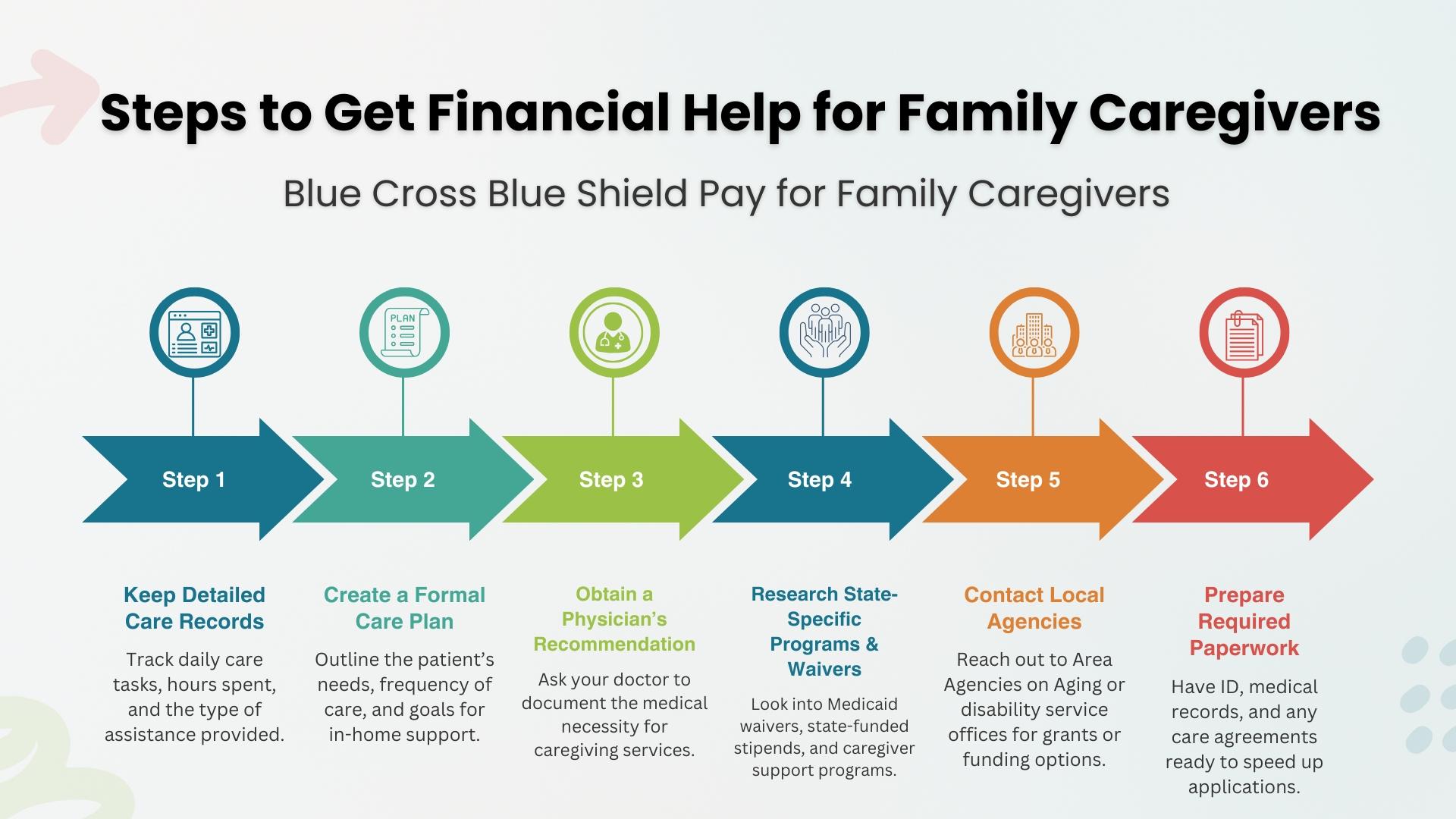
Get a physician's recommendation: BCBS and other insurance companies often ask for proof that the care is medically necessary. A signed declaration or a referral from the primary care doctor can start the process of getting in-home services or caregiver-related benefits.
Explore state programs and agencies: Call your state's Department of Health and Human Services or the Area Agency on Ageing. They can help you figure out how to use state-specific payment models, Medicaid waivers, respite care grants, and other caregiver assistance programs that are easy to access.
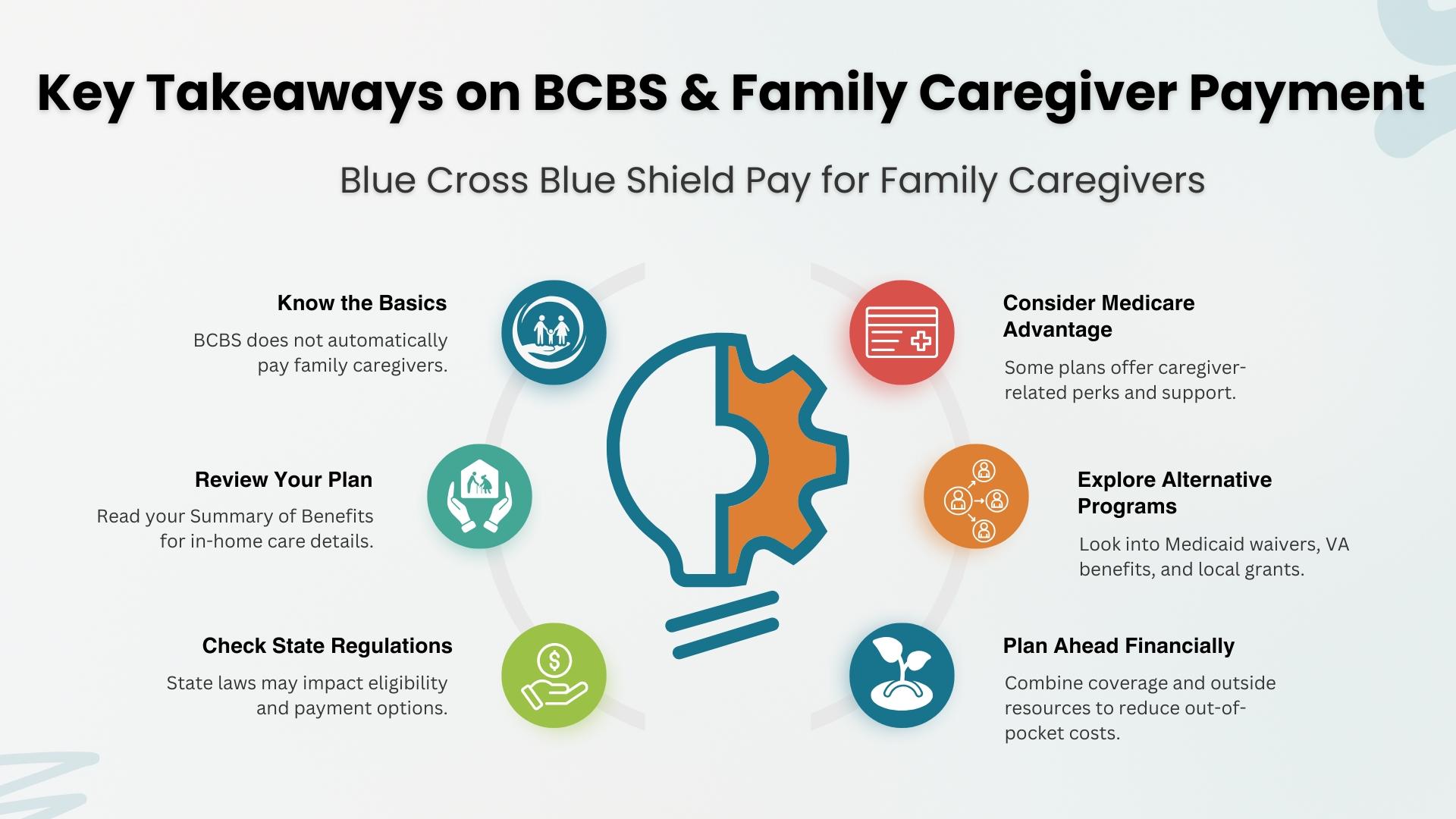
The Blue Cross Blue Shield does not pay family caregivers directly unless they work for an approved organization or are part of a specified program. Only certain Medicare Advantage or long-term care plans will pay for trained family caregivers who meet specific standards.
Some Blue Cross Blue Shield Medicare Advantage plans offer caregiver benefits like help at home, short-term care, or training for caregivers. It's essential to check the Summary of Benefits to get the correct information because coverage varies by state and plan.
Blue Cross Blue Shield may pay you to care for your parents. Still, only if an approved provider delivers the care is it covered by your BCBS plan and meets eligibility requirements (such as caregiver certification and medically essential services).
Blue Cross Blue Shield Medicare Advantage plans may pay for caregiver support services such as in-home care, caregiver training, and respite care. It is essential to review your coverage paperwork because the benefits differ from state to state and plan to plan.
If Blue Cross Blue Shield doesn't cover family care, you could look into Medicaid waivers, VA caregiver programs, local nonprofit help, or long-term care insurance. Contact your state's ageing services for personalized guidance and information about financial options.
The rules in each state and the specific plan will determine whether or not Blue Cross Blue Shield covers family caregivers. Some insurance plans don't cover anything, while others only cover a little help at home or with a caregiver. If your plan isn't good enough, you should call your BCBS provider right away and look into all the state or federal programs that could be available.
GoInstaCare gives you instant access to high-quality in-home care, including choices for professional family caregivers. GoInstaCare ensures that loved ones get reliable care without having to wait or be confused, whether they need help for a short or a long time.
Cities
Houston
Dallas
Austin
San Antonio
Miami
Chicago
Find Here
Companies