
December 08, 2025 • 7 min read
Table of Content
As families are busy and among seniors is becoming a big emotional issue. Human friendship is important because it fills the emotional gaps that technology and occasional phone calls cannot. When people lived in communities and big houses, they had built-in social support. Seniors live in more isolated places. Companionship is more than just being with an individual. It gives you a sense of purpose and a reminder that you matter. Not only is having friends good for you but it is also required for healthy emotional development.
As people become older, their emotional health changes in ways that are often small but very important. As people get older, their bodies slow down, their energy levels decline, and they may start to feel less independent. These changes can make you feel unsure, annoyed, or worried about becoming a burden. Emotional well-being is closely tied to feeling safe, understood, and having reliable people around who help elders feel valued and respected. Many older people need empathy, patience, and deep conversation to keep their feelings in check.
One of the biggest emotional changes is when your social circle changes. People you care about die, friends move away, and it's harder to stay in touch. These changes make it hard to fill in the gaps. Seniors with limited mobility may find it hard to do things, go to events, or even leave their homes comfortably, which could make it harder for them to meet new people. This takes away some of their freedom and could make them feel alone.
Seniors need additional emotional care while they get used to these changes. Human companionship solves this problem by giving people regular chances to connect, interact, and share experiences. When older people feel heard, involved, and supported, their emotional health improves and they can age with dignity and confidence.
Human contact has a big effect on a senior's emotional health. As people get older, the need to feel heard, recognized, and valued becomes even more important. Through friendship, older people can talk about their thoughts, memories, and anxieties with someone who will listen to them patiently and honestly. This gives them emotional validation that what they went through was important and that their voice is still important. When seniors feel valued in this way, their self-esteem goes up and their emotional balance is better.
Also, spending time with others might help with loneliness and anxiety. Seniors who spend a lot of time alone may get more worried, overthink things, or feel sad. Having a trustworthy friend around makes you feel better. Knowing that someone would come over, spend time with them, or help them with routine duties can greatly lower emotional stress. This relationship gives you a sense of comfort and security. These periods provide people with structure, an objective to work for, and a new sense of direction. Seniors rediscover the simple but deep joy that comes from becoming friends with someone and feeling close to them.
A senior's everyday life changes in major and essential ways when they have regular companionship. The most apparent benefit is that it helps you feel better. Being engaged often helps people to avoid long periods of time when they fail to do anything or talk. When situations are tough, companionship could help them feel better. Seniors who talk to other individuals on a daily basis feel less alone and get more emotional support. Seniors who have companions are more likely to be active in ways that match their passions. A person accompanying them helps them to continue on schedule whether they're eating or doing simple duties around the house. These common schedules help seniors to remain active.
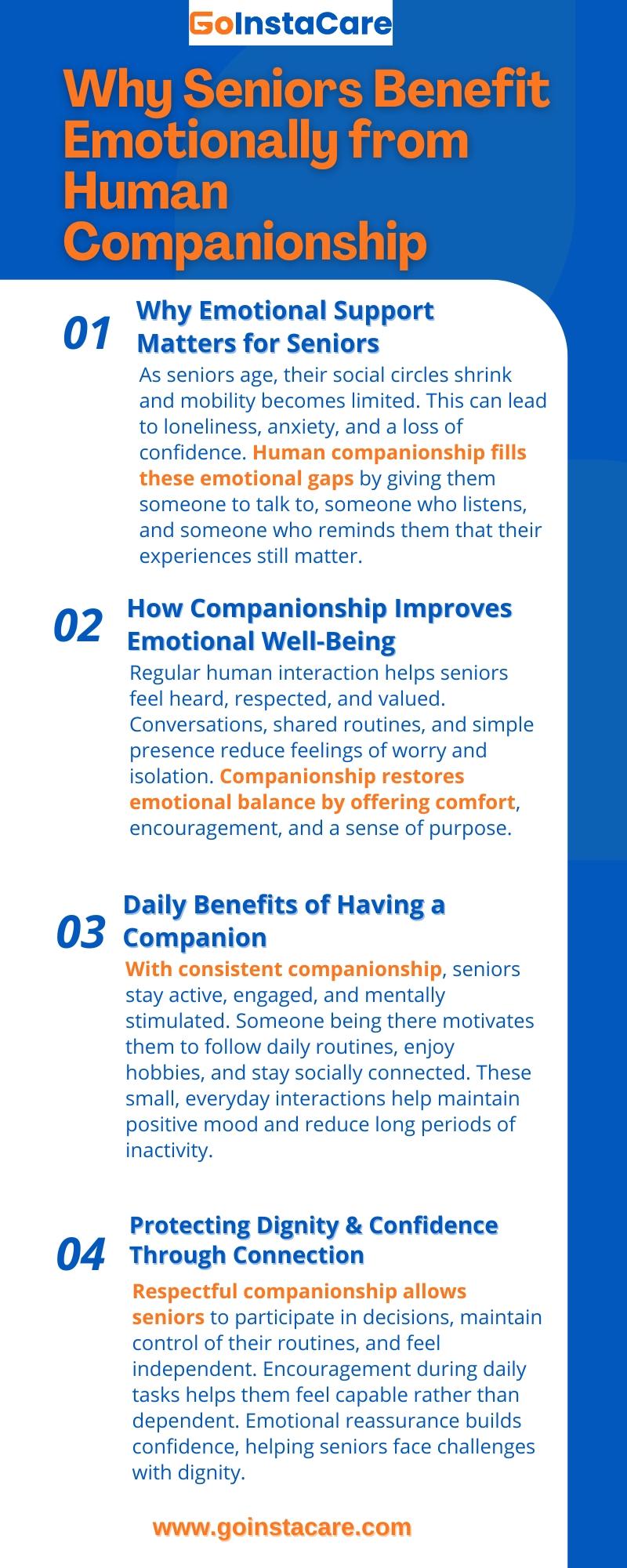
For older people, being with other people is really important for keeping their self-esteem and sense of dignity. When seniors are treated with respect, they can feel valued instead of dependent. When a friend quietly listens to them, provides them choices, and lets them make decisions about their own routines, seniors keep their sense of identity and control. Respect is a reminder that getting older does not change who you are, what you've done, or your right to be acknowledged and encouraged.
Getting support in everyday tasks also helps your self-esteem. As individuals get older, simple things like getting dressed, cooking, and putting things away may take longer, but encouragement changes how these things feel. Seniors see assignments as chances to be independent and learn new things, not as reminders of what they can't do. When seniors have a friend who helps them without rushing or taking over, they can try new things, succeed, and be a part of their day.
Emotional reassurance connects these parts. Friends can chat to you, show you they care, and agree with you when you're upset or worried. Knowing that someone is there to keep things in check can help with fear of failure and loneliness. Being with someone, being patient, and giving emotional support can help older people feel safe and confident in their daily lives.
The first step in finding out if a senior needs more emotional support is to see if they are withdrawing from their usual social interactions. If someone who used to love talking to people, getting together with relatives, or spending time outside suddenly prefers to be alone, it could be a sign of sadness, confusion, or feeling that they don't belong. Withdrawal often happens slowly and shows up as less eye contact, shorter conversations, or not wanting to do family things. These changes may mean that they don't feel safe expressing their needs anymore.
Another sign that they may need emotional therapy is if they have lost interest in pastimes they used to like. Examples of hobbies that bring happiness and significance are reading, cooking, gardening, and spending time with friends. If seniors start to lose interest in these interests, they may be feeling emotionally drained or lonely. They might think that their contributions are no longer important or that they have no one to share their life with. Because of this transition, they often have fewer reasons to stay involved and active.
GoInstaCare says that emotional stability is built on consistency and true human connection. Companion caregivers get to know each senior's background, likes and dislikes, and personality, which helps them build strong, trusting connections. Caregivers help people feel more stable by being there for them daily, which lowers their anxiety and emotional stress. Seniors begin to look forward to daily support, conversations, and routines that help them feel safe, connected, and understood. GoInstaCare puts a lot of focus on courteous discussion, support, and friendship that build self-confidence and a sense of community. Regular, compassionate interaction keeps seniors emotionally stable and helps them feel good about themselves.
Being with another individual makes you feel less lonely and helps you trust them. When you feel valued and understood, it helps you stay emotionally stable, boosts your confidence, and makes you see the good in everyday life.
Signs include moving away from people, losing interest in daily activities or spending a lot of time alone. These actions show that you are emotionally disconnected and require help from others.
Being with other people makes you feel safe, comfortable, and emotionally supported. When you're going through changes in your health, independence, or habit, feeling seen and heard can help you feel less anxious and keep your dignity.
Yes, being among others makes you want to exercise and helps with daily duties. When someone listens, understands, and gently encourages seniors, they are more likely to stay active.
Families may see their loved ones become withdrawn, forgetful, depressed, or unwilling to be around other people. When emotional shifts affect daily well-being, frequent company is beneficial for solace and connection.
Emotional connection is important for a senior's well-being, and it's more than just comforting them. When older people feel valued, understood, and included, they feel better about themselves and their daily lives. They feel good about themselves since they know they aren't alone. A familiar voice, shared laughter, and compassionate support can help ease the pain of loneliness and help you feel more balanced emotionally. Families feel better knowing that their loved ones are getting help, which makes relationships stronger. Human connection is one of the best ways to help older people be happy, emotionally stable, and involved in life as they get older.
Cities
Houston
Dallas
Austin
San Antonio
Miami
Chicago
Find Here