
July 15, 2025 • 6 min read

Table of Content
Yes, family members can get paid to care for loved ones through Medicaid, VA programs, and other support options. Payment depends on state laws, care needs, and program rules. Depending on where you live, the condition of the person receiving care, and the programs they qualify for, you may be able to get money back through Medicaid, veterans' benefits, long-term care insurance, or state-funded programs. But rules vary by program, and not all caregiving situations qualify for payment.
Family members can get paid for caring for someone, but only under certain situations and through specific programs. The benefits that the person obtaining care can enjoy depend on where they live, their relationship with them, and other factors. Medicaid's self-directed services, caregiver help for veterans, and some state-level programs make this possible.
For example, if your loved one gets Medicaid, they might be able to hire you as their caretaker and pay you with state-approved funds. But not all nations or plans allow this. You should check your local rules because marrying or living with someone else can change your eligibility.
You and the person you are caring for must fulfill specific conditions to be eligible to be paid as a family caregiver. These follow a few basic guidelines but differ by program and state.
The majority of programs take into consideration the following:
You must be at least 18 years old
The care recipient must require assistance with everyday tasks like eating, dressing, or bathing
The caregiver must typically be a close family member or friend
You might have to complete basic training or a background check
Most programs ask that you provide care at home and pass a simple training course
Medicaid or other programs must authorize the arrangement
Medicaid supports many programs that allow family members to be paid for caring for someone. Consumer Directed Services (CDS) lets the person getting care choose who will care for them, usually a family member. Home and Community-Based Services (HCBS) sometimes pay for family caregivers. These services help people get care at home.
Structured Family Caregiving pays and helps caregivers who live with the person they care for daily. Each program has its own rules in each state, so it is essential to know who can use it and when it is available. Go to the Medicaid website to learn what is available and how to apply through your state's local health or aging departments.
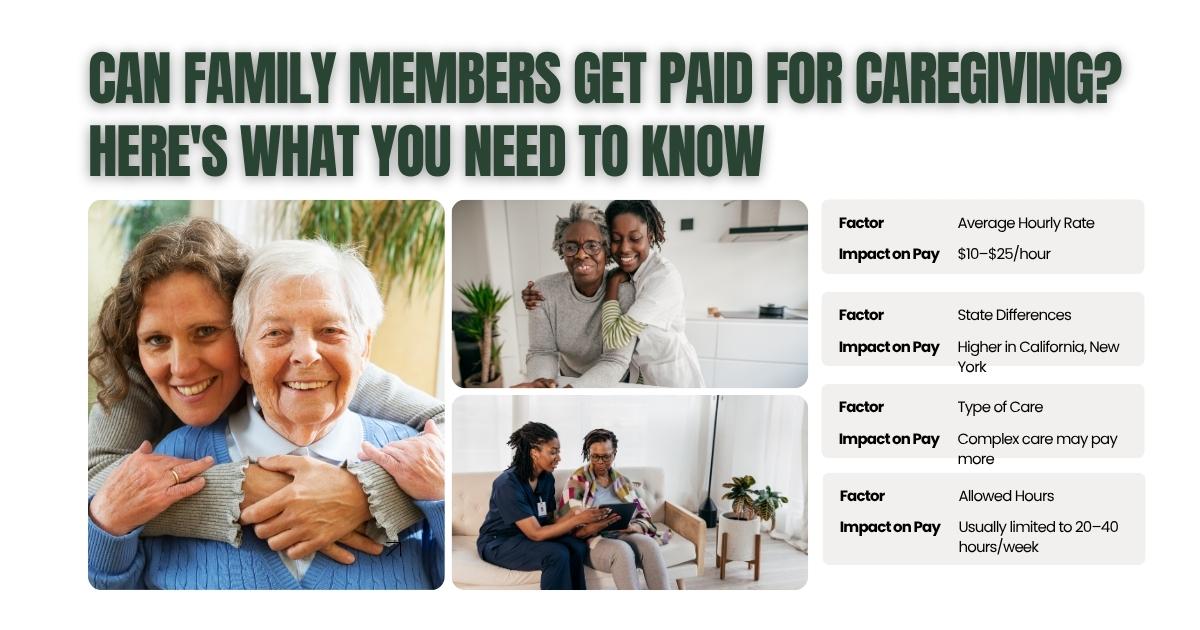
In most states, Medicaid programs pay family caregivers between $10 and $25/hour, depending on care complexity and location. This is more like financial help to make caregiving easier than a full-time job. Payments can vary widely, even within the same state, depending on the type of care provided and the number of hours allowed. Some programs only let you work a certain number of hours daily, while others set monthly limits. Here is a table to help you understand what affects the rates:
Factor | Impact on Pay |
Average Hourly Rate | $10–$25/hour |
State Differences | Higher in California, New York |
Type of Care | Complex care may pay more |
Allowed Hours | Usually limited to 20–40 hours/week |
First, check to see if the person you are caring for can get Medicaid in your state. If they do, fill out an application for a self-directed care program with your state's health department. The next step is a care assessment, in which professionals look at the person's daily needs. Once you've been approved, they can name you as their caregiver. Some states may require basic training or orientation. A home care agency or financial intermediary will handle the paperwork, payroll, and compliance. Depending on the state's system, the process could take a few weeks. So, check in with your local Medicaid office for updates.
If you can't get Medicaid, other programs may help you get paid or get help as a family caregiver. The Veteran Directed Care program and other VA programs pay qualified veterans monthly to pay family members and other caregivers to help them. The Program of Comprehensive Assistance for Family Caregivers (PCAFC) allows people caring for post 9/11 veterans with service-connected conditions by giving them time off, training, and money.
Long-term care insurance is another option. Check if your loved one has a policy covering in-home personal care. Some plans allow family members to be paid, but rules can vary from one insurance company to the next and may require an agency or license.
You can also get help from local caregiver support programs or tax breaks. For example, the Child and Dependent Care Credit helps people pay for care during tax season. Also, Area Agencies on Aging (AAA) may give grants, equipment, or respite support even when direct payment isn't possible.
Even though these options won't always equal a full salary, they can help ease financial stress when used together. Always determine your options with your state, insurance company, and local senior or veteran services.
A family member may be able to get paid for taking care of a parent through state-funded caregiving plans, Medicaid's self-directed services, or VA benefits. This depends on their eligibility, where they live, and how much care they need.
California, New York, Pennsylvania, Texas, and Colorado Medicaid programs compensate family caregivers. Because every state has its waiver or self-directed care program with distinct eligibility requirements, restrictions on caregiver relationships, and other regulations, availability varies.
Depending on state regulations and care requirements, family caregivers who receive Medicaid typically make between $10 and $25 per hour. Approved hours, the complexity of the care, and the particular waiver program all affect payment. For most families, it is a supportive income rather than a full-time salary.
Yes, a spouse may occasionally receive payment for providing care, particularly through VA caregiver benefits or Medicaid self-directed programs. Eligibility, however, varies depending on where you live and the particular guidelines of the caregiving program, as some states and programs may exclude spouses.
Yes, becoming a paid family caregiver frequently requires training. Basic training or orientation on personal care, safety, and documentation is part of many Medicaid self-directed programs and VA caregiver initiatives. Programs and states have different requirements.
You can get paid to care for a family through Medicaid self-directed care, VA caregiver pay, and private insurance. Programs like CDS and HCBS let your loved one choose you as a caregiver. For more guidance, see how to apply for caregiving programs above.
You need to know where to look and how to apply for the available help, which can be anything from consumer-directed services to structured family caregiving.
If families need more help or want to look into professional caregiving options, GoInstaCare makes it easy and quick for them to find qualified caregivers. GoInstaCare offers flexible, reliable help that meets your needs, whether you're a family member needing a break or looking for reliable in-home care.
Cities
Houston
Dallas
Austin
San Antonio
Miami
Chicago
Find Here