
September 09, 2025 • 6 min read

Table of Content
Knowing home care prices in ten years is vital because these charges are going up. Because of increased demand, a lack of caregivers, and inflation, future home care expenses could be very high for families. The hourly rates for companionship or home help vary from $20 to $30, but these rates are expected to increase significantly. Costs will increase as more older people stay home instead of going to a facility. When families plan for these anticipated price hikes in their savings, they will be ready for the financial realities of future home care.
The need for home care is expanding significantly, mainly because people live longer and there are more older people. A lot of people are living into their eighties and nineties, and many of them have health problems that will last for a long time and need constant care. This change in the population will mean that more people will need help with everyday tasks, even if they don't need hospital-level care. Long-term planning must include home care because people are living longer and will need help with both medical and non-medical needs for more years.
Another key factor is that most people would rather stay in their homes than move to an assisted living or nursing home. Comfort and freedom are essential to seniors, and staying in a place they know well suits their mental health. Families increasingly choose in-home care to keep their loved ones safe and supported at home.
There has also been an apparent increase in the number of people using elder home care services. Professional caregivers are now needed for everything from full-time help to part-time help with bathing and eating. Families know they can't handle work, kids, and caregiving alone. As the need for home care providers grows, the necessity for reliable ones will also increase. This will affect how healthcare and retirement plans are handled in the next 10 years.
State | Hourly Rate (Median) |
Minnesota, Washington, Colorado | $33 – $43/hr |
California, New York, New Hampshire | $32 – $38/hr |
West Virginia, Louisiana, Mississippi | $19 – $25/hr |
The cost of home care will go up a lot because of inflation and higher caregiver compensation. Agencies will change the hourly rates to reflect that caregivers will require more money to keep up with the rising cost of living. If prices go up over the next 10 years, the average hourly salary of $33 today could go up a lot, making it hard for families to plan their budgets for the long run.
Another key problem is the growing need for caregivers and the lack of workers to meet that need. The number of individuals getting older keeps increasing, but fewer people opt to work in the caregiving field because the hours are long and the pay is low compared to other jobs. Because there is more competition for qualified caregivers, this mismatch will raise costs and make it harder for families to find cheap solutions.
AI monitoring systems, smart devices, and digital health technologies cost more, making things safer and more efficient. They might save some time for caregivers, but they cost money to set up and keep running. Families that want tech-enhanced home care will have to pay more up front. These factors suggest that the cost of home care will keep increasing. This makes it even more critical to plan and be ready to pay for it.
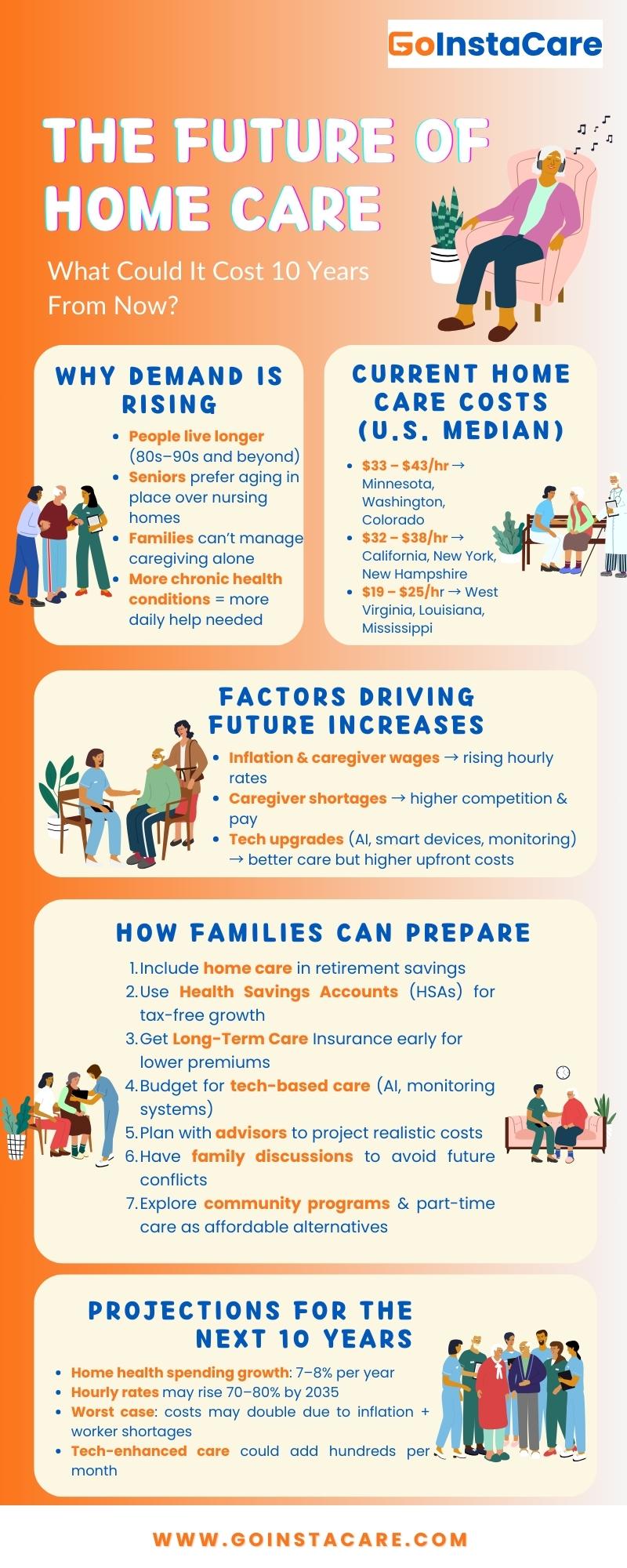
Over the next ten years, home care costs are expected to go up a lot. Home health spending is expected to climb by 7% to 8% annually, meaning hourly and monthly rates may triple by 2030.
If prices stay the same and wages only go up slightly, hourly rates may increase by 70–80% because of this cost trend. Monthly budgets would also go up at the same time. In a worst-case scenario, rates may double or more, significantly affecting future retirees' costs, mainly because there aren't enough workers and prices are rising quickly.
Also, using the latest technology and expert services would likely add to the costs. If many people use telehealth platforms, AI-driven remote monitoring, smart-home security systems, and tech-enhanced care coordination, household budgets could go up by hundreds of dollars a month. These changes could raise the overall cost of treatment while also making it better.
Families should be preparing for a significant rise in the cost of home care over the next ten years. Depending on economic and technical conditions, these costs could double when inflation and changing care requirements are considered. Please allow me to know if you want pricing scenarios that are specific to your area or level of technological integration.
Retirement planning must include ways to save money to cover the rising home care costs. Families will be ready to pay for daily help if they set aside specific amounts of money, whether they need part-time or full-time help. Regularly putting money into health savings accounts or retirement accounts can help make up for unexpected costs and inflation.
Long-term care insurance and extra plans are also quite significant. These plans can help you pay for care that isn't medical by covering some of the costs that Medicare doesn't. Choosing coverage early often leads to lower premiums and better benefits.
Honest interactions help everyone understand their roles and avoid future arguments. Expert advisors can suggest the best financial tools and give you estimations. Planning for the future and saving money can help families afford home care securely.
Community-based groups offer affordable solutions to help seniors like social engagement services that protect them from feeling alone. In-home companion care is a part-time service that helps with daily tasks including food, grocery shopping and interaction without the cost of full-time care. It is an excellent idea because families can modify the time of their schedules according to their requirements. Medicaid only pays for a limited amount of home-based support, depending on the rules in each state. Charitable groups often give out grants, volunteer caregiver programs, or lower-cost services.
The average cost of home care in the U.S. is about $33 per hour. Reside-in caregivers usually charge between $250 and $280 per day, and 24-hour care can cost between $20,000 and $24,000 per month, depending on where you reside.
If price growth is 2.3% annually, home care may cost almost $120,000 annually by 2035. This would be nearly twice the average cost of home health aides now.
The cost of home care in the future will be affected by things like inflation, rising pay for caregivers, an ageing population, a lack of workers, and additional costs that come with technology like telehealth, AI monitoring, and smart home safety devices.
Getting long-term care insurance and other plans early may help pay for some of the costs, giving you a break from your growing financial obligations. However, most health insurance and Medicare do not cover rising home care costs.
Families can get ready for future care by saving early, looking into long-term care insurance, preparing for inflation, incorporating family caregivers in the planning process, and receiving expert assistance on making plans that will work for them to pay for rising home care costs.
Seniors who want to be comfortable and independent in a place they know will continue to choose home care. Even if costs are expected to increase significantly over the next 10 years, families who prepare ahead can deal with these increases with less stress and financial strain. Regular saving, thinking about long-term care insurance, and working with family and specialists on planning can all significantly affect how well you can meet future needs. Families may feel safe knowing their loved ones get reliable support while living with dignity and independence. GoInstaCare's Instant Quality Care for Your Loved Ones promises that reliable Senior Caregivers will be there when needed.
Cities
Houston
Dallas
Austin
San Antonio
Miami
Chicago
Find Here