
August 12, 2025 • 7 min read

Table of Content
Most home health aides in the U.S. make between $13 and $20 an hour, although their income might vary based on where they work, how much experience they have, and what kind of business they work for. This means the average yearly pay for full-time work is between $27,000 and $42,000. HHAs with specific skills or who work in states with a higher cost of living usually get paid more. It's important to know that the pay rates for HHAs depend on where you live and whether you work for a private client, an agency, or a hospital.
A home health aide is a qualified caregiver who assists people with everyday tasks when they cannot perform them independently because of age, disease, or injury. They frequently assist with mobility support, dressing, grooming, bathing, medication reminders, and light food preparation. Additionally, they provide emotional support and companionship, significantly improving their clients' quality of life.
Role | Training Required | Main Duties | Work Setting | Medical Tasks Allowed |
HHA | State-approved training, usually 75+ hours | Personal care, mobility help, light housekeeping, basic health monitoring | Homes, agencies, assisted living | Limited (medication reminders, vitals) |
CNA | State-approved training, usually 75–150 hours + exam | Personal care, patient transfers, vital signs, assist nurses | Hospitals, nursing homes, rehab centers | Yes (under nurse supervision) |
PCA | Varies by state, often no certification | Personal care, companionship, household tasks | Private homes | No medical tasks |
HHAs can work in various places, including assisted living facilities, hospices, private homes, and home health organizations. They can serve customers in settings where they feel most at ease because of the role's flexibility.
In the U.S., full-time home health aides make between $27,000 and $37,000 a year, or $13 to $18 an hour. These numbers may alter depending on the type of company. Hospitals usually pay the most, while private clients pay more than agencies.
Employer Type | Average Hourly Pay | Annual Pay (Full-Time) |
Private Client | $16–$20 | $33,000–$42,000 |
Home Care Agency | $13–$17 | $27,000–$35,000 |
Hospital | $15–$19 | $31,000–$39,500 |
While part-time HHAs may make less money but have more flexible schedules, full-time HHAs who work 40 hours a week often receive a consistent annual salary.
Work Schedule | Hours/Week | Estimated Annual Pay |
Full-Time | 40 | $27,000–$42,000 |
Part-Time | 20 | $13,500–$21,000 |
The pay for home health aides might differ depending on the state and city where they work. In states with a higher cost of living, like California and New York, hourly salaries are usually greater. Conversely, states like Texas and Florida have lower average incomes but might still pay well after expenses.
State | Average Hourly Pay | Average Annual Pay (Full-Time) | Notable Cities & Rates |
California | $18–$22 | $37,000–$46,000 | Los Angeles: $20–$22, San Francisco: $21–$23 |
Florida | $14–$18 | $29,000–$37,000 | Miami: $16–$18, Orlando: $14–$16 |
New York | $16–$21 | $33,000–$44,000 | NYC: $20–$21, Buffalo: $16–$18 |
Texas | $13–$17 | $27,000–$35,000 | Houston: $14–$16, Dallas: $13–$15 |
Illinois | $14–$19 | $29,000–$39,500 | Chicago: $17–$19, Springfield: $14–$16 |
A home health aide can make better professional choices if they know what factors determine their income. Two of the most important things that affect income are your experience and the degree of certification you have. An entry-level HHA with only the required state training may start at the lower end of the wage range, while an HHA with years of experience, advanced caregiving skills, or other healthcare certifications may earn more. Specialized training in post-surgical recovery, mobility assistance, or dementia care often leads to better-paying jobs.
The place is also very crucial. Home health aides (HHAs) in big cities and other urban areas usually make more money than those in rural areas. This is because the cost of living is higher and there is more demand for in-home care. For example, wages in small towns can be many dollars less per hour than in Los Angeles or New York City.
It's also crucial to know what kind of client you have. Taking care of older customers may include regular care, but caring for persons with disabilities or those recovering from surgery may require unique expertise and pay. Clients who need help getting around or keeping an eye on their health may have to pay more than clients who only need light help or company.
The type of shift you work can also affect your pay. Day shifts usually pay the same hourly rate, while night and weekend work may pay more. When you include free housing and meals, live-in employment may pay a set amount each day or week, which can be competitive. These things affect how much an HHA can make in some instances.
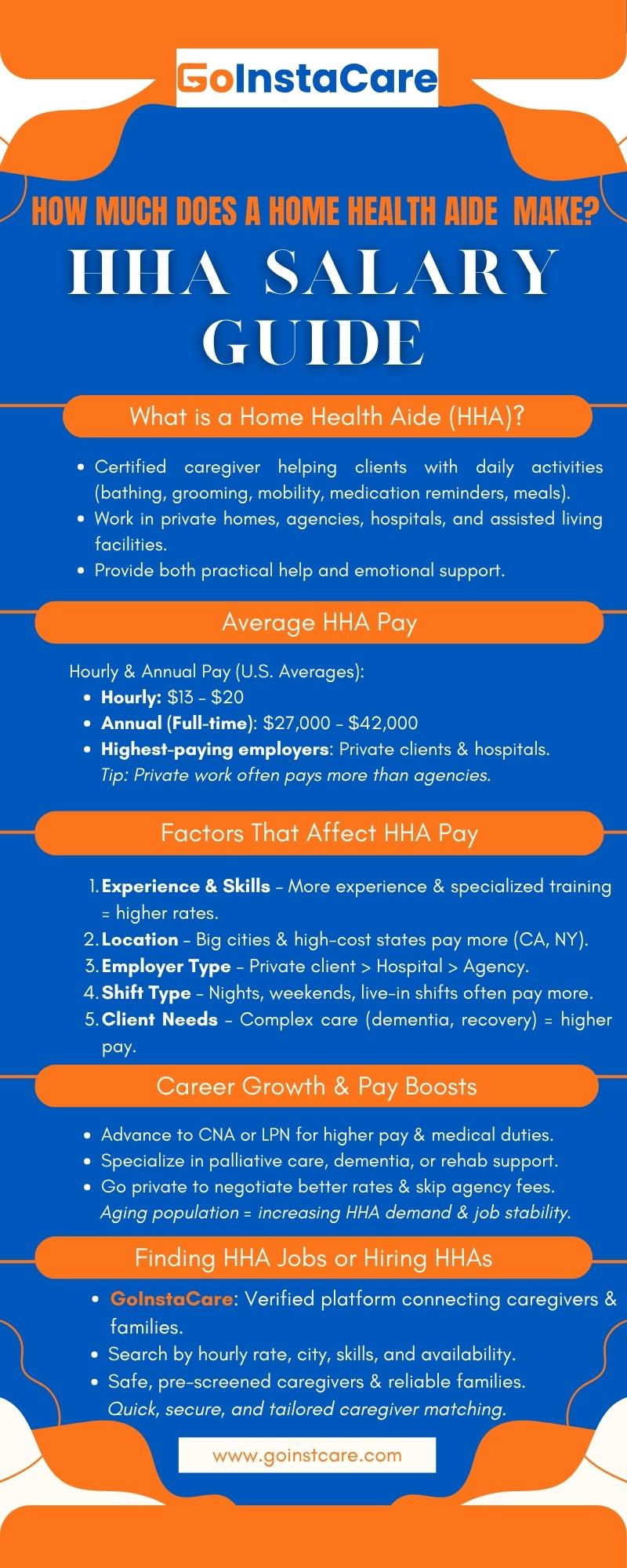
There are several ways for home health aides to move forward in their careers and make more money. Becoming a Certified Nursing Assistant (CNA) or a Licensed Practical Nurse (LPN) is one typical way to go. These jobs demand more training and certification but pay more, give you more medical responsibility, and open up more job opportunities in clinics, hospitals, and assisted living institutions.
More specialized training means HHAs can make more money without changing jobs. Higher-paying clients generally look for people who have worked in palliative care, dementia care, or rehabilitation aid. Working directly with clients instead of through agencies might also pay more because private agreements reduce agency fees and let you negotiate rates.
The aging of the population and the growing need for home-based care are predicted to cause a significant increase in demand for HHAs over the following years. This consistent demand, especially for people with good reputations and specialized talents, gives them more job stability and chances to ask for higher pay. HHAs can develop a rewarding, long-term career in healthcare and steadily enhance their pay by combining expertise, cutting-edge training, and careful client selection.
A reliable network connecting families and caregivers makes it much easier to find the right Home Health Aide job or hire a good HHA. GoInstaCare helps HHAs find verified families and respectable companies so they may work in a safe and professional environment. This gives people looking for work a list of options that have been checked for quality and dependability. Families may relax knowing that each caregiver has been screened before being placed.
The platform's hourly rate, city, and specialized filters make finding matches that meet your needs easy. It doesn't matter if someone is looking for post-surgery help, mobility aid, or dementia care specialists; the search process is easy and quick.
Complete job listings and caregiver requirements are on our Home Aides page. Families looking for dependable care can find certified providers at Find Top Home Health Care Aides in the USA. Families can easily start getting care for their loved ones using our Instant Quality Care for Your Loved Ones service. This service guarantees that their loved ones will get personalized, professional, and caring attention in the comfort of their own homes.
Home health aides usually make between $13 and $18 an hour in the United States, around $27,000 to $37,000 a year. The exact amount depends on where they live, their experience, who they work for, and when they work.
Due to high demand and greater living expenses, HHAs in major cities like New York and Los Angeles typically make $2–$4 more per hour than those in smaller towns or rural areas.
HHAs often make more money working with private customers than through agencies since private agreements let them negotiate rates directly and cut out agency costs. This is especially true for caregiving services that need special skills.
Working as an HHA is a terrific way to get your foot in the door in the healthcare field. It gives you hands-on experience, essential care skills, and chances to move on to better-paying jobs like registered nurse, certified nursing assistant, or LPN.
A CNA works in medical environments, does more clinical tasks, and helps nurses under supervision. They need more training and certification. An HHA, on the other hand, primarily provides personal care and basic health monitoring in homes.
HHA jobs pay well, are satisfying, and give numerous chances to advance in healthcare. Earnings can be significantly affected by the state, level of certification, type of care delivered, and work environment. People with specific skills or knowledge often have more ways to negotiate for greater compensation. Because there is a growing need for in-home care, HHAs could expect to have solid job options in the next few years. Whether you want to hire a reliable HHA or find your next caring job, GoInstaCare makes it easy to find home health aides and verified caregiver employment that fit your needs.
Cities
Houston
Dallas
Austin
San Antonio
Miami
Chicago
Find Here
Companies