
August 12, 2025 • 6 min read

Table of Content
IRIS pays Wisconsin caregivers an hourly fee based on the participant's approved budget. Rates might change depending on the participant's needs, where they live, and how much they agree to pay within the program's rules. However, caregivers usually make between $12 and $16 an hour. As state law requires, the payment is handled by a fiscal employer agency and paid for by Medicaid. IRIS lets clients choose their caregivers by hiring friends, family, or other qualified persons. The participant and caregiver agree on the fees if they fit within the IRIS budget plan.
Wisconsin has a self-directed Medicaid long-term care option called IRIS, which stands for Include, Respect, I Self-Direct. This option is for older people and people with disabilities who are qualified for Medicaid and need help all the time. Unlike traditional agency-based care models, IRIS gives consumers complete control over their care plans. This means that people have the right to select who will take care of them, when they will get care, and how the money will be spent, as long as they stay within specific limits.
IRIS users can choose from several caregivers, such as friends, neighbors, or family members, as long as they meet the program's requirements. This self-directed approach allows for more personalized therapy because the participant knows and trusts the people who are giving the care. It also supports regular, culturally appropriate care that fits the participant's needs and lifestyle.
The person in IRIS works with an IRIS consultant to make a care plan and set a budget based on their needs. Then, within the boundaries set by the program, they can set hourly rates for caregivers. A fiscal employer agency handles payroll, taxes, compliance and processes payments. This approach allows participants to choose while following Medicaid's rules. It also makes sure that everyone is responsible and flexible.
IRIS allows people to choose and manage their caregivers, which promotes independence, dignity, and control over daily life. Families can still care for their loved ones at home and in their communities while getting paid.
Yes, family members such as adult children, siblings, and relatives can be paid caregivers through the IRIS program if they meet eligibility and training requirements. Depending on program approval and the participant's care needs, spouses may be allowed to be paid caregivers in specific circumstances. Under IRIS, the participant becomes the employer, choosing who to hire, setting the caregiver's schedule, and determining the hours worked within the approved budget.
People who work for the IRIS program in Wisconsin normally earn between $12 and $17 an hour. The price per hour is not the same in every region of the state. People who are in the program can choose how much to pay the caregiver per hour as long as it matches their finances and maintains the program's requirements.
People can change their salary because the IRIS payment procedure is flexible. Caregivers who help with personal care, mobility support, or health-related tasks can earn more. The financial agency keeps records of the hours worked by the caregiver and communicates with them. It also makes sure that state and Medicaid rules are followed when it comes to salary payments. This plan makes it easier for people to focus on care. IRIS is a self-directed program and individuals can also decide how to spend their money like respite programs as well as on caregiver wages.
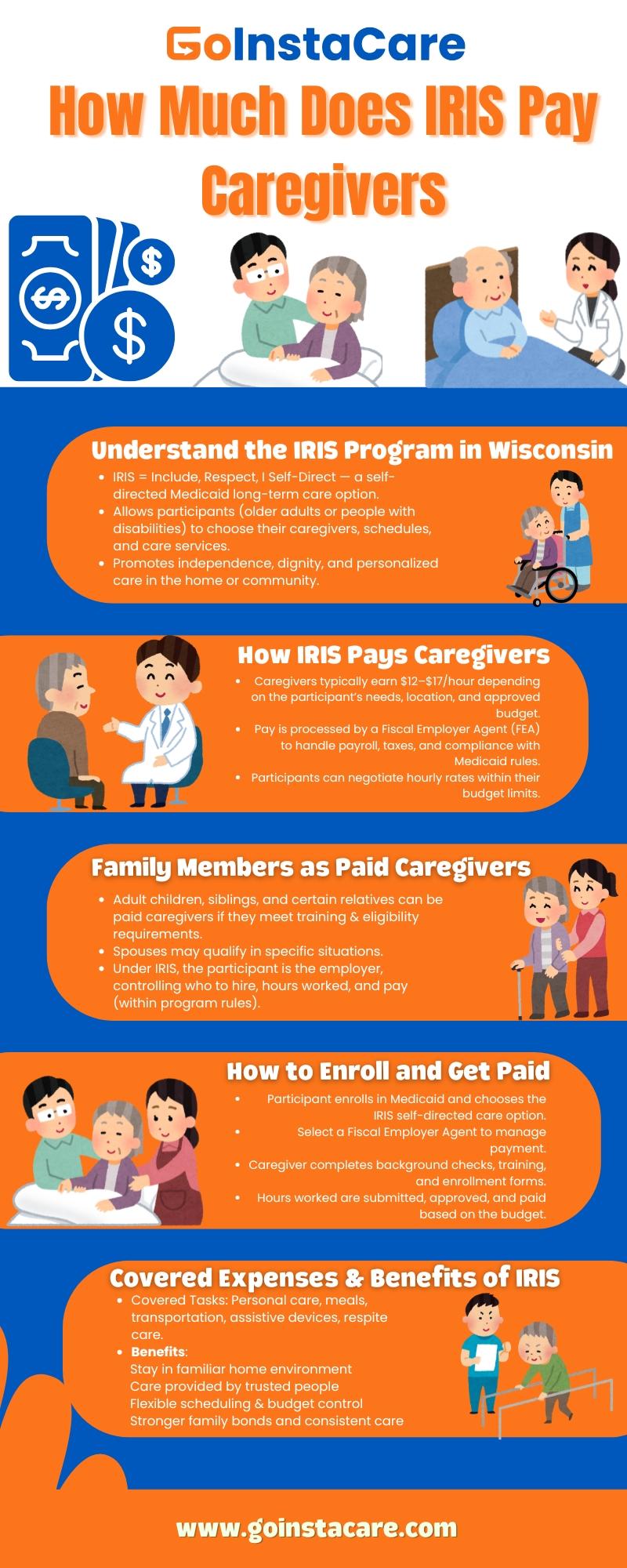
During Medicaid enrollment, the participant selects the self-directed care option through the IRIS program.
The participant chooses a Fiscal Employer Agent (FEA) to handle salary checks and taxes.
The chosen caregiver completes background checks, training (if required), and all necessary enrollment paperwork.
The FEA processes the caregiver records and submits hours worked and payment according to the approved wage and budget.
Personal care tasks include bathing, dressing, grooming, and hygiene assistance.
Caregivers help with meal preparation and grocery shopping when needed.
Transportation to medical appointments, community activities, or essential errands.
Assistive devices like mobility aids, adaptive equipment, or medical supplies.
Respite care services are provided to give primary caregivers short-term relief.
All covered expenses must be approved and align with the participant's individualized IRIS care plan.
One of the best things about the IRIS program is that it lets people choose who will provide care and when. Families can get aid from trustworthy friends, relatives, or other skilled people to ensure the caregiver understands what the participant needs and wants. This structure helps care stay consistent and builds trust at the same time.
IRIS also wants to keep family members' houses rather than move them to nursing homes or assisted living facilities. Being in a familiar place often helps people become more independent, improves their mental health, and strengthens their familial relationships.
The program also lets families operate their support network. They are in charge of scheduling caregivers, making hiring decisions, and deciding how to spend money on equipment and services. This self-directed method provides the framework and supervision of a Medicaid-funded program for security and responsibility and ensures that care is tailored to the participant's way of life.
GoInstaCare makes it easier for families in Wisconsin to find trustworthy caregivers. Our platform ensures that all the professionals meets safety and quality requirements. GoInstaCare can help you find a caregiver who can help you full-time, part-time, or with self-directed care approaches. Instant Quality Care for Your Loved Ones can help you get reliable caregiver support more quickly and easily by connecting you with specialists who can help you immediately.
Yes, IRIS allows some family members, such as adult children, siblings, and even spouses, to serve as paid caregivers as long as they meet program standards, complete the necessary documentation, and the arrangement fits within the participant's approved budget and care plan.
Caregivers in Wisconsin's IRIS program usually earn between $12 and $17 per hour that depends on the care they require and the experience of the caregiver.
The average hourly wage IRIS provides is about $14 to $15, although expenses might range from $12 to $17 depending on the participant's approved budget, location, and type of care needed.
To become a paid caregiver under IRIS, you must work for an eligible participant, complete the required paperwork and background checks, agree on an hourly rate that suits their budget, and submit your hours through the program's fiscal employer agent.
In the IRIS scheme, a Fiscal Employer Agent (FEA) is responsible for payments and paperwork. They handle payroll, tax withholdings, timesheets, and compliance to ensure caregivers get the proper compensation according to Medicaid and program rules.
IRIS offers a flexible, family-centered approach to long-term care in Wisconsin. Participants can choose and manage their caregivers while still getting support at home. Caregivers can earn competitive hourly wages appropriate for the level and difficulty of care they provide. This is a way to balance family and financial responsibilities that will last. Families can still have a say in care plans, expenditure plans, and service choices thanks to IRIS, which is focused on self-direction. GoInstaCare makes it easier for those who need reliable help to find high-quality support that meets their care needs by connecting them with pre-screened caregivers who have met program requirements.
Cities
Houston
Dallas
Austin
San Antonio
Miami
Chicago
Find Here
Companies