
July 17, 2025 • 7 min read

Table of Content
Little space care is when you help someone who is acting like a child, which might happen as part of age regression for emotional safety or rehabilitation. You should be very careful, ask for permission, and show respect in this region. Whether you are a friend, spouse, or new caregiver, your role is to respond gently, set clear boundaries, and offer comfort. Age regression isn't a game; it's often linked to mental health or emotional management. The first stages to being a small space caregiver are to listen, recognize triggers, and express love without judging or pushing someone to grow up or act appropriately.
A person in a little space, mentally and emotionally, tends to feel, think, or act more like a child. It's typically non-sexual and falls under the category of age regression. Folks living in cozy spots often seek fun, comforting, nurturing activities such as watching cartoons, coloring, or cuddling with plush animals.
Having this mindset makes them feel more secure, especially during times of stress, anxiety, or when they're feeling emotionally overwhelmed. A lot of folks turn to it as a way to handle their mental health and seek some emotional comfort.
Acting like a child for fun or a show isn't what little space is all about. It's a genuine emotional shift that often ties back to self-soothing or healing from trauma. When people find themselves in small spaces, they act more innocently, use simpler language, or show heightened emotional sensitivity.
It's important to understand that age play or DDLG, which can involve sexual dynamics, is not the same as little space. Little Space caretakers should always view the experience as non-sexual unless it's clearly and willingly stated otherwise, even if there might be some overlap in terms of language. Most regressors say Little Space is about feeling emotionally safe, rather than just roleplay or imagination. Caregivers need to grasp the deep emotional significance of this, and it's essential to handle it with care while establishing clear boundaries.
A little space caregiver gives emotional support by making the regressor feel safe and cared for and letting them know they are accepted. The caregiver's responsibility is to care for the child with love and compassion, not to control or fix them. This means doing warm and fuzzy things, like coloring, reading stories before bed, giving them soft toys, or creating soft food. These little things help people feel safe and trust one another. A competent caregiver makes people feel protected, respects their limits, and listens without judging. Their presence creates a secure and supportive space for the regressor to relax, calm down, and deal with their feelings.
Being a caretaker in a small environment takes emotional intelligence and consistent support. Your obligations extend beyond tasks; they center on your presence, attentiveness, and reaction.
Setting and respecting boundaries: Discuss what feels safe and off-limits, and always follow the regressor's lead with consent and care.
Being consistent and patient: Regression may shift quickly or last longer than expected. Stay calm, offer gentle reassurance, and never rush them out of a bit of space.
Practicing active listening and non-judgment: Validate feelings, use soft tones, and never mock or dismiss regressed behavior, even if it seems unusual.
Offering reminders, routines, or structured care if needed: Some regressors feel safer with snack time, nap time, or quiet play. Help provide those rhythms without control or pressure.
Building trust in a tiny space. Before giving care, the caregiver and patient must be able to talk to each other honestly and openly. For consent, both people must agree on their responsibilities, limits, and what they expect from each other. You should be honest about what the regressor needs, what makes them feel safe, and what they should avoid. Creating a simple signal or safe phrase lets them say what they need to tell if they feel overwhelmed or need to leave quickly. Caregivers should also check in often, even when they are not in the same place, to understand emotional and mental health. These small but continuous attempts make the regressor feel seen, encouraged, and always in charge. They build a sense of safety.
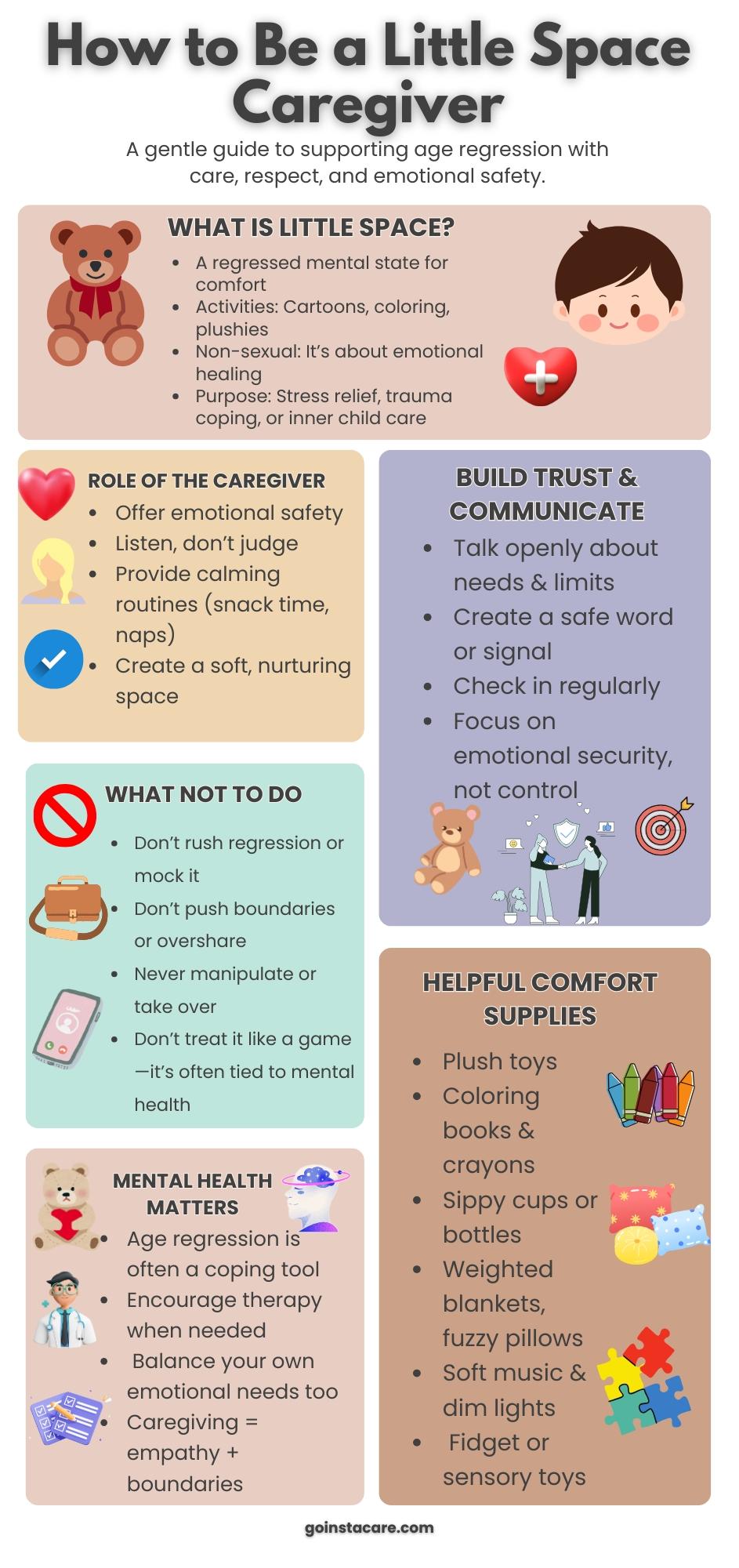
A little space caregiver should never think of regression. Don't act in a way that is controlling or manipulative. Caregiving is about helping, not being in charge. Always respect the regressor's right to make their own decisions. Also, keep the dynamic private until they have permitted you to share it. Ignoring signs of discomfort, pushing boundaries, or breaking trust can hurt the relationship.
Caregiving in limited settings should always be based on respect, consent, and emotional safety. Don't act in a way that is controlling or manipulative. Caregiving is about helping, not being in charge. Always respect the regressor's right to make their own decisions. Also, keep the dynamic private until they have permitted you to share it. Ignoring signs of discomfort, pushing boundaries, or breaking trust can hurt the relationship. Caregiving in limited settings should always be based on respect, consent, and emotional safety.
Caregivers can make a tiny space feel cozier by giving them soft, familiar things that make them feel safe. These items help create a calm environment where the regressor feels safe.
Plushies: Soft stuffed animals provide physical comfort and emotional grounding.
Coloring books and crayons: Art helps with focus, calm, and creative expression during regression.
Sippy cups or bottles: These offer a sensory element that feels soothing and age-appropriate within a bit of space.
Soft blankets and pillows: Warm, weighted, or fuzzy textures can reduce anxiety and support relaxation.
Dim lighting or calming music: Helps set a peaceful tone and reduce sensory overload.
Fidget toys or sensory tools: Useful for self-soothing and keeping hands engaged gently.
A lot of people use limited space as a coping mechanism for worry, emotional overload, or trauma from the past. Caregivers must understand that regression could be a sign of a more serious mental health issue. Although your support can be consoling, therapy is still necessary. Encourage professional assistance gently if you observe symptoms of distress, dissociation, or unresolved trauma. Remember to look after your emotional health at the same time. It can be very emotional to support someone in a small area, so striking a balance between empathy and appropriate boundaries keeps you centered while providing continuous care to someone who needs it.
Little space is a non-sexual emotional state in which you act like a child to feel better or deal with stress. Age play, which can include sexual or adult roleplay, is different. Little space focuses on safety, emotional control, and healing.
The first stages to being a trusted tiny space caregiver are to talk openly, have explicit consent, and know the person's limits. Be patient, listen without judging, and always be there for them. Over time, trust grows when people are nice, safe, and respect each other.
Yes, providing care in a small location requires mutually agreed-upon boundaries and explicit norms. These consist of privacy, safe language, emotional boundaries, and permission. By upholding these boundaries, the caregiving dynamic remains secure, encouraging, and emotionally sound while fostering trust.
If one approaches it with compassion, understanding, and respect, anyone can become a little space caregiver. Recognizing the emotional depth of regression, adhering to consent, and establishing a secure, accepting environment focused on support and sound boundaries are all crucial.
Please don't make fun of someone, neglect them, or push them out of your way. Don't term the event sexual unless you both consent to it. Caregiving must always be kind and safe for the person receiving care.
Little space caring is based on gentle support, emotional safety, and understanding. A safe space where someone may show weakness without fear is more vital than coloring pages or giving them soft toys. In this case, being a caregiver means paying great attention, looking for signs of emotional distress, and keeping the limits that keep regression safe. Trust and informed consent should guide every contact. A responsible caregiver is not only there when they say they will be but also reliable, caring, and aware of the regressor's needs. GoInstaCare prioritizes caring interactions that improve mental, physical, or emotional health in everyday life and promotes all kinds of care.
Cities
Houston
Dallas
Austin
San Antonio
Miami
Chicago
Find Here
Companies