
September 08, 2025 • 6 min read

Table of Content
When getting ready for future senior care, many families ask what to look for in long-term care insurance before making a choice. This type of insurance helps pay for things like assisted living, in-home care, and stays in nursing homes that Medicare and regular health insurance don't often cover. Having the right coverage can protect your funds and give you peace of mind as care costs rise. However, not all policies give you the same freedom or benefits. To choose a plan that matches your long-term care needs, you need to know which parts are most important to you, like coverage limits and protection from inflation.
Long-term care insurance is vital since the cost of care for seniors goes up every year and can be hard for families to pay for on their own. In-home care, nursing homes, and assisted living facilities can all cost thousands a month. Families must pay for most of these costs because Medicare and regular health insurance don't cover them. For many families, paying for long-term care out of pocket might consume their retirement savings or put them in a challenging financial situation that affects everyone.
Long-term care insurance pays for many of the costs that come with long-term care needs, which makes this burden easier to bear. A policy can cover services like memory care, daily personal help, and skilled nursing, giving seniors high-quality care without costing their family a lot of money. Additionally, you can decide whether to get care at home or in a facility. Families can decide on plans with confidence when they have coverage because they know they will get treatment if their health changes. Long-term care insurance can help seniors stay independent and keep their family's finances stable by covering rising expenses and economic concerns.
The first thing to think about while looking for long-term care insurance will be what kinds of coverage are available. A lot of families want to be able to select where and how their seniors get support. Some in-home care services and senior home care include professional caregivers who help with everyday tasks including bathing and cooking. This choice allows seniors to get the care they require while still remaining in a familiar environment.
Assisted living and nursing facilities are another crucial area of coverage. Policies may cover accommodation, board, and care services in these places when staying at home is no longer safe or possible. This gives you peace of mind. Insurance might help you avoid paying a lot of money, especially for nursing homes, which can be very expensive.
Many insurance policies also cover hospice and palliative care providers, who help families take care of their loved ones at the end of their lives. This includes helping patients and their families with care and emotional support. Some policies only pay for care for a set number of years or up to a certain amount of cash each day. Families must think carefully about these things to ensure their long-term needs are met.
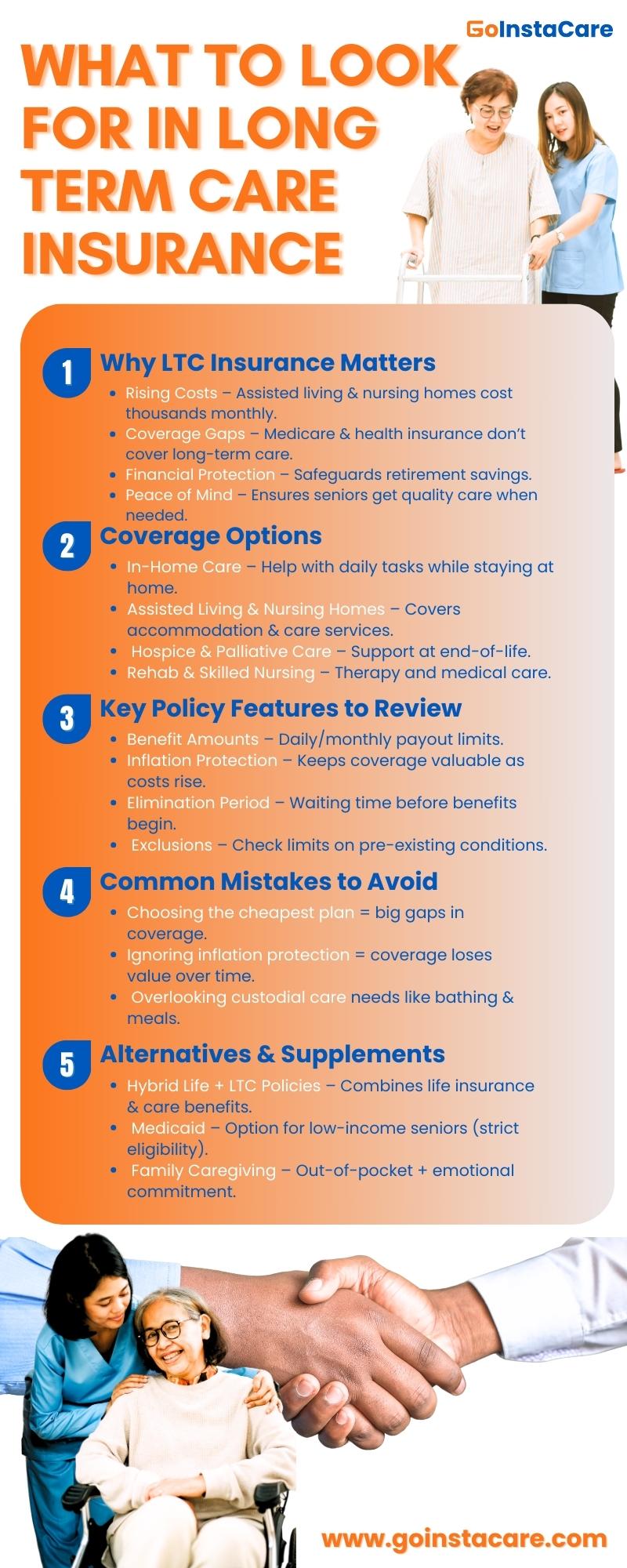
When choosing long-term care insurance, families can avoid gaps they didn't see coming by looking at critical policy details. One of the most important things to know is the number of benefits you get daily or monthly. This sets the maximum amount the insurance will pay for care costs, whether at home, in a nursing home, or in assisted living. Families should compare their benefits to the cost of care in their area to ensure fairness.
Price insurance is another crucial component. An insurance policy that doesn't protect against price increases could not be enough because the expense of senior care increases every year.
The elimination period, or the time before benefits start, is another crucial thing to consider. This determines how extended families must pay for things out of their pockets before insurance kicks in, which can be anywhere from 30 to 180 days. Choosing a shorter elimination period usually means paying less upfront but more premiums.
You should also check the provisions that say you can't get coverage for pre-existing conditions. Some medical conditions may not be covered by insurance, or they may only be covered after a delay. Families should read these terms carefully to ensure that older people can get the help they need later.
Opting for the cheapest plan may leave significant gaps in benefits, forcing families to pay out-of-pocket when real care needs arise.
Without inflation protection, today's coverage may fall short in future years as the price of assisted living, nursing facilities, and in-home care continues to increase.
Many policies exclude custodial support such as bathing, dressing, or meal preparation. Families must read carefully to understand what is covered and what is not.
Families should also look into other possibilities and alternatives when choosing what to look for in long-term care insurance. One option is hybrid life insurance with long-term care riders. These policies combine life insurance and long-term care coverage, so families can utilize the policy value to pay for care costs if they need to or leave it as a death benefit if they don't. This gives you options and stops you from losing money if you never require long-term care.
Medicaid is another choice for seniors with low incomes. Medicaid can cover stays in nursing homes, assisted living, and custodial care, but only if you meet strict income and asset requirements. Families must be ready correctly to be eligible.
Another common choice is to pay for care out of pocket and use family members as carers. Many families choose to have help with everyday tasks from family members or pay for professional carers directly. Families who don't have supplemental insurance or support services may feel financial and emotional pressure, even if this kind of treatment is tailored to each person.
Long-term care insurance pays for in-home care, assisted living, nursing home stays, hospice care, and physical or occupational therapy. This lets seniors seek help with daily tasks and medical procedures that Medicare doesn't usually cover.
Many long-term care insurance policies cover in-home care, meaning seniors can stay home while obtaining help with daily tasks like getting dressed, bathing, cooking, and moving around.
Long-term care insurance (LTC) can be worth it for middle-class families since it protects against high elder care expenses, makes it easier to pay for care, and ensures access to high-quality services like assisted living, nursing care, or help with caregiving at home.
People between 50 and 60 are usually the best candidates for long-term care insurance since they are healthier and the premiums are lower. This means they are more likely to get accepted before their care needs rise.
Long-term care insurance policies may not cover all of your pre-existing conditions because they generally have time limits. Families should read the agreements carefully to find out what medical issues are covered and which ones are not.
Long-term care insurance is an important part of planning for retirement because it helps families to prepare for increasing expenses of caring for older people. Without insurance, the cost of in-home care, assisted living, and nursing homes can quickly eat up your funds. Families may relax knowing that if they need long-term care, they will be financially secured as long as they obtain the correct coverage.
Families should think about their own medical requirements, the coverage options they have, and the expenses before making a choice. You should check the number of benefits and time limits to ensure the policy will still work. Sometimes, additional choices like Medicaid or life and health insurance might also be useful.
GoInstaCare provides your seniors with high-quality care from reliable senior caregivers who offer personal assistance and companionship. Families can ensure that their seniors get the individual care they require.
Cities
Houston
Dallas
Austin
San Antonio
Miami
Chicago
Find Here
Companies