
July 16, 2025 • 6 min read

Table of Content
In some situations, Medicare will pay authorized clinicians or registered home health aides to be caregivers, but it won't pay family caregivers directly. To be eligible, the care must be medically necessary, ordered by a doctor, and administered in the patient's home. The caregiver also has to work with a Medicare-approved group. Most of the time, caregivers help with personal care, physical therapy, or skilled nursing. Family members can help, but Medicare usually won't pay them unless they work as qualified professionals for a provider that accepts Medicare. When families know who is eligible, they may better plan care and look at other ways to get help with money, like Medicaid.
Medicare usually doesn't pay family members who help out at home. It focuses on specialized medical care that a doctor prescribes and certified professionals, such as nurses, physical therapists, or rehabilitation services, provide. It doesn't include custodial care, which many family caregivers do regularly and provides help with cooking, dressing, and bathing. On the other hand, Medicaid will pay family members for home care services.
Medicare only pays for some medically essential care given part-time or as-needed. It doesn't cover 24-hour care or help with everyday duties unless it's part of a bigger medical treatment plan. A doctor must prescribe the service, and a home health organization that Medicare has approved must provide it. This means that even if a family member is certified, they usually can't be paid unless they work for a company that is allowed to do so.
Home Health Services, when prescribed by a doctor
Skilled Nursing Care for wound care, medication administration, or health monitoring
Physical and Occupational Therapy to recover from surgery, illness, or injury
Speech-language pathology services
Medical social services for counseling or care planning help
Part-time home health aide support (if part of skilled care—not custodial)
Medicare does not pay the caregiver directly; it pays the agency. Therefore, family members who assist with everyday tasks like eating or cleaning are usually not covered.
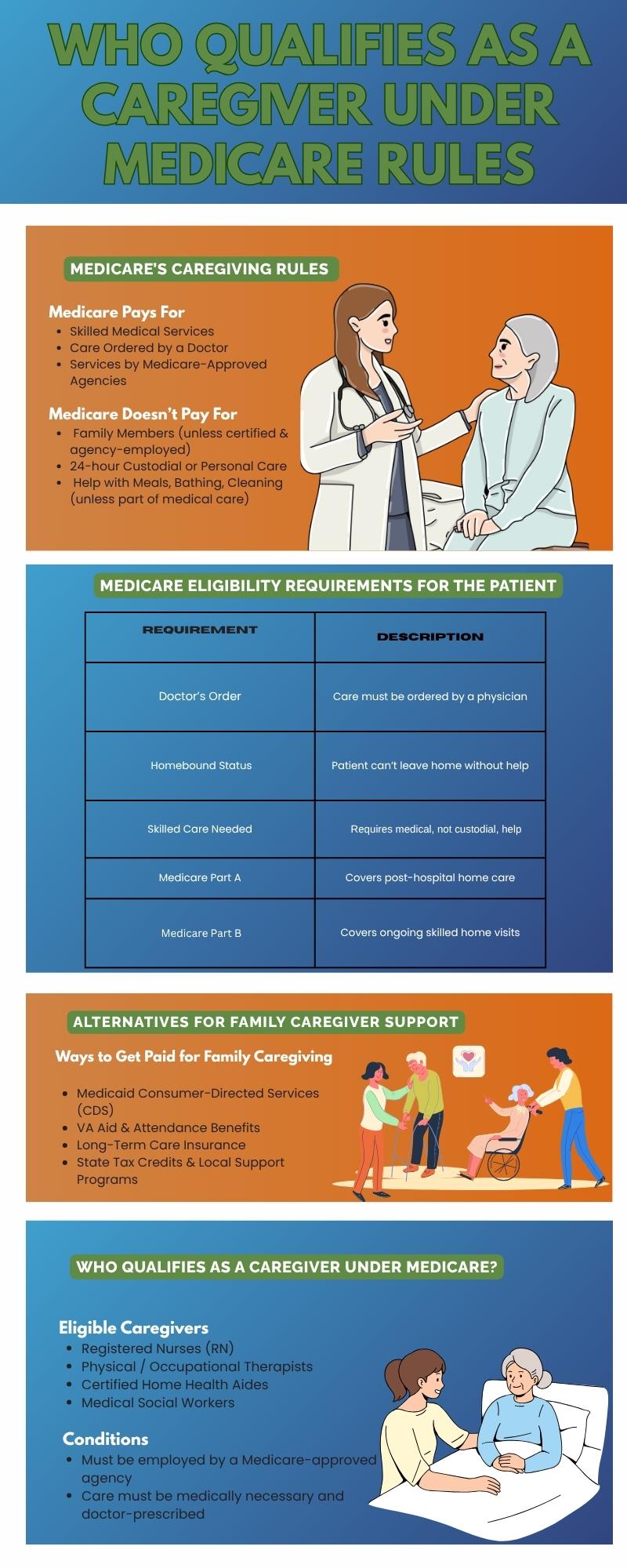
Medicare rules say only licensed professionals can be considered eligible caregivers for compensation. A home health agency that Medicare approves must hire these workers, and a doctor must prescribe the services they provide. Medicare does not pay family members to be caregivers, even if they help out every day. Family members are still welcome to help, but they won't get paid unless they are certified and work for a provider that can do so.
Registered Nurses (RNs) who provide medical care at home
Licensed Physical or Occupational Therapists delivering rehab services
Certified Home Health Aides assisting with personal care under nurse supervision
Medical Social Workers are involved in care planning and support
Medicare usually sees family caregivers as providing unpaid support, but they can benefit when they work with these professionals. Families needing paid support services may have more options with Medicaid or private insurance.
Medicare caregiving services are subject to strict eligibility restrictions that the patient, not the caregiver, must fulfil. These rules decide whether or not Medicare will pay for in-home care from a certified agency. A caregiver's eligibility is based on the patient's medical and care needs, not family or personal relationships.
Requirement | Details |
Doctor’s Care | Patient must be actively under a physician’s care who orders home services. |
Homebound Status | Patient must be unable to leave home without help due to illness or injury. |
Skilled Services Needed | Must require nursing, therapy, or other qualified care not just help. |
Medicare Part A | Covers home health care after a hospital or skilled nursing facility stay. |
Medicare Part B | Covers ongoing part-time skilled services at home with a doctor's order. |
Yes, alternative methods exist to seek aid even when Medicare does not pay family caregivers. The most popular choice is Medicaid, where specific programs allow family members to receive compensation for providing in-home care for loved ones. Verify whether home caregiving is covered by your loved one's long-term care insurance. VA Aid and Attendance, which offers monthly funds to assist with caregiving, may be available to veterans. Many states now provide tax breaks or local caregiver support programs to lessen the financial strain. Details on these programs can be found on your state's Medicaid and aging services websites.
Feature | Medicare | Medicaid |
Pays family caregiver? | No | Yes (in some states) |
Covers long-term care? | Limited | Often cover In-home care |
Income-based? | No | Yes |
Medicare does not pay family caregivers. It only pays for medical care certified professionals provide through organizations that Medicare has approved. Family members can help with care, but Medicare rules say they can't get paid directly.
Medicare says a caregiver is a licensed professional who gives medically necessary care as a doctor recommends. This could be a nurse, home health aide, or therapist. These caregivers must work for a company that Medicare approves. Medicare does not pay family members to take care of someone.
Medicare only allows licensed professionals to provide care. This covers certified home health aides, physical or occupational therapists, and registered nurses. They must provide care for qualified patients as directed by a physician and work for an organization that has received Medicare approval.
Medicare does not pay family members who take care of a parent. You can only pay licensed caregivers who work for companies that Medicare has approved. Look into Medicaid, VA programs, or state-funded caregiving options that can help family caregivers if they need money.
Yes, Medicare will pay for some home care if a doctor says it's needed for medical reasons. A Medicare-approved organization must provide skilled nursing, therapy, or part-time home health aide care, but not full-time or custodial care.
Medicare usually doesn't pay family caregivers, and the program has strict rules for caregiving. Medicare will only pay for medically necessary skilled care, suggested by a doctor, and given by licensed professionals who work for organizations that Medicare has approved. This means that many of the daily tasks that family members do to care for someone, including bathing, cooking, or keeping them company, aren't covered. Families that help out without getting paid may find this confusing and upsetting.
The first step in making a better care plan is knowing who can get it, what treatments are covered, and how Medicare and Medicaid differ. Medicaid often offers funding programs for family caregivers, primarily through Consumer-Directed Services (CDS) and Home and Community-Based Services (HCBS). This is different from Medicare. If your loved one is qualified for both Medicare and Medicaid, you may be able to combine services to get extra help.
GoInstaCare can help you find eligible providers who follow Medicare rules, understand eligibility, or find your way around local programs. Their staff can help you find Medicaid-funded programs that can help family caregivers with money problems or help you get professional caregiver support.
Cities
Houston
Dallas
Austin
San Antonio
Miami
Chicago
Find Here