
August 19, 2025 • 5 min read

Table of Content
Yes, it provides insurance to the caregiver and the family. Families are at risk if something goes wrong as they seek care without it, or if someone is harmed. Insurance helps to establish trust by showing caregivers are safety-conscious and doing their work. Finding the appropriate type of insurance, for example, health care insurance, workers' compensation, or liability coverage, can help you avoid costs and legal challenges. Families may hire caregivers with confidence when they know that insurance is essential.
Private caregivers usually get insurance, even if it's not often required by law. Insurance protects the family that hires the caregiver and the caregiver from accidents and debts. Some states or agencies may need insurance if the service is part of a Medicaid-funded program or is being done through an agency, even if it is not legally required most of the time. The right insurance reduces risks, provides you with peace of mind, and often makes families look for reliable support at home.
General Liability Insurance: Protects against accidents that cause property damage or bodily injury while the caregiver works in someone's home, such as a slip or broken item.
Professional Liability Insurance: Covers situations where a caregiver is accused of negligence, mistakes, or failure to provide proper care, helping with legal costs and claims.
Workers Compensation Insurance: Provides medical and wage benefits if a caregiver is injured while working, and may be legally required when hired as a W-2 employee.
Bonding Insurance: Offers families peace of mind by covering losses from theft, fraud, or dishonest acts, making caregivers appear more trustworthy and professional.
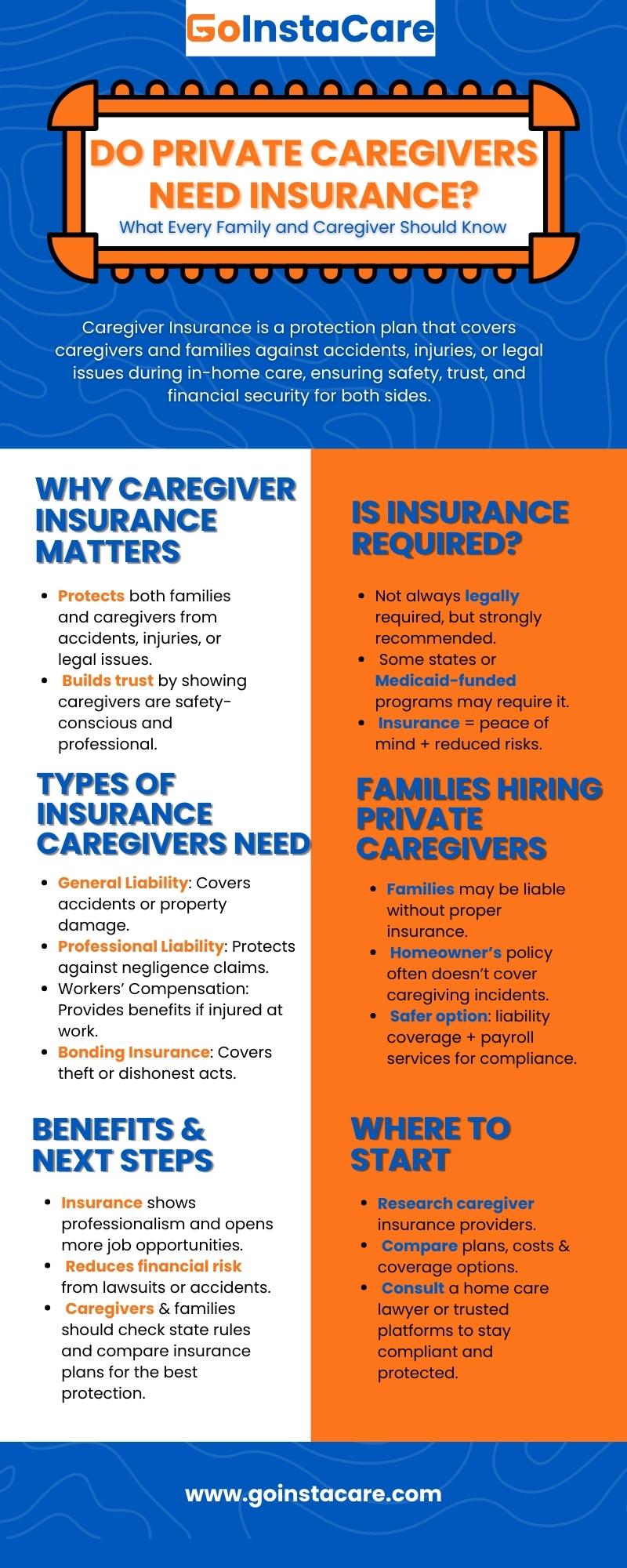
Families who hire private caregivers are hiring people to work for them. This means that they could be responsible for accidents or injuries if they don't have insurance. An ordinary homeowner's policy may not be enough because it normally doesn't cover incidents that include caring. Families may reduce the chances of losing their jobs by purchasing specific forms of coverage, like liability or insurance for employment practices. Using a payroll service can manage insurance, and when it comes to hiring people, it is another safe method to accomplish things while following the rules. Get reliable private caregivers for older people in the United States.
The state has a big impact on the insurance of private caregivers. In some states, families who hire a caregiver must have insurance. This protects families from lawsuits and makes sure caregivers are safe if they get hurt. It is usually a good idea to examine the rules in your area before signing any caregiving contract. Other states may have similar requirements but implement them in different ways.
Medicaid-funded consumer-directed care programs introduce another set of rules. Under these plans, families can hire and manage their caregivers, including family members. However, they may also need specific types of insurance. For example, Medicaid waivers may demand workers' compensation or liability insurance to protect the person receiving care and the caregiver.
Families and caregivers shouldn't think one basic rule applies everywhere because these rules differ. The best thing to do is talk to a home care lawyer or read your state's labour and insurance laws carefully. This way, all sides may avoid penalties, follow the rules, and set up a safer way to care for someone.
There are a lot of good reasons to become a licensed private caregiver, not just for safety. Having insurance gives clients and agencies quick trust by showing that you are reliable, professional, and committed to your business. Families are more secure when they hire an individual who can show they have insurance.
Insurance reduces your financial risk in case of accidents or lawsuits. With the right policy, you can focus on giving care instead of worrying about how much it will cost.
Lastly, many professional networks, caregiving groups, and referral platforms want proof of insurance before they post or recommend a caregiver. This means that insurance protects you and opens up new opportunities and clients.
If you are hiring a caregiver, you should first choose a caregiving insurance provider. They can assist you to choose the right insurance like liability. After that, examine multiple caregiver insurance plans and evalute their costs and restrictions. These individuals can feel more secure using trustworthy sites that include Instant Quality Care for Your Loved Ones.
Private caregivers are often requested to seek liability insurance, even if the law doesn't always require it. It covers against accidents, injuries, or damage to property while seeking treatment, which reduces the risks to your own money.
The family may have to pay for lost wages or medical fees if a without insurance caregiver gets hurt on the job. If the caregiver doesn't have insurance, they may have financial concern.
If a caregiver who doesn't have insurance gets hurt at work. Families who don't have enough insurance could end up in court, where they would have to pay a lot of money and face legal action.
Companies that specialize in caregiver insurance can help self-employed caregivers receive insurance. Two types of insurance that can help you improve your professional reputation are general liability insurance and professional liability insurance.
Some states require private caregivers connected to Medicaid-funded programs to have insurance. Even if you don't need it, insurance gives you important safety and trust.
Insurance isn't always necessary, but it's a good idea for families and private caregivers to have it. It makes childcare plans more professional, reduces risks, and provides you peace of mind. Enough coverage makes the environment safer and more reliable, whether you're a family hiring help or a caregiver seeking someone you can trust. When caring for someone at home, their health, money, and trust should always come first. Use GoInstaCare to find insured and verified caregivers who meet tight standards and give your loved ones immediate, high-quality care. You may hire them with confidence.
Cities
Houston
Dallas
Austin
San Antonio
Miami
Chicago
Find Here
Companies