
August 30, 2025 • 6 min read

Table of Content
As AI fraud becomes more popular, older people are more likely to fall for scams online. Criminals use AI to produce fake emails, texts, and phone calls that look real. This makes it more challenging for older adults to recognize when someone is lying. Older individuals are more likely to fall for AI scams because they don't know much about technology. Scammers can easily approach people by using their emotions and an emergency. To keep elders safe they need to know about scams and have somebody they can turn to for support when they see one.
AI technology is making scams more complicated and more challenging to spot. Voice cloning and other methods can make seniors think the call is real by making it seem exactly like a loved one's voice. Chatbots powered by AI can conduct long, natural-sounding conversations, while deepfakes can make movies or pictures that look real. Using these techniques, scammers can easily weaken trust and persuade seniors to act without validating the source. These methods take advantage of many older people's trust in talking to people and making phone calls immediately.
The two primary reasons AI scams are so common in the US are that they are easy to find and huge. Scammers don't need to be smart because AI platforms are easy to use and available for everyone. This makes it easy for them to cheat people. But AI can produce convincing content, so scammers can reach thousands of individuals in seconds. Seniors are especially at risk because they tend to stick to traditional communication methods and may not be aware of the new digital threats. Police can't keep up with these methods that change so frequently.
One of the key reasons seniors are more likely to fall for AI fraud is that they are naturally friendly and trusting. When scammers make it hard for seniors to say no, they are more likely to do what they want when it is essential. Chatbots and AI voice replication make these conversations feel more authentic that makes trust.
Another reason is that they don't know how to use digital tools. Many older people didn't grow up with the internet, so they might not know what to look for, including strange email addresses, fake websites, or strange voices. When people don't know much about computers, they have little reason to suspect AI-powered scams intended to look real.
Older adults are confused and have trouble remembering past scam alarms and checking information. Scammers use this shortcoming to get people to make fast decisions before they have time to think about them.
Finally, being alone renders them more open to attack. Lonely seniors are more likely to answer calls or texts because they feel like the relationship is essential. Fraudsters use AI to make convincing conversations that lower defenses since people want to connect with others.
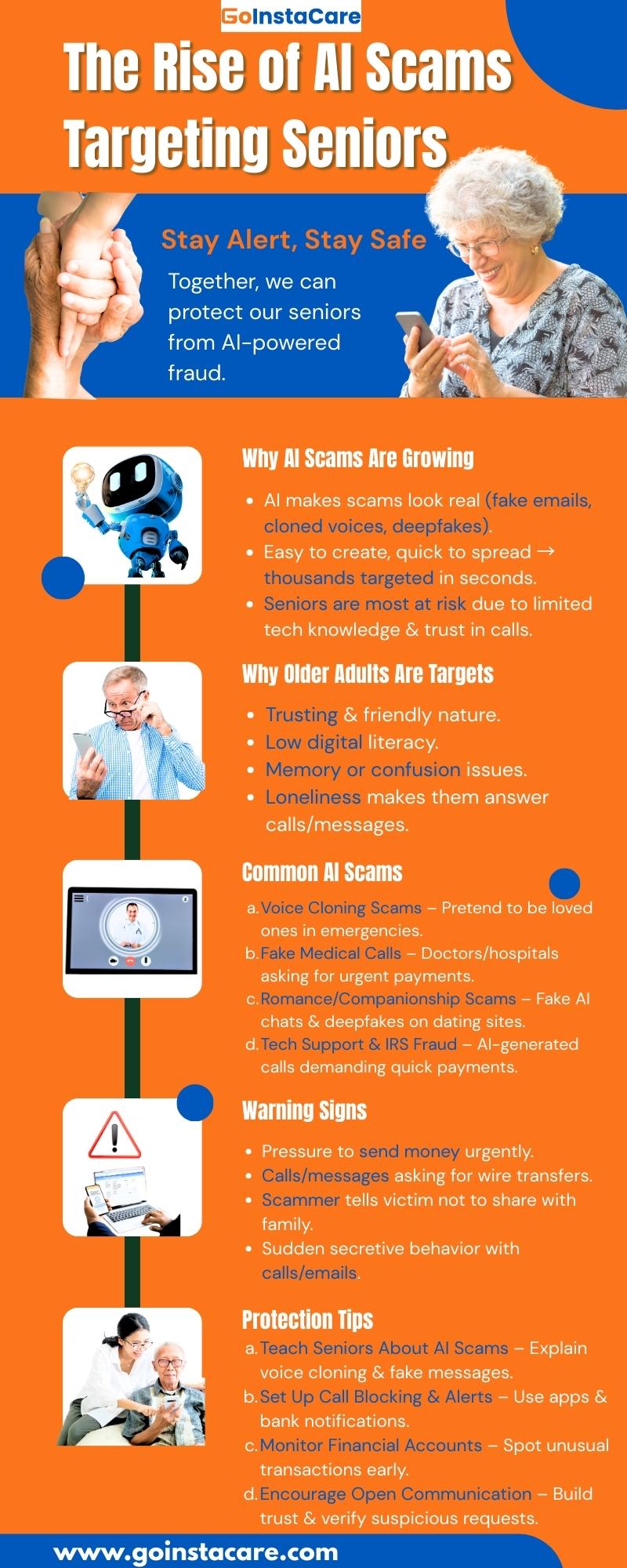
Voice cloning scams pretending to be family members: Scammers use AI to mimic the exact voice of a loved one, often claiming an emergency like an accident or arrest to trick seniors into sending money quickly.
Fake medical or caregiving calls: Fraudsters pose as doctors, hospitals, or caregiving services using AI-generated voices or chatbots to pressure seniors into paying for counterfeit treatments, prescriptions, or urgent health services.
Romance or companionship scams: AI-powered chatbots or deepfakes create fake profiles on dating sites engaging seniors in emotional conversations that feel real then asking for financial help or gifts.
Tech support and IRS frauds enhanced by AI: Criminals use AI to sound like legitimate companies or government agencies, warning seniors about viruses on their computers or unpaid taxes demanding immediate payment through secure-looking but fake platforms.
Families play an essential role in seeing warning indicators that an older adult may be the victim of an AI scam. Scammers often force seniors to transfer money immediately. Another sign that something is wrong is getting fraud calls or messages asking for money usually through wire transfers. AI voice cloning scammers may pretend to be a loved one that can scare seniors.
If seniors start to ignore calls, emails, or texts, it could also mean that they are being forced to do something. Scammers often tell their victims not to say anything to others. Families can stop financial harm if they see these before.
Strategy | Explanation |
Teaching seniors about AI scam tactics | Explain how voice cloning, fake emails, and chatbots work in simple terms. Awareness makes seniors pause before responding and gives them confidence to question suspicious calls or messages. |
Setting up call blocking and fraud alerts | Use call-blocking apps and enable fraud alerts from banks or phone providers. These tools filter suspicious numbers and notify seniors of unusual activities before they escalate. |
Monitoring financial accounts | Regularly review bank statements, credit card activity, and online accounts. Early detection of unusual withdrawals or purchases can stop scammers before significant losses occur. |
Encouraging open communication with family | Build trust so seniors feel comfortable sharing details about unexpected calls or requests. When conversations stay open, it's easier to verify scams and stop them together. |
Seniors are effortless targets for AI scams because they trust people too easily, don't know much about technology, have trouble remembering things, and are often alone. Fraudsters employ convincing AI technology like voice cloning, chatbots, and deepfakes to take advantage of these things.
Voice cloning is the most common AI fraud that targets older people. In this scam, a con artist pretends to be a family member and calls an older person in an emergency to persuade them to pay them money immediately without checking to see whether the call is real.
Families may protect seniors from AI voice cloning fraud by using call blocks, asking elders to wait before sending money, creating secret verification codes, and encouraging open communication with family members to confirm crises.
AI scammers are more complex to spot than regular scams because they use realistic voices, deepfakes, and chatbots that sound like honest conversations. Seniors have a harder time spotting fraud than they did with older, less convincing methods.
If a senior is scammed, caregivers should tell the police and banks immediately. They should also protect the seniors' accounts, watch their finances, offer emotional support, and teach them how to recognize future AI-driven scams.
Seniors are still likely to fall for AI scams because they leverage trust, loneliness, and a lack of digital knowledge. Voice cloning, chatbots, and deepfakes are all quite complicated, which makes them seem very real. This is why seniors are more likely to fall for these scams. Families and caregivers should know that fraud can be stopped and that spreading the word can make a big difference.
Being proactive is the most excellent way to keep older people safe. Seniors can considerably lower their risk by learning about typical scams, using call-blocking software, keeping a watch on their finances, and encouraging open communication. Building a system of trust and support is crucial to keep older people from feeling that they have to do things independently when insecure.
Cities
Houston
Dallas
Austin
San Antonio
Miami
Chicago
Find Here
Companies