
September 09, 2025 • 6 min read

Table of Content
The rising cost of senior care in the U.S. is one of families' most prominent problems. Prices for everything from nursing homes and assisted living to in-home care are increasing because of increased medical expenditures, a lack of staff, and more people needing care. Costs can add up quickly, and families are often not ready for this, especially when they need care for a long time. Knowing about these charges early on helps families arrange their finances better and find resources to help them with their problems. Knowing what causes these rising costs, families may better plan for and protect their loved ones' future care requirements.
Families that have been getting ready to help their elderly loved ones for a long time are becoming more worried about senior care because prices are increasing nationwide. Home care services, which send carers to help with daily duties, currently cost an average of $30 per hour. The price varies based on where you live and how much care you need.
Assisted living facilities, including housing, meals, and some medical care, cost between $4,500 and $6,000 a month. Nursing homes are the most expensive option. Semi-private rooms cost between $8,000 and $10,000 a month, while private rooms cost much more. These numbers show how important it is for families to get their finances in order immediately.
Many families prefer in-home care versus facility-based care because it allows their loved ones to stay in familiar surroundings and gives them emotional support. It is often less expensive for folks who only need a little or part-time aid. Facility-based care is necessary when daily specialised services and medical monitoring are required. Nursing homes offer 24-hour medical care but cost much more than assisted living, which is a middle ground between independence and help. Families should prepare for the rising costs of senior care by understanding this breakdown and picking the best option for them and their budget.
The cost of senior care is always going up, and many significant reasons exist. Inflation is a big deal since it affects everything from housing to food. Because agencies must raise wages to hire and keep skilled people, developing caregiver salaries is also essential. These increases directly raise the hourly rates for home care and the monthly fees for senior living facilities, even though they make carers more stable. Families often experience the benefits away, especially when care needs are continuous.
Another reason is that more and more older people need it. As more individuals live longer, the requirement for professional care grows. This demand is putting a strain on current resources, causing prices to rise. Healthcare expenditures make things even harder for seniors because they often need drugs, therapies, or monitoring that modern technologies can help with. Even though technology makes institutions and home care services more efficient and safer, it also makes them more expensive.
The problem is even worse because there aren't enough skilled carers. Because there aren't as many experienced workers, agencies and facilities have to pay more, making things more expensive for families. The cost of caring for seniors in the U.S. is increasing and not decreasing.
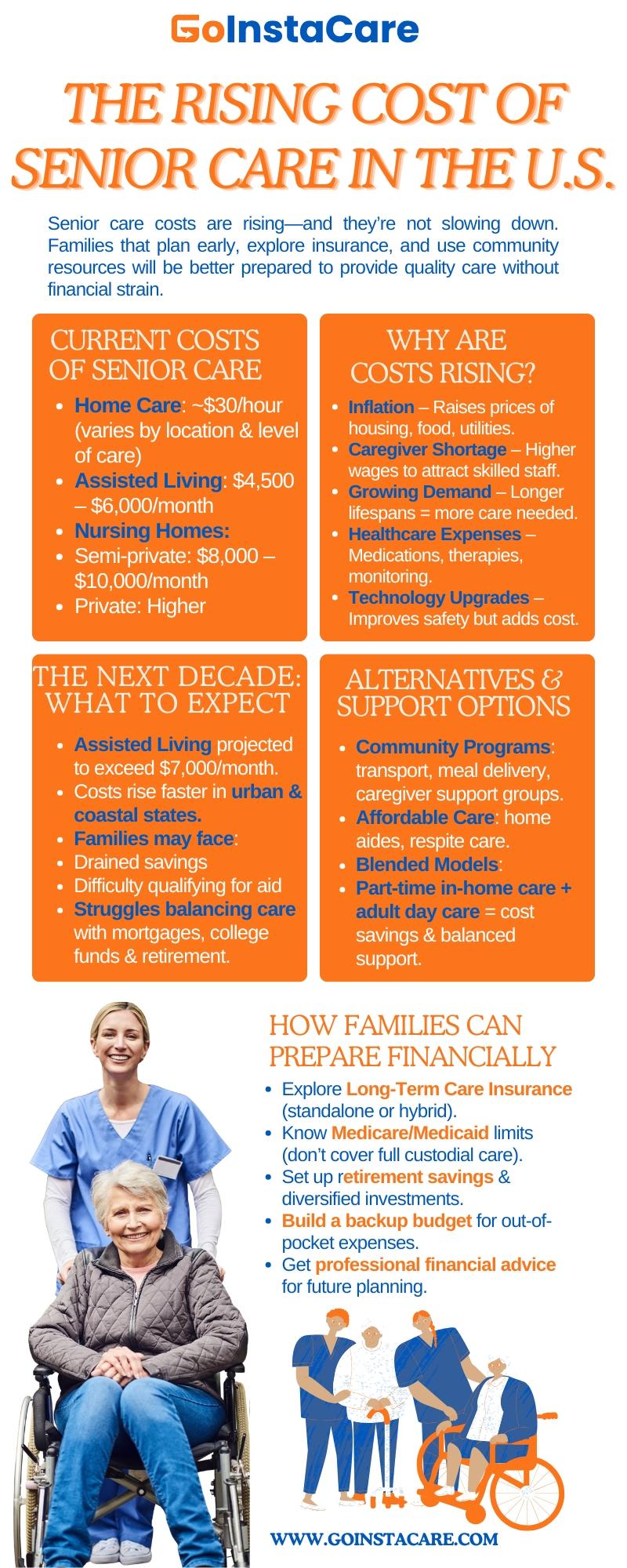
Expected cost increases are significant, with national averages for assisted living projected to exceed $7,000 per month within the next decade. State-level estimates vary, with higher costs expected in urban and coastal regions.
Families' Potential challenges include exhausting savings faster, difficulty qualifying for government assistance, and balancing care expenses with other financial responsibilities like mortgages, college funds, or retirement planning.
The growing importance of planning early cannot be overstated. Families who explore long-term care insurance, savings plans, or caregiver support networks now will be better prepared to handle the rising cost of senior care in the U.S.
The first step in making a budget for senior care is to determine what coverage is available and what isn't. Long-term care insurance is still one of the best tools. It can help pay for nursing homes, assisted living facilities, and home care. Supplemental options, including hybrid life and care insurance policies, are also popular because they give families more freedom.
Medicaid and Medicare do not fully fund long-term custodial care but give partial coverage. Families that only use these services often run out of money; therefore, they must make a backup budget. Out-of-pocket costs are significant for family carers who sometimes give up work or funds to aid their loved ones.
You need to make plans for your retirement to meet your future needs. Setting aside specific amounts of money, spreading investments, and getting financial counsel can all help develop a better safety net. Taking steps early helps families deal with rising senior care costs in the U.S.
Community programs and local services are becoming increasingly crucial for families needing help paying for senior care. Many states and cities offer transportation services, meal delivery, support groups for carers, and programs paid for by the government. These choices help seniors stay active and involved in their communities while making things easier financially and emotionally. They also help families determine how to use the complicated senior care system.
There are also affordable options like home assistants and respite care. Home aides help with daily activities for much less money than nursing home care, and respite care lets family carers take breaks without moving into a full-time facility families like how flexible these services are, especially when they don't need help all the time.
Blended models are becoming more common as families explore choices that work for everyone. When combined with adult day care, part-time in-home assistance provides people with a safe and comfortable place to sleep at night and a monitored place to spend the day. This plan saves expenses and ensures people to get the treatment they require. Families want their seniors to be self-sufficient but still require assistance. These steps work together to reduce the expense of senior care in the U.S.
The average cost of senior care in the United States now is $30 per hour for home care, $4,500 to $6,000 per month for assisted living, and $8,000 to $10,000 per month for nursing homes. Prices vary by region and type of care.
Assisted living costs between $4,500 and $6,000 per month and provides seniors who need more structured care with housing, meals, and basic medical help. Home care costs approximately $30 per hour and gives flexible support in the home.
There are a number of reasons why caring for seniors is so expensive such as increases in prices, higher compensation for caregivers, an aging population, rising healthcare costs, the need to learn new technologies, and an absence of skilled caregivers.
Medicare usually doesn't pay for long-term senior care such as assisted living or aid at home. It mostly pays for short-term medical care or rehab. Families still have to pay for regular care services.
Families can prepare ready for future eldercare by determining out the care needed for the seniors, getting long-term care insurance and integrating their retirement plans with guidance.
Experts say that the cost of eldercare in the U.S. will be increasing because of increased healthcare costs, greater pay for caregivers, and the fact that more and more people are getting older and they need care. When families understand the differences between nursing homes, assisted living facilities, and home care, they can make smart choices with comfort and safety. Long-term care insurance can help you acquire additional support without putting your savings at risk.
Taking action provides families greater control over decisions reducing unexpected expenses and guaranteeing seniors to receive enough care and comfort. GoInstaCare's Instant Quality Care for Your Loved Ones makes it easy to find good care for seniors.
Cities
Houston
Dallas
Austin
San Antonio
Miami
Chicago
Find Here
Companies