
September 09, 2025 • 6 min read
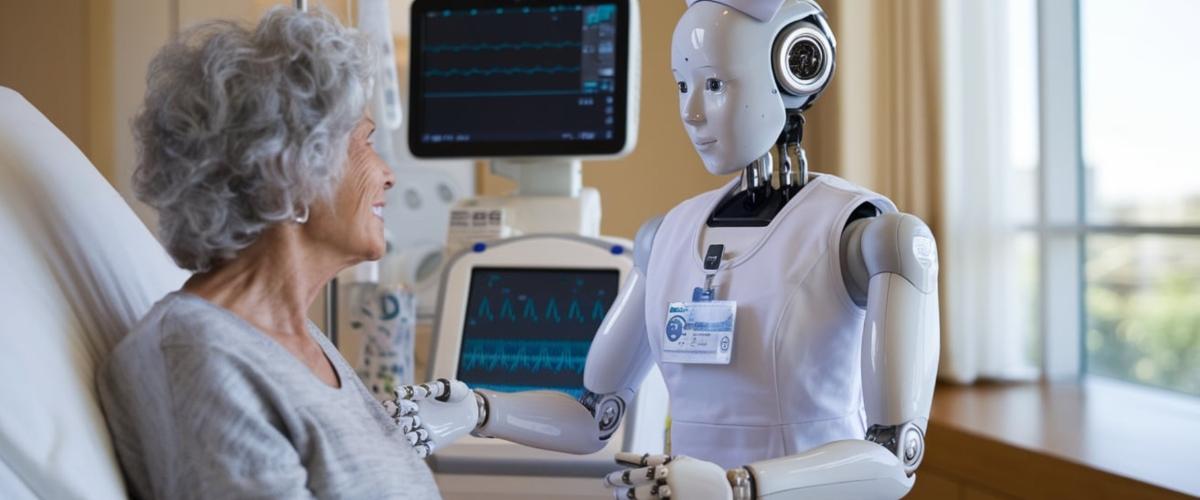
Table of Content
Robots in elder care are no longer just a fantasy as technology changes how seniors get help. Robotics can help with companionship, mobility, reminders, and even keeping an eye on the home for safety reasons, especially when there aren't enough caretakers and costs increase. These improvements aim to help human caretakers, not replace them, by taking care of tedious or routine tasks so that people can focus on their emotional and social relationships. In the future, people and machines will work together to care for people. For example, social robots will help people feel less lonely, while robotic arms will aid with routine activities. Awareness of this development can help families prepare for a new age of elder support.
Robots meant to aid with practical and emotional needs are becoming more common in elder care. Companion robots like ElliQ, an interactive companion, and Paro, a robotic seal, are helping seniors feel less lonely and more connected to other people. Exoskeletons and robotic walkers are mobility aids that make it safer for older people to get around. These devices minimize their chance of falling and provide them with more freedom. It's also becoming more usual to utilize audio reminders and automatic dispensers to remind older people to take their prescriptions on time without help from caregivers. These tools assist older people in better managing their everyday tasks.
Japan is leading the way in using robots to help care for the seniors since its population is becoming older. The country has tried out several care robots in private and nursing homes. These include interactive robots that occupy the thoughts of seniors and lifting robots that assist caregivers. South Korea and several regions of Europe are also investigating robotic solutions to deal with the absence of caregivers and an increasing demand for care. These initial efforts show that robots could be highly useful for making the task of human caregivers better and developing long-term care for older people.
Using robots to care for older people could change how they are helped in several ways. One of the best things about them is that they are always available. Unlike human caregivers, who need breaks and time to relax, robots can always support you. This ensures that older people never feel alone, especially when problems happen at night.
Another benefit is that it makes the work of human caretakers easier. Robots can handle hard or boring tasks and caregivers can spend more time offering emotional support.
Robots are also being designed to help with everyday duties. These technologies include giving out medicine, helping with eating and helping with movement can provide people more freedom and make them less dependent on having someone with them all the time.
Robots are also great at making security checks more efficient. A lot of robotic systems employ sensors and AI to check health parameters and send out emergency warnings. Families can feel relaxed knowing that their loved ones are always being monitored.
Even though robots offer great possibilities, families must consider a variety of factors before letting them care for their seniors. One of the biggest difficulties with robotic care systems is how much they cost. People may find it tougher to adopt because they have to keep paying for maintenance and modifications.
Privacy and security of data are also very important. People are concerned about how safe and protected the private information that many robots gather such as cameras, microphones, and health data. Families can be worried about safety holes or how their personal information is being utilized.
No matter how smart they are, robots can't replace the bond or understanding that people have with each other. Seniors who depend on AI can feel lonely if they don't interact with other people. People need to talk to each other for their mental health and technology can't replace that emotion. Families might not know the importance of human caregivers if they rely on robots. Robots can't take the role of professional care.
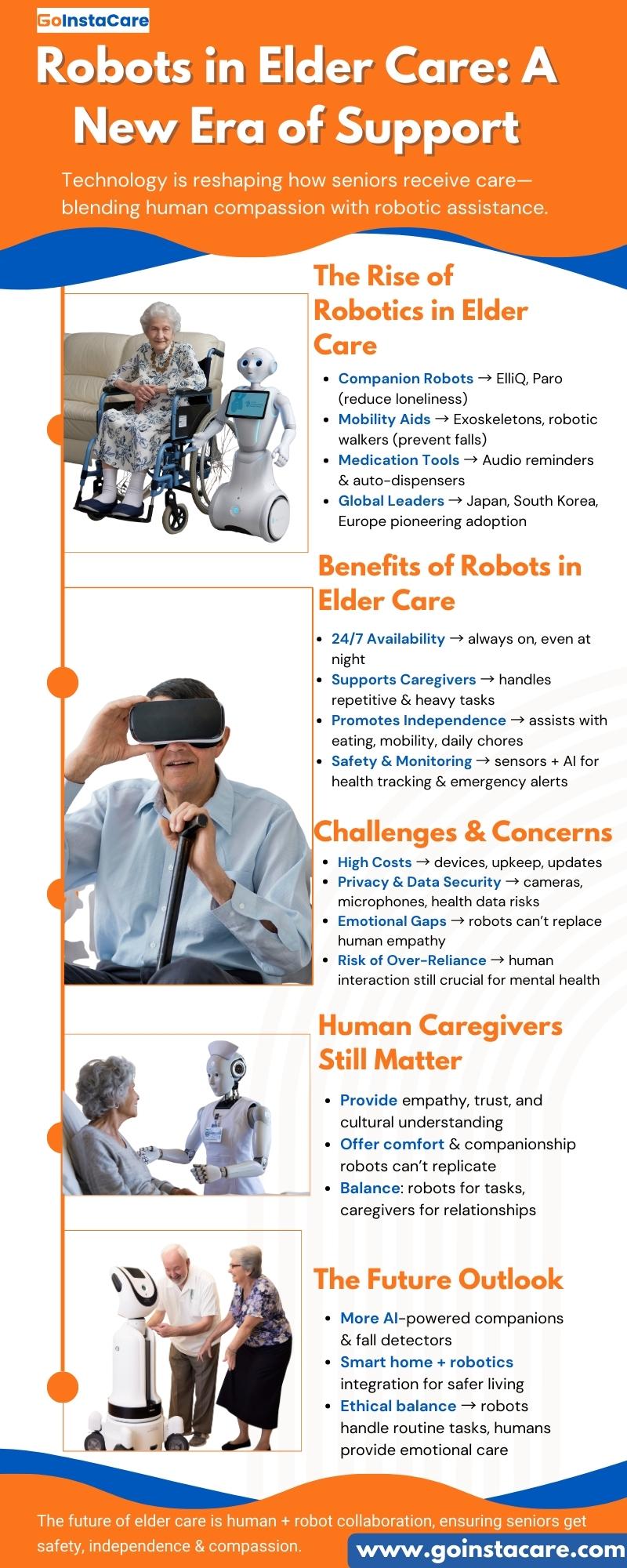
Senior and geriatric caregivers are still very important because they can provide empathy, comfort, and cultural understanding that no machine can. Their job is more than just doing things; it's about building relationships and trust.
Robots can't replace human kindness and emotional support. Caregivers assist seniors to deal with the loneliness and depression that often comes with being old and they offer them to feel loved and respected.
To give care for seniors, human caregivers will focus on kindness, emotional support, and personalized care. Robots execute physical tasks such as transporting and reminding people to take their medicine.
Elder care technology will move toward more advanced AI, robots, and smart home integration. This will make seniors safe. Innovations like interactive robotic companions and fall warning devices are transforming to offer care for the seniors.
However, ethical discussions over empathy and mental health can focus on whether technology should replace human caregivers. Most experts think that the future will be like robots doing boring jobs and trusted caregivers offers empathy and interaction. Families can take better care of their seniors if they plan for both human and technological assistance.
Yes, robots help seniors with companionship and movement, reminding them to take medicine. This is mostly happening in Japan and some parts of Europe. While acceptance is still sluggish, these robots provide seniors more freedom and make caregivers' jobs easier.
Robots can aid seniors with everyday tasks, including lifting, moving around, reminding them to take their medicine, keeping them company, and keeping an eye on their safety. They help older people be comfortable and independent at home while making it easier for caregivers to do their jobs.
Robots can't fully replace human caregivers because they don't have empathy or emotional support. Even when they are helpful for tasks and monitoring still seniors want to communicate with other individuals and receive care from human caregivers.
Elder care robots can cost anywhere from a few thousand to tens of thousands of dollars, depending on their appearance. Most families can't afford high-tech models that have AI monitoring.
In the future, robots will be used more often in caregiving to help with routine tasks and remind people to take their medicine. However, because they require emotional and social support, they will only be used to help human caregivers, not replace them.
In the future, robots will be utilized more and more to assist with physical work and remind them to take medicines. However, the empathy and emotional bond that only human caregivers can offer cannot be replaced by them. Families should think of robots as a method to help, not as a replacement for care. GoInstaCare blends new ideas with reliable caregiving to give your loved ones Instant Quality Care. This helps seniors to feel safe and secure. Your seniors can live happier and more secure if you find the perfect balance between technology and interacting with other people.
Cities
Houston
Dallas
Austin
San Antonio
Miami
Chicago
Find Here
Companies