
December 08, 2025 • 6 min read
Table of Content
One of the best ways for families to help their older parents become more independent and less anxious is to make their home a comfortable place to live. Safety becomes more important as people get older because even small changes in strength, vision, or balance can make simple actions hard. Kids who are trying to establish a balance between love and obligation, as well as older people, find comfort in a safe home. Families feel secure knowing that help is accessible when safety is the most important thing, and parents feel good about their daily routines.
Each aging parent has different needs because their lifestyle, personality, and body change slowly over time. People who have trouble moving around may find it hard to walk on uneven surfaces, stairs, and bend. Changes in their senses of sight, touch, or hearing may make it harder for parents to spot threats that were once easy to spot. It may also be harder to make decisions when you're in a new or rushed situation since your brain works differently, like when you forget things or get confused when you're under a lot of stress.
Families often learn about these developments over time. It could now require a lot of time and care to finish a task that used to take only a few seconds. It's important to protect independence and deal with these changes with care, not take it away. By knowing about these changes, families may make their homes safer and more respectful, which will reduce hazards that can be avoided. When parents carefully set up their house, they may live with confidence, be proud of their daily routines, and stay connected to the place they love.
You don't necessarily have to make big changes to make your home safer. A few simple, planned improvements may make any environment safer. Lighting is one of the best changes you can make. In bedrooms, hallways, and doors, warm, even illumination helps keep people from getting confused and falling. When you're moving around at night, which is when accidents often happen, motion-sensor nightlights can help you find your way.
It's safe to move around the house when there are no things in the way on the walkways. Open drawers, loose wires, or shoes in public places can all be unexpected problems. Families should try to have wide, clear corridors with no unstable decorations or sharp edges. It's just as important to be safe in the bathroom. Non-slip mats, grab bars beside the shower and toilet, and raised sitting options can help keep people safe where the floors are most slippery.
Handrails and stable furniture in both sitting and standing areas can make it safer and more comfortable to sit and stand. Every advancement should encourage independence instead of limiting it. The goal is to lower stress and keep seniors confidence in the places they utilize every day.
There are a lot of risks in the home that are hard to notice and easy to overlook. Cleaning materials that leave behind spills, glossy surfaces, or slippery floors could make things more dangerous than they should be. You can lower this danger by putting down anti-slip mats and using cleaning supplies that don't make things shiny. Another problem is that it's hard to see at night. When your eyesight changes, it becomes tougher to see depth and shadows. Lights near the entryway to the restrooms, stairs, and bed level help people find their way and see well.
You might have to bend, stretch, or climb to get to things you need, such as dishes, medicines, or clothes that you wear a lot. Moving things around in drawers and on shelves so that everyday items are easier to get to could help reduce stress. Families should look at the house from the point of view of an older person and write down any parts that seem hard, unclear, or unsafe. Early modifications reduce parents' stress levels, and families can focus on bonding instead of always watching over their children.
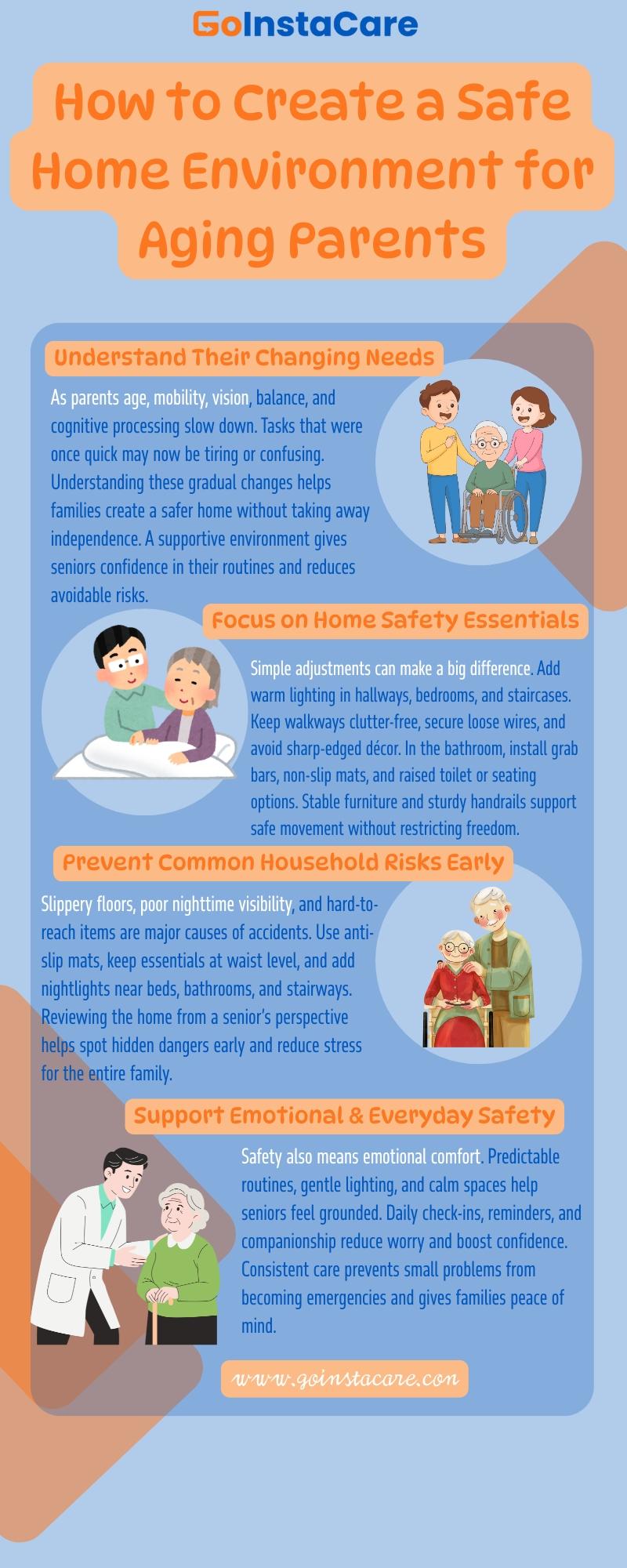
Safety isn't simply about the real world. Having a set schedule gives you stability and makes things more predictable. Having tea at the same table every morning or going for a walk at night are all activities you may do every day that might help you feel peaceful.
Calm and lovely places can make a tremendous difference. The environment feels peaceful because the lights are soft and the loud noises are getting reduced. This helps individuals to relax and think clearly. Parents feel respected instead of dependent when support is delivered with care. Parents should be involved in changes to safety in families. They are more secure inside when seniors realize they are being recognized.
Safety is not something that happens once; it happens all the time. Daily help makes sure that problems don't turn into accidents. Supportive supervision during daily tasks, including cooking, dressing, and bathing can reduces the danger that can be avoided. Gentle reminders for appointments, prescriptions, and hydration help people stick to their healthy routines. Emotional comfort is just as vital. Knowing that someone is there makes you more independent and less worried.
Consistent attention creates stability. Seniors feel like their lives are stable and normal, and families have fewer emergencies. Consistent help lowers stress and strengthens relationships.
GoInstaCare believes that safety and respect are two sides of the same coin. Many families want to help their elderly parents, even though they have to deal with work, responsibilities, and distance. Supportive caregivers are very important because they watch over each child every day with empathy and care that is right for each parent.
Caregivers who have been trained do more than help with chores. They talk to each other in ways that protect their emotional health, notice subtle changes, and help keep things safe. Caregivers show respect and love to seniors when they help them move around or remind them of their routines. A safe house is more than just a place to live; it's a place where everyone in the family may feel secure.
Add non-slip mats, clean up the mess, and make the lights better. These little changes make things safer right away and lower the chance of falls and confusion at home.
Daily routines make things more predictable, which cuts down on confusion. Having regular times for meals, medicine, and exercise builds confidence and cuts down on the number of times when mishaps usually happen.
Emotional safety boosts self-esteem, reduces stress, and helps people to be independent. Seniors are more inclined to ask for help and talk about their needs when they feel supported and appreciated.
Caregivers provide constant supervision, gentle reminders, and emotional support. Their presence makes elders feel less alone, keeps them safe, and makes the place tranquil and secure for them.
Frequent falls, trouble getting to things, not being sure what to do at night, and being unsure about moving around the house are all signals that safety changes may be needed.
Providing a secure environment for elderly parents respects their freedom, life, and memories. Enhancements in safety demonstrate concern, not command. Every deliberate change promotes confidence and helps avoid ambiguity. Families are crucial, but they don't have to do it by themselves. When parents feel encouraged rather than watched over, emotional comfort increases. Seniors can continue to live with pride because of a combination of thoughtful improvements and sympathetic care. Home should continue to be a cozy and secure place. That is made possible by safety.
Cities
Houston
Dallas
Austin
San Antonio
Miami
Chicago
Find Here
Companies