
December 08, 2025 • 5 min read

Table of Content
Parents may find it distressing to hire a sitter because safety, trust, and emotional comfort are so vital. When you leave your child with a stranger, you may start to worry, have questions, or want to protect them. Parents feel this way because they want to make sure the person who lives with them respects their beliefs, habits, and restrictions. Safety is the most important thing when parents aren't around to watch their kids. This is why getting ready in a way that boosts your confidence is so vital. Knowing what to look for and what to say ahead of time helps turn anxiety into clarity. Prepared sitters who respond better and parents who feel more at ease are the first steps toward a better caregiving experience.
Screening candidates in a meaningful way is the first step in selecting a sitter. Parents should learn about the sitter's past work with kids of different ages and how they deal with situations that aren't clear. It's crucial to know how to talk to kids because they desire clear, gentle, and calm advice. Learn how they handle fights between kids, kids who don't want to go to bed, or kids who get angry.
Talk about how they handle routines, including whether they follow directions closely and are consistent. Safety is very important. These early talks help parents figure out if their kids are ready, mature, and responsible.
Connection is more essential than experience when it comes to compatibility. Parents can see how the babysitter talks to the child and how the child naturally behaves. Certain children get excited while others just watch. The child shouldn't feel any pressure. The caregiver's response to affection or excitement shows that they are calm and emotionally intelligent. Gentle limitations, paying attention and encouraging participation are all instances of cooperation. When the child feels safe, the overall caregiving relationship gets better.
Parents should go over crucial safety information before they leave. Make sure that the address, phone numbers, and backup contacts are easy to find. Don't expect the sitter to remember everything you say regarding your child's allergies, medication schedules, and dietary requirements. Explain sleep methods, comforting behaviours, and emotional triggers to help the youngster feel comfortable even when things change. It's also crucial to have rules about things like screen time limits, outdoor borders, off-limits areas, and who is allowed in the house. Kids feel safer when sitters are more sure of themselves. Clear guidelines help sitters act with confidence and responsibility.
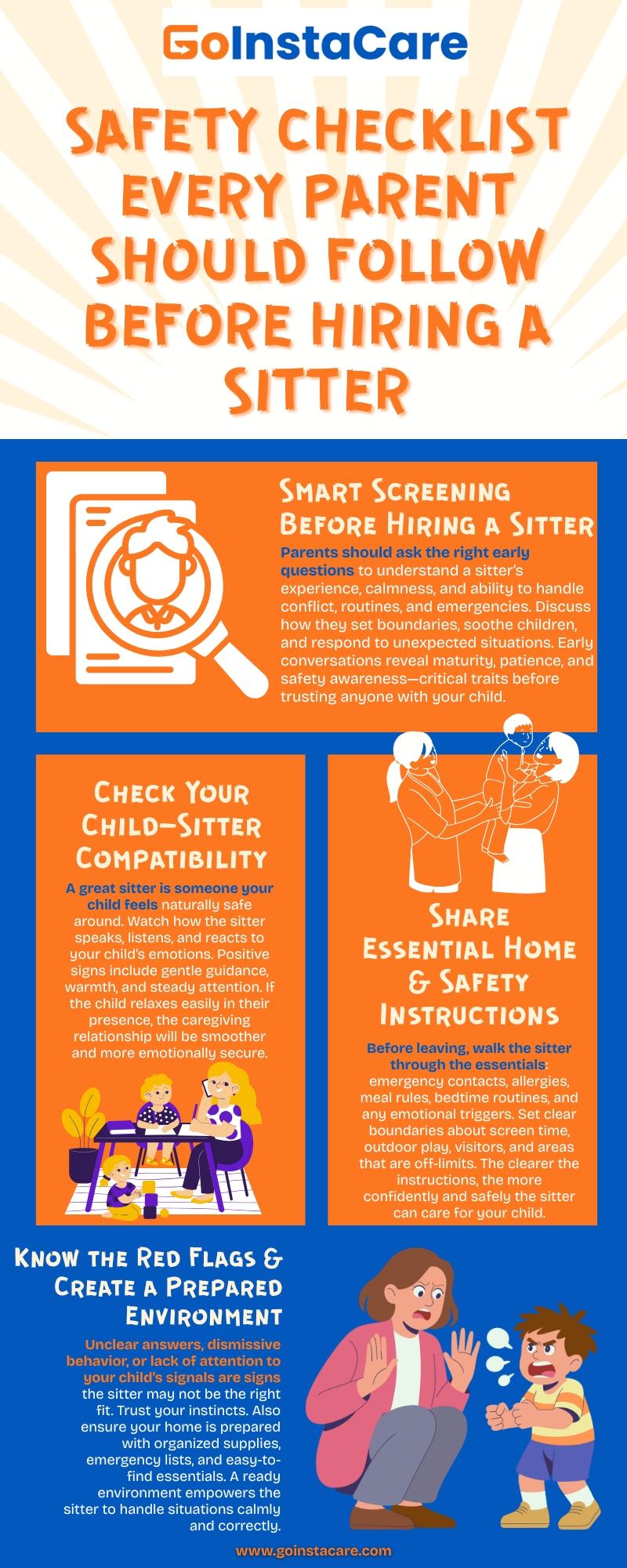
If a babysitter has specific qualities, they might not be the best choice. Not answering questions or giving unclear replies are all negative ways to talk that might put people in danger. People could worry about how the child will act when they aren't being monitored if they ignore the child's emotional warning signs. When something doesn't feel right, parents should trust their instincts. A safe caregiver doesn't just show respect once in a while; they do it all the time. It is easier to think about things again early on than to solve a bigger issue after trust has been shattered.
Every individual is more likely to succeed well when the atmosphere is helpful. Well-organized supplies like diapers, snacks and pajamas can help avoid mistakes. The caregiver may have to rely on clear instructions if they can't get in touch with the parents to ask inquiries. It should be easy to find secure items like flashlights and emergency lists. These individuals are more confident and can respond more quickly when things go badly. Getting prepared for the child's short-term care makes the change easier because it makes them feel safe and comfortable.
GoInstaCare says that getting ready for anything lowers stress and makes things clearer, which helps parents, sitters, and kids get along better. Families have more trust in the process when expectations are made clear. Sitters feel valued when they are provided the right information and environment. Preparedness helps kids become emotionally stable since routines are predictable even when parents aren't there. GoInstaCare says that openness, checking for compatibility, and communication are all important parts of giving care. When families and sitters can talk to each other clearly, everyone has a safer, more comfortable time.
Parents should ask about experience, safety training, how well they handle routines, and how they deal with problems. You can have a better idea of when to schedule by understanding how they talk and how they solve problems.
Please take attention to how they behave when they first meet an individual, the way they pay attention, and how kind they are. A qualified caregiver works at the child's schedule that helps them to feel safe.
Parents should provide children with emergency contacts, sleep routines and rules for the house. Written guidelines help the caregiver to make safe decisions.
Look out for ambiguous answers, impatience, behaviour that is distracted, or answers that are contemptuous. These indicators could mean that the sitter is not dependable, emotionally aware, or responsible.
Preparation gives things structure and makes them clear. Sitters can respond quickly, stay consistent, and make the caregiving experience smoother with easy-to-find supplies, written instructions, and safety gear.
When parents use screening and preparation as a guide, it is easier for them to find a babysitter. To keep the child safe, ask the correct questions and remain an eye on connection. Communication and trust become an essential part of the child's safe routine. The goal is not to be perfect but to work together that is only possible with compassion.
Cities
Houston
Dallas
Austin
San Antonio
Miami
Chicago
Find Here
Companies