
August 19, 2025 • 6 min read

Table of Content
Social Security doesn't directly help caregivers, but some related programs might help them in certain instances. Traditional Social Security retirement and disability payments are meant for individuals, not family members or private caregivers. If you qualify, Social Security Disability Insurance (SSDI) or Supplemental Security Income (SSI) benefits may sometimes help pay for care costs indirectly. In certain areas, Medicaid programs add to Social Security so family caregivers can get paid. Families need to know what Social Security can't do, so they don't rely on it alone to pay for caregiver payments.
Social Security doesn't directly pay caretakers, but specific programs can help families. The goal of regular Social Security disability and retirement benefits is to help the individual who earned them, not to pay family members or private caregivers. This means that Social Security can't just pay a caregiver for the care they give.
However, people who get Social Security Disability Insurance (SSDI) or Supplemental Security Income (SSI) may utilize their monthly benefit payments to help pay for care at home if they want to. Even though this isn't direct caregiver pay, it can help with some financial stress. Family caregivers may also be able to get paid for their services through various federal and state programs that add to Social Security, like Medicaid waiver programs.
The amount of help depends on where the person lives and what medical needs they have, since these programs are not the same in every state. Families who are seeking approaches to pay for caregivers should realize that combining Social Security benefits with state-funded programs could make it easier.
The government launched a program called Social Security to support retired individuals and those with impairments. Two components of this system are directly related to the requirements of caregivers: Supplemental Security Income (SSI) and Social Security Disability Insurance (SSDI). SSDI supports persons who have worked and paid Social Security taxes but can no longer work because of a disability. On the other hand, SSI gives people who are aged, blind, or disabled who don't have a lot of money or resources monthly benefits.
These benefits can help pay for care at home when you need it. People who earn SSDI or SSI payments may use some of that money to hire a caregiver, like a family member or a professional. The money isn't meant to be used as direct caregiver payment, but it does provide people the freedom to take care of their own personal requirements. You need to know how SSI and SSDI are suitable for caring in order to arrange for long-term assistance.
State Medicaid Waiver Programs: While funded separately, these programs are often tied to SSI eligibility and can provide payment to family caregivers who meet state requirements.
Representative Payee Programs: Caregivers may manage a beneficiary's Social Security funds for essential needs, but they cannot legally pay themselves for caregiving services.
Dual Eligibility Options: Veterans or family members who qualify for Social Security and other federal programs may access caregiver support through additional benefit channels.
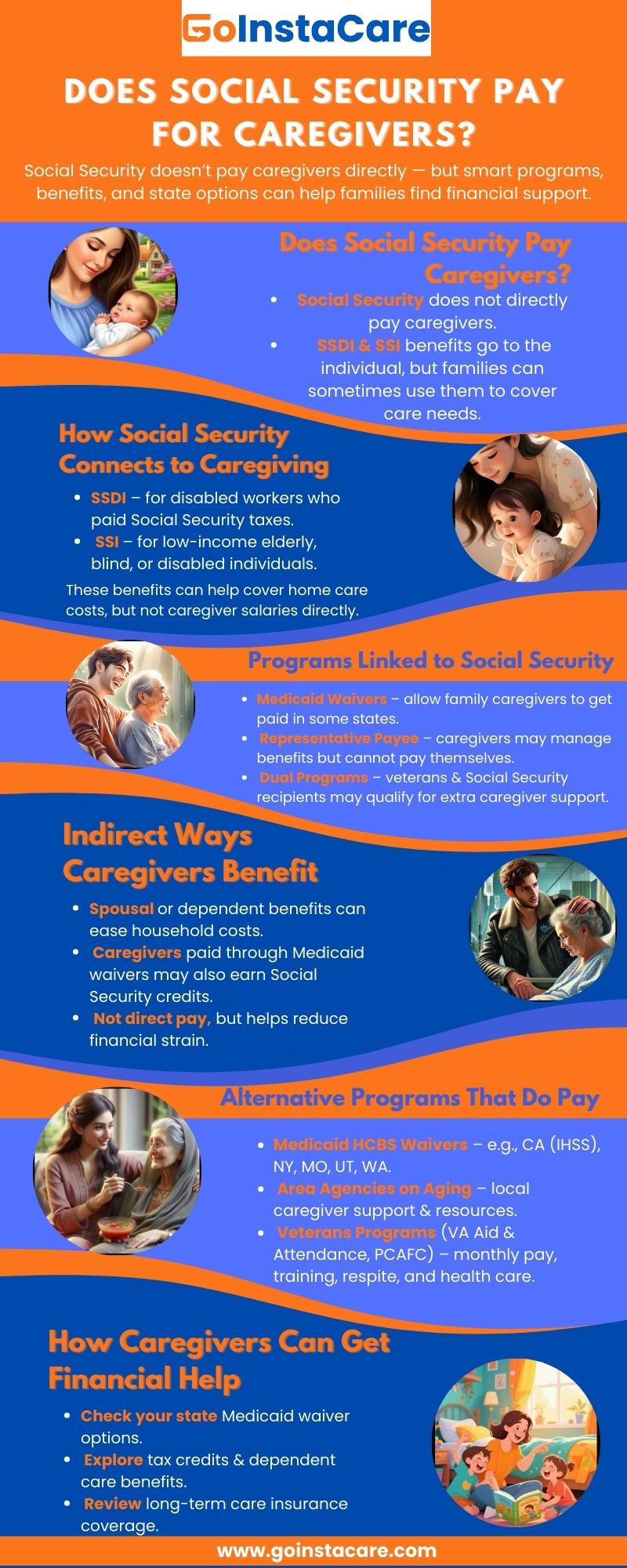
Social Security doesn't pay caregivers directly but there are many programs that can support them indirectly and make things easier. For instance, if the caregiver is eligible, their spouse or a family member may be able to obtain money from Social Security through spousal benefits or family benefits. These benefits can help pay for household costs while you care for someone, but they are not payment for caregiving. In the same way, SSDI Dependent Benefits can help the spouse or child of a disabled worker on SSDI.
The extra money could support the family caregiver with their normal daily tasks. Another thing to think about is that caregivers who get a taxable wage and are paid through programs like Medicaid waivers may also be eligible to earn Social Security employment. This is excellent for caregivers in many ways than just making money at the moment.
State | HCBS Waiver Name / Program Caregiver | Payment Details |
California | In-Home Supportive Services (IHSS), HCBA Waiver, and MSSP | Allows payment to family caregivers who provide non-medical care at home |
Missouri | Aged & Disabled Waiver (ADW); Structured Family Caregiving Waiver (SFCW) | Family caregivers may be paid under self-directed personal care assistance models |
New York | OPWDD 1915(c) Waiver – Family Support Services, Respite | Offers caregiver reimbursement and respite under Medicaid HCBS Waiver |
Utah | HCBS ID/RC Waiver | Supports a self-administered waiver model where families can hire caregivers they trust |
Washington (State) WA | Cares Fund (public long-term care insurance) | Pending from July 2026; covers home caregivers, including family members, through state-funded insurance |
There are additional systems besides Medicaid HCBS waivers that may pay caregivers. Area Agencies on Ageing (AAA) offer counselling, assistance, and occasionally payment for recognized caring services or products, primarily through support networks for older Americans. These groups are essential places for caregivers to find aid in their area.
The VA Aid & Attendance program gives veterans and their families extra money to help with the costs of caring for them and their VA pensions. The Program of Comprehensive Assistance for Family Caregivers (PCAFC) also gives qualified caregivers training, time off, access to health care, and a monthly payment.
Choose Instant Quality Care for your loved ones if you need additional support and want to work with caregivers you can trust. This platform might make it easier to identify caregivers who are licensed and suitable for you.
A lot of states have Medicaid waiver programs that pay family members to support them at home. The first thing you should do as a caregiver is look into your state's Medicaid alternatives to seek financial help. It is important to know the restrictions in your area because these programs are not the same. In addition to Medicaid, caregivers can also check into tax benefits and credits that could help them pay for things on their own. You can reduce your taxes by claiming a dependent care credit for an instance.
You might additionally verify long-term care insurance payments. Families can utilize the money that certain insurance plans cover to pay caregivers directly for care at home. Social Security doesn't normally pay caregivers, but several state programs, tax credits, and private insurance can provide caregivers with money and make their tasks easier.
Social Security doesn't pay you directly to care for a family member. Some Medicaid waiver programs and state decisions tied to Social Security may allow family caregivers to be reimbursed.
A Representative Payee is someone Social Security has chosen to manage benefits for recipients who can't handle their money. They ensure they have enough money for basic needs, but can't legally pay for their treatment.
Yes, beneficiaries may pay a caregiver with their SSI or SSDI benefits. Since these monies are intended for necessities, their distribution necessitates careful budgeting.
No, Social Security does not have any programs that directly pay caregivers. Instead, it gives benefits to qualified individuals. Family caregivers may be paid through state or federal programs in some cases.
Caregivers can get additional funds from Medicaid HCBS waivers, Veterans Aid & Attendance, and state-funded programs. These programs could help pay for treatment by giving out payments or stipends.
Medicaid waivers and veterans benefits are two programs that may help caregivers with money, even though Social Security doesn't pay them directly. You should contact your local Medicaid office to find out if you can qualify. GoInstaCare connects families with verified and secured caregivers so they may get trustworthy support. This gives you peace of mind that your loved ones will get high-quality care.
Cities
Houston
Dallas
Austin
San Antonio
Miami
Chicago
Find Here
Companies