
January 05, 2026 • 6 min read

Table of Content
Every child's growth process has emotional ups and downs, including those who have special needs. These times often happen following changes in habit, emotional stress, or learning shifts. Because actions speak louder than words, children with special needs may be more aware of setbacks. A child could become introverted, irritated, or have problems with things they used to be able to do well. This doesn't mean that progress has been lost. It means that the child is learning something new or hard. Families may stay calm instead of being scared when they perceive problems as chances to talk about them. With continuous, calm care and emotional safety, kids may find balance and go at their own pace.
Children with special needs who have emotional problems may show temporary changes in their behaviour, habits, or emotional responses. A child could go back to old habits, fight against doing things that are part of their routine, or have trouble with skills that used to be easy for them. Families may be worried about these changes, but they are usually only a sign of emotional processing and not real regression.
Kids may be more impatient, have emotional outbursts, or retreat when things are unpleasant. This happens because their nervous system is trying to deal with stress, change, or unmet emotional needs. Some youngsters may become more reserved, while others may show major changes in their behaviour. Both replies suggest that the person hasn't grown up yet, not that they have a difficulty with self-control.
Setbacks don't undo progress. Skills are not lost, but they are harder to get for a short time. Like adults, kids may have feelings that affect their confidence and ability to focus. When emotional safety is restored with consistency, reassurance, and gentle help, kids often go back to how they were before. When caregivers see failures as a normal aspect of growth, they may respond with calm compassion instead of feeling stressed or let down.
Children with special needs frequently have emotional setbacks as a result of changes that make them feel unsafe. When consistency is a source of comfort, even little changes in routine or surroundings might feel overpowering. Unexpected occurrences, altered schedules, or altered environments might cause emotional reactions that appear to be regressive.
Another frequent cause is sensory overload. Strong textures, crowded areas, bright lights, and loud noises may all overload a child's nervous system. Emotional resilience may decline as a result of this happening frequently, which may cause heightened responses, retreat, or frustration.
Emotional stress might also be brought on by unfamiliar caregivers or novel social circumstances. Children may find it difficult to feel safe without trust, which takes time. Another factor is emotional tiredness. Children may have fewer emotional resources available to them after spending energy coping during the day, which increases the likelihood of setbacks.
Emotional failures may have a big effect on a child's self-esteem and sense of safety. When kids perceive a change in their growth, they may wonder if they are doing things well or feel unsure about their surroundings. Because of this uncertainty, they may become more cautious, withdrawn, or emotionally reactive. The youngster can suddenly find it hard to do things they used to do easily and need additional reassurance to feel safe. Repeated failures without help over time might make people lose faith in systems that used to work.
Parents and other caregivers frequently get stressed out. Caregivers may become tired when trying to do everyday tasks while constantly giving emotional support. Families can go through challenging circumstances together with knowledge and assistance to those who provide care.
Caregivers initially decrease their expectations to assist an individual who has experienced a mental crisis to feel happier. The emotional growth of a child might cause progress to stop or set around for some time.
It is essential to constantly assure an individual that everything will be handled in a relaxed strategy. When caregivers work with GoInstaCare, their primary objective is to be there for individuals emotionally and comfort them without attempting to heal their feelings too soon.
It is just as important to respect emotional signs and boundaries. Some children need a separate place to be themselves while others need to be among other individuals. GoInstaCare puts compassion by offering children personalized attention that makes them feel protected when they are having trouble with their feelings.
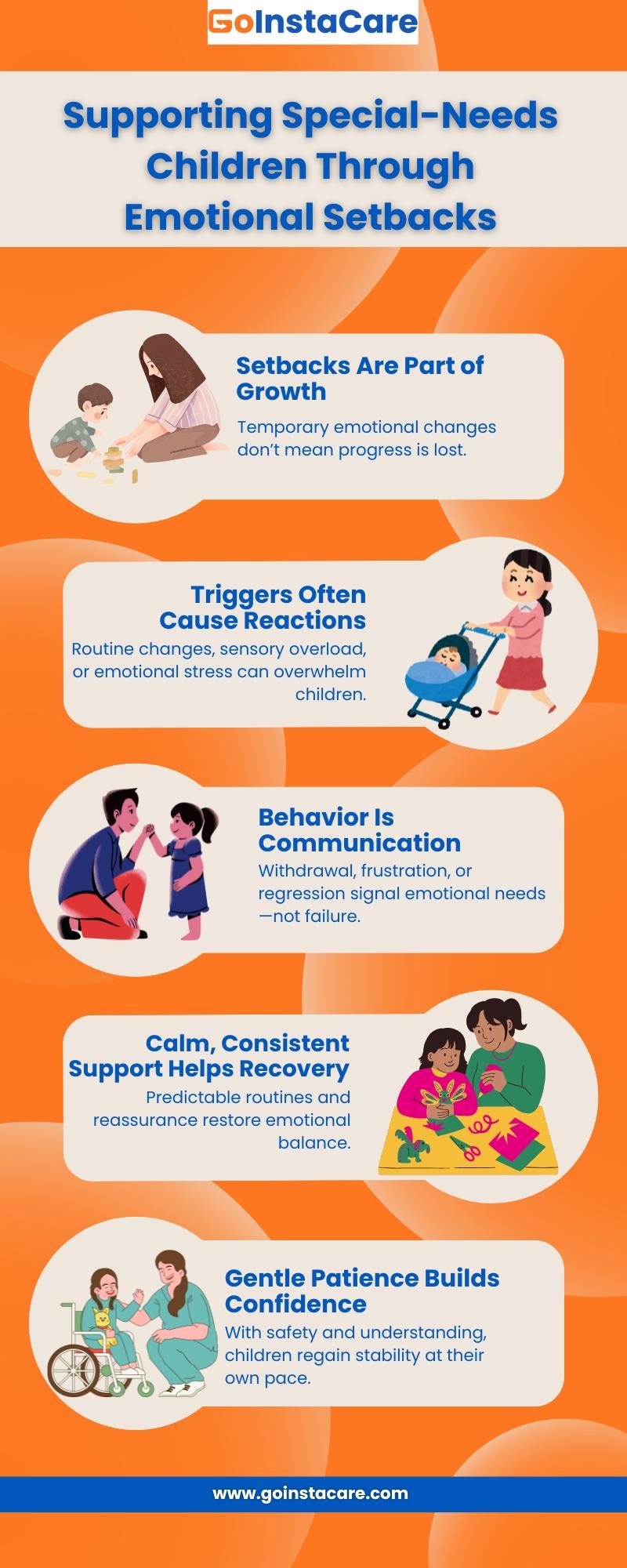
Children that follow schedules are not concerned when issues aren't evident because they understand what to look for. When children do their tasks in a predictable and consistent way, they feel greater possession of their feelings.
You don't have to follow an exact schedule to maintain your habits. It includes maintaining comfortable routines like scheduled meals. These frequent interactions can help people stay emotionally stable when things are uncertain. GoInstaCare caregivers help children to feel safe and stable by offering them constant support every day.
Parents are very important in helping kids with special needs get over an emotional setback. During this time, it's really important to be patient. Children need time to feel understood instead of being rushed back into expectations. When kids get emotional validation, as when their anger or sadness is gently acknowledged, they feel more at ease saying things they can't always put into words.
Instead of reacting straight away, parents would be smart to watch patterns. One hard day doesn't mean there's a big problem, but changes to habits, sleep patterns, or behaviour that happen over time can be useful. Parents can change the help they give without adding to their stress or anxiety by keeping an eye on these trends over time.
It is just as essential to communicate to caregivers in a manner that makes feel natural. Children feel safe and comfortable when their parents and other caregivers work together. GoInstaCare assists families by offering caregivers and helps families to get on the right path and feel better about themselves.
Caregivers at GoInstaCare emphasize developing strong relationships based on trust and understanding. Children are more secure if issues are hard when answers are clear and trustworthy.
Caregivers who are always there for children develop the ability to read their emotional signs and comfort signs. This allows them to respond with compassion. Children benefit from having this constant while they work on developing their confidence. GoInstaCare creates a safe environment for children to recover naturally. Children may go at their individual schedule and giving gentle support.
Emotional setbacks happen when a child becomes less secure physically when they have made improvements to their emotions before.
Setbacks happen because growth doesn't always go in a direct path. Even when things have been getting better for a while or feelings of exhaustion can make it hard to deal with it.
Caregivers should be calm, limit their expectations, stick to routines, offer comfort, and respect the kid's emotional boundaries. This will help the youngster feel protected instead of being rushed to get better.
Parents may acknowledge feelings, avoid blaming or panicking, look for trends, keep communication open, and work closely with caregivers to provide their kids with continuous, dependable emotional support.
Families should consider receiving extra support when things keep going wrong or put too much stress on the people who care for them. This might indicate that emotional support could help keep therapy on track.
Children with special needs that are going through tough feelings can have difficulties with emotions as they grow older. When families and caregivers deal carefully and effectively, losses hurt more as time passes. If children are in the correct emotional condition and remain going without sacrificing that they have developed.
Cities
Houston
Dallas
Austin
San Antonio
Miami
Chicago
Find Here