
November 20, 2025 • 6 min read

Table of Content
Families in the United States spend a significant amount of money every day to care for their elderly parents. They sometimes spend at least $4,000 a month to ensure their parents' safety. However, the person taking care of them might only earn $12 an hour. The senior care business has quietly developed one of the most unfair labor systems in the country. This blog examines the reasons behind this disparity, who benefits from it, and why those who work the hardest often receive the least amount of compensation.
Families often assume that high prices indicate caregivers are being paid well. But the truth is considerably more complicated. Even when families want to pay caregivers more, the cost of senior care has increased faster than most household incomes, making it difficult for them to afford care. Every year, the number of older people is increasing, and there aren't enough staff to meet their needs. Shortages raise costs, but not for the people who do the work. Instead, the money is wasted long before it reaches the caretaker.
Traditional care agencies serve as intermediaries, handling tasks such as hiring, payroll, insurance, scheduling, and client service. These services are important, but they complicate matters for the individuals who manage them. Agencies may take 40% to 60% of each billed care hour. The caregiver only gets $12, even though the family pays $32 an hour. This imbalance is not the fault of families or caregivers; it is a systemic issue. Even though they don't lift, feed, or give emotional support to older people every day, the middle layers get most of the pay.
To run a care business, you need insurance to ensure that everyone is following the rules, to conduct background checks, to supervise training, and to coordinate staffing at the last minute. Every cost increases the total amount that families have to spend. The problem isn't that these costs exist; it's that they continue to rise while caregiver pay remains unchanged. When prices rise, CEOs in other businesses invest in their workers. In senior care, on the other hand, wages remain low to protect profits even when costs increase. Families have to pay more each year as a result, yet caregivers often struggle to afford necessities such as food, housing, and transportation.
Caregivers still earn some of the lowest incomes in the service sector, despite having some of the most demanding jobs. Being told you're wrong stings. Caregivers take care of a lot of things, like medication, mobility, safety, memory issues, loneliness, and emotional crises. However, wages have remained stagnant for decades, as the care system was built around generating profits rather than delivering quality service.
Profits are prioritized over overhead in many traditional care models, with caregivers coming in last. Agencies often fail to increase caregiver pay at the same rate as they raise their hourly rates. As a result, workers' wages remain almost constant while the cost of living increases. Some organizations prioritize market competition in their pricing strategies often at the expense of their employees' requirements. This approach develops a culture where caregiver salaries are seen as a cost to be reduced rather than an useful investment.
Caregiving involves more than simply physical work; it is a tough and emotionally challenging profession. Emotional work includes comforting senior people and dealing with the emotional challenges of aging and loss. Compensation and job postings rarely capture this level of emotional investment. The basic issue is clear and caring is often undervalued because society is unable to put a financial value on emotional labor.
The effects of caregivers getting low wages are both quick and long-lasting. People often have multiple jobs that can result in stress and exhaustion. As caregivers manage their own difficulties and the emotional requirements of the seniors they care for, they often get emotionally exhausted. This situation leads to constant stress for workers not because they lack commitment but the system makes it difficult for them to enjoy stable and respected lives.
Families often feel confused or guilty when they discover how little caregivers are paid. But families aren't the problem. They often give as much as they can and wish that more money went directly to the caregiver. The real issue is a care ecology that was established decades ago, long before emotional labor became recognized or expected. Caregivers and families agree. One has too much money. The other person makes less money. Both of them are victims of the same old system. Recognizing this shared issue facilitates the removal of blame and the focus on solutions.
GoInstaCare says that the caregiving sector will only grow if caregivers and their families are treated with respect. The platform has a structure that makes it easy for families to see accurate prices with no hidden fees and allows verified caregivers to keep more of their earnings. Tools for identity-blind matching make sure that everyone has a fair chance and help caregivers find jobs without bias. RAMA supports families by providing them with information that makes them feel safe and trustworthy without increasing prices. The platform aims to empower those who care for others daily by providing them with more options for emergency care and making it easier to see how earnings are distributed. When family and caregivers live in a healthy environment, seniors have better experiences. Fair pay and treatment make this possible.
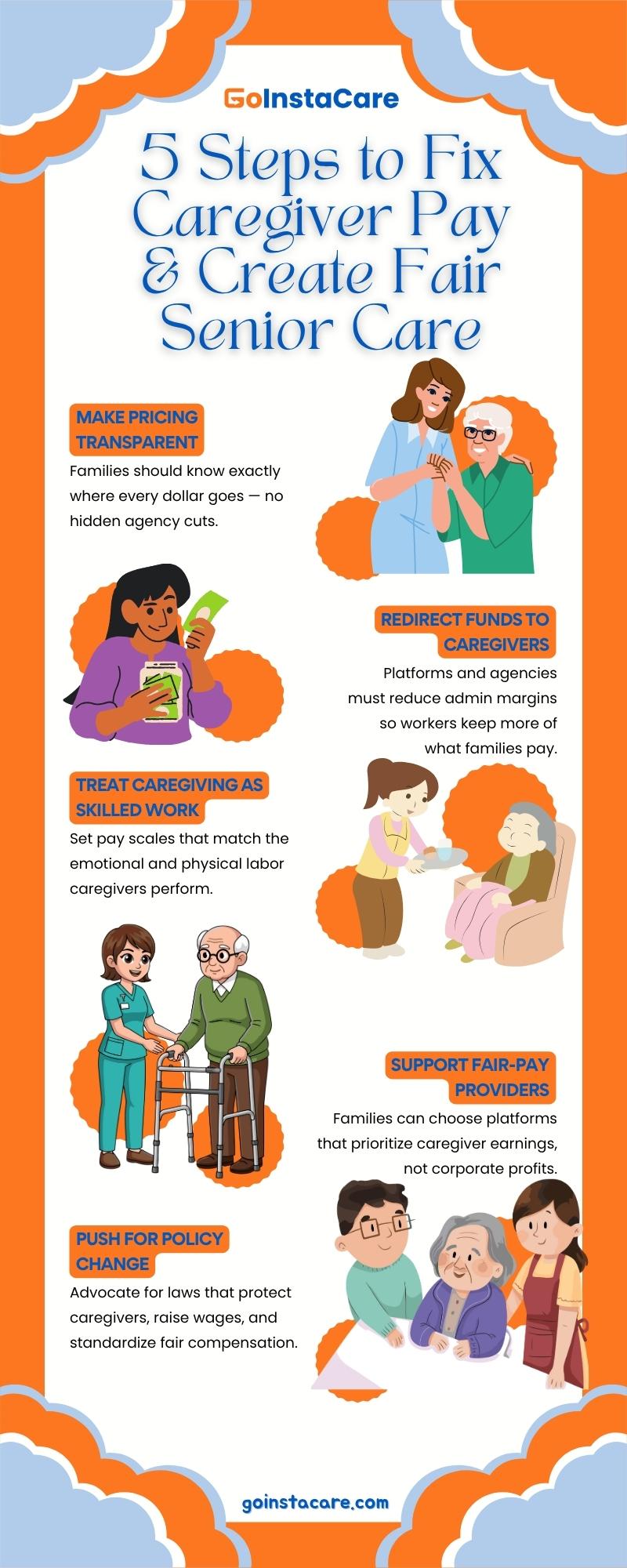
To transform the caregiving economy, we require a combination of platform accountability, cultural shift, and regulatory reform. Lawmakers need to recognize that caring for others is a vital job and establish compensation scales that account for the emotional and physical stress associated with the role. People need to stop seeing caregivers as entry-level workers and start seeing them as skilled professionals who keep families together. Technology platforms need to create clear pathways for more funds to flow from administrative levels to caregivers. Families can help bring about change by choosing providers that follow fair-pay principles and being honest with caregivers regarding remuneration. Real change occurs when everyone in the ecosystem values both affordability and dignity equally.
The cost of senior care is increasing due to higher demand, additional layers of administration, and operational expenditures that drive up prices before caregivers are even paid.
Caregivers are still underpaid due to outdated economic structures, inadequate wage standards, and a system that undervalues emotional and physical work.
Low pay causes burnout, high turnover, and emotional exhaustion, all of which make things less stable and consistent for seniors.
Families can pick clear platforms, ask about how pay is divided, foster cultural understanding, and encourage honest talks about equitable pay.
Taking care of someone is a human, skilled, and profoundly felt thing to do. It deserves a lot more than minimum wage. Families shouldn't struggle to afford the care they need, and caregivers shouldn't have to sacrifice their own safety to care for others. The current system keeps people who really have the same aspirations, worries, and exhaustion apart. When society invests in fair pay, open pricing, and respect for emotional work, everyone benefits: families, caregivers, and seniors. For the future of senior care, everyone needs to agree that they should appreciate those who make aging safer and more dignified.
Cities
Houston
Dallas
Austin
San Antonio
Miami
Chicago
Find Here
Companies