
July 16, 2025 • 6 min read
Table of Content
You can become a registered caregiver for a family member in the U.S., especially if they need long-term care because of their age, illness, or handicap. Some places that pay for services through programs like Medicaid only demand a little training or certification, but not usually a medical background. The process usually starts with a short training session on how to care for someone, followed by background checks and, in some instances, certification in first aid or CPR. Once certified, you can get paid through veterans' benefits or state programs. It's a smart way to give care and get rewarded for the time and effort you put into it.
A certified family caregiver has completed the required training or education to safely and effectively care for a loved one. "Certified" doesn't always mean having a medical license. It usually means finishing a short course that teaches you how to communicate, respond to emergencies, help with mobility, care for yourself, and keep yourself clean. Some states also require people to be certified in CPR or First Aid. This basic training helps families take care of aging parents, disabled family members, or seriously ill spouses at home.
You often need to be certified when you apply for paid caregiving jobs through Medicaid, veterans' programs, or private health plans. These programs demand proof that the caregiver can safely conduct routine tasks, including feeding, bathing, reminding individuals to take their prescriptions, or utilizing a mobility aid. It also protects both the care recipient and the provider by setting clear standards for care. In most jurisdictions, you can get financial help if you are certified, especially if you use a consumer-directed care model, which treats the family member as a professional caregiver.
Age and residency: To become a certified caregiver for a family member, you must be a U.S. citizen or a lawful resident at least eighteen years old.
Eligible relationships: Most state and federal programs allow spouses, adult children, siblings, parents, step-relatives, or close acquaintances to become paid and trained caregivers.
Care recipient's condition: The person getting care must have a long-term illness, disability, injury, or condition that comes with age that makes it hard for them to do things like dress, wash, move around, or cook. Medical records may be needed to show that you need something.
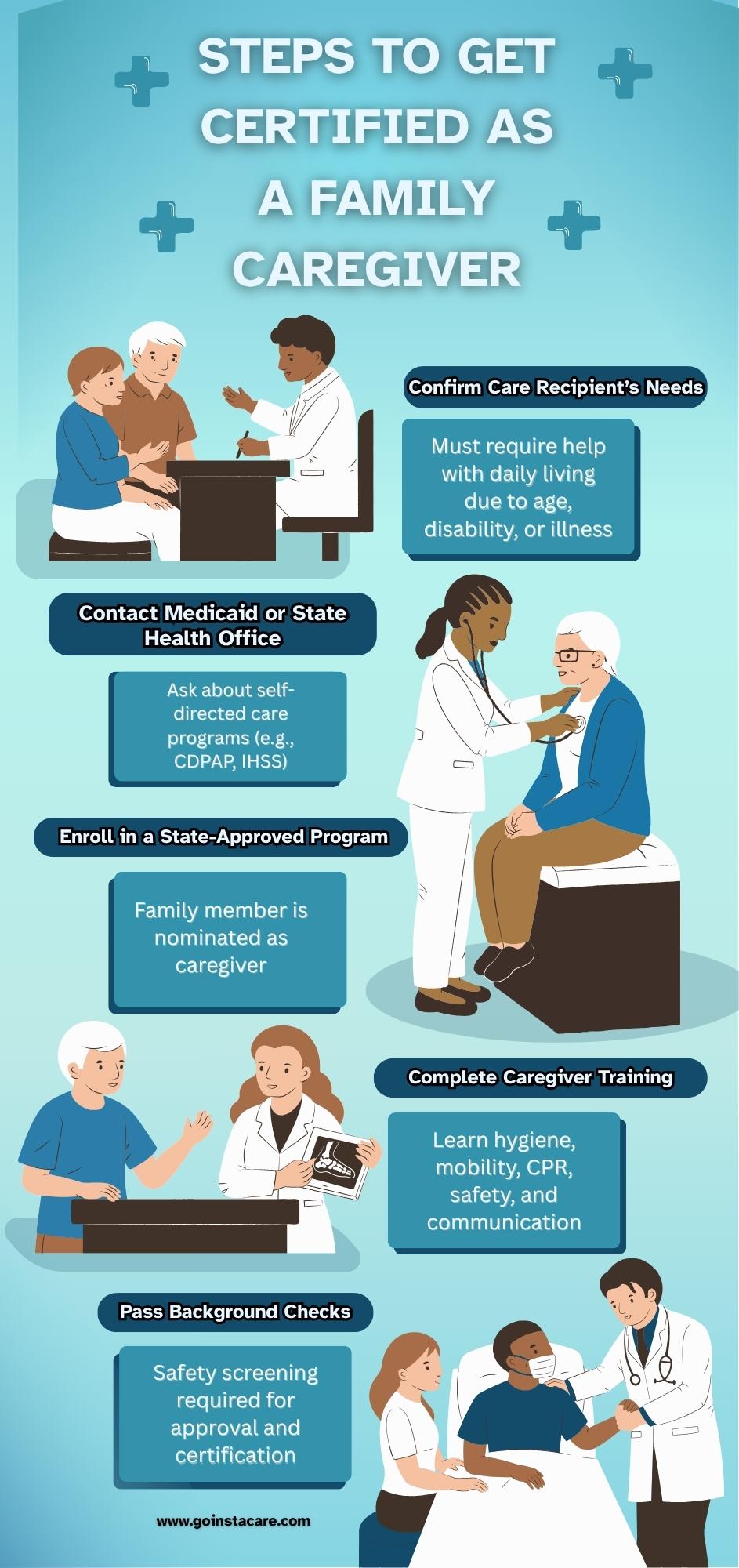
Confirm care recipient's eligibility: Verify whether a family member needs daily care due to a qualifying condition. This frequently involves limits brought on by aging, disabilities, or chronic illnesses.
Contact your state's Medicaid or health office: Every state has initiatives for supporting caregivers. Get in touch to learn about local regulations and the availability of self-directed care.
Enroll in a self-directed care program: Care clients can select their caregiver, frequently a family member, through programs like Medicaid's CDPAP or IHSS.
Complete required training: You should complete brief in-person or online courses on safety, mobility, cleanliness, and personal care.
Pass background checks: To guarantee that the care recipient is in a safe setting, all caregivers must undergo screenings.
Get certified and start receiving support: After being accepted, you'll be given a formal designation and be able to start getting caregiver compensation through the relevant federal or state program.
Common training topics: Most caregiver training includes CPR, First Aid, personal hygiene, mobility support, nutrition, safety, emergency response, and communication skills. Some also cover dementia care and medication reminders.
State or program variations: Training requirements vary by state and program. For example, California's IHSS may have modules different from New York's CDPAP. Always check your local Medicaid or health department for details.
Training formats: Many states now offer online caregiver training for flexibility, while others may require in-person classes at approved centers or agencies. Some programs also blend both for hands-on learning.
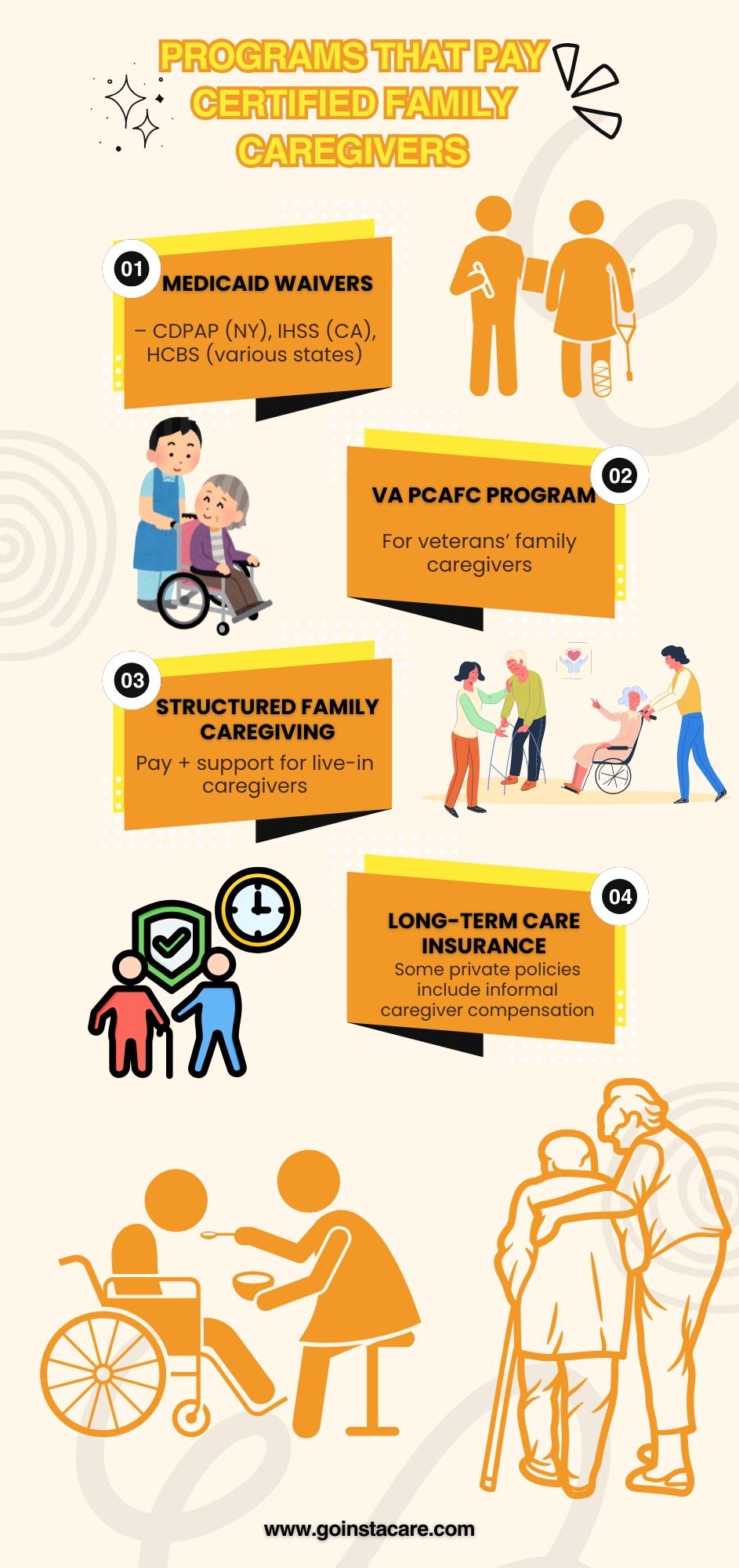
Various programs in the U.S. will pay family caregivers who meet specific requirements. Medicaid is the most common type of waiver program. Some of these are the CDPAP in New York, the IHSS in California, and the HCBS waivers available in other states. They let the individual getting care choose a family member to be their caregiver and decide how care is given. Most of the time, you must go through basic training and get certified to get these programs paid for.
The VA's Program of Comprehensive Assistance for Family Caregivers (PCAFC) is another excellent option for families that are caring for veterans. If the veteran and caregiver meet the standards, it gives them health care, support services, and monthly payments.
Structured Family Caregiving programs in several areas pay family members who live with the person receiving care and care for them every day. Managed care providers and Medicaid often work together to run these. Finally, some long-term care insurance policies pay family caregivers if the plan allows them to provide informal care.
Pros | Considerations |
Earn while caregiving | Training can take several hours or days, depending on state and program |
Access to health benefits | Some states don't allow spouses or certain relatives to be paid caregivers |
Free caregiver training | Must pass background checks and complete forms, which can delay approval |
Stronger caregiving skills | Certification may not transfer across states if you move |
Support from Medicaid or VA programs | Payment amounts vary and may be limited based on hours or level of care required |
Caregiver training usually includes CPR, first aid, personal hygiene, helping people move around, and safety tips. Some programs may require emergency response training or modules on how to care for people with dementia. There are varied standards for states and programs, and in-person and online learning options.
You do not need a medical license to become certified as a caregiver. Most programs ask you to pass background checks and finish caregiver training. Family caregiver certification does not require a full nursing or medical license.
Yes, you can get paid for taking care of your spouse or parent through programs like organized family caring, Medicaid waivers, and VA caregiver benefits. Your state, the condition of the person you care for, and whether you have finished the required training determine your eligibility.
Getting certified as a caregiver can take anywhere from a few days to a few weeks. The length of the training, the rules set by your state, and how quickly you accomplish background checks and any required medical exams will all affect the timeline.
Becoming a Certified Caregiver might help you get money and emotional assistance for a family member. Because of government-funded programs, flexible training, and a growing need, caregiving is now a real professional option for many families. It lets you care for a loved one while getting help and money to simplify the process. It's crucial to get the right help, whether you're just starting or need help figuring out how to receive Medicaid, VA, or certification. GoInstaCare is a trustworthy website where you can find jobs, get your certification, and get advice tailored to your caregiving goals, all in one place.
Cities
Houston
Dallas
Austin
San Antonio
Miami
Chicago
Find Here