
July 16, 2025 • 6 min read

Table of Content
The VA Caregiver Program helps family members who care for veterans who are very sick or hurt. To be eligible, the veteran must have served before May 7, 1975, or after September 11, 2001, and need help with daily tasks because of a service-connected illness. The caregiver must be at least 18 years old and pass background checks and the training that the VA requires. Spouses, adult children, family members, or even friends may be eligible as long as they live with the veteran now or plan to do so. The program gives health insurance, monthly payments, and other benefits to simplify full-time caring.
The VA Caregiver Support Program may be helpful for families who care for veterans who are very sick or hurt at home. One of its main parts is the Program of Comprehensive Assistance for Family Caregivers (PCAFC). This program helps anyone who cares for veterans who served before May 7, 1975, or after September 11, 2001. It is created especially for veterans who need personal care daily due to illnesses or disabilities while serving.
PCAFC allows designated family caregivers to get monthly cash help, but only if the veteran's location and care needs are met. It also offers training programs to help caregivers prepare for tasks, including assisting with personal hygiene, managing medications, and assisting with mobility. PCAFC also provides respite care for caregivers, which gives them short getaways by paying for temporary professional help.
Another significant benefit is that the caregiver can get CHAMPVA health insurance if they don't have any other coverage. So, family members who don't get paid can take care of others without risking their health. Overall, PCAFC makes it easier for families to provide care by ensuring they don't have to do everything independently. It's one of the best things VA does to help folks who help Veterans every day.
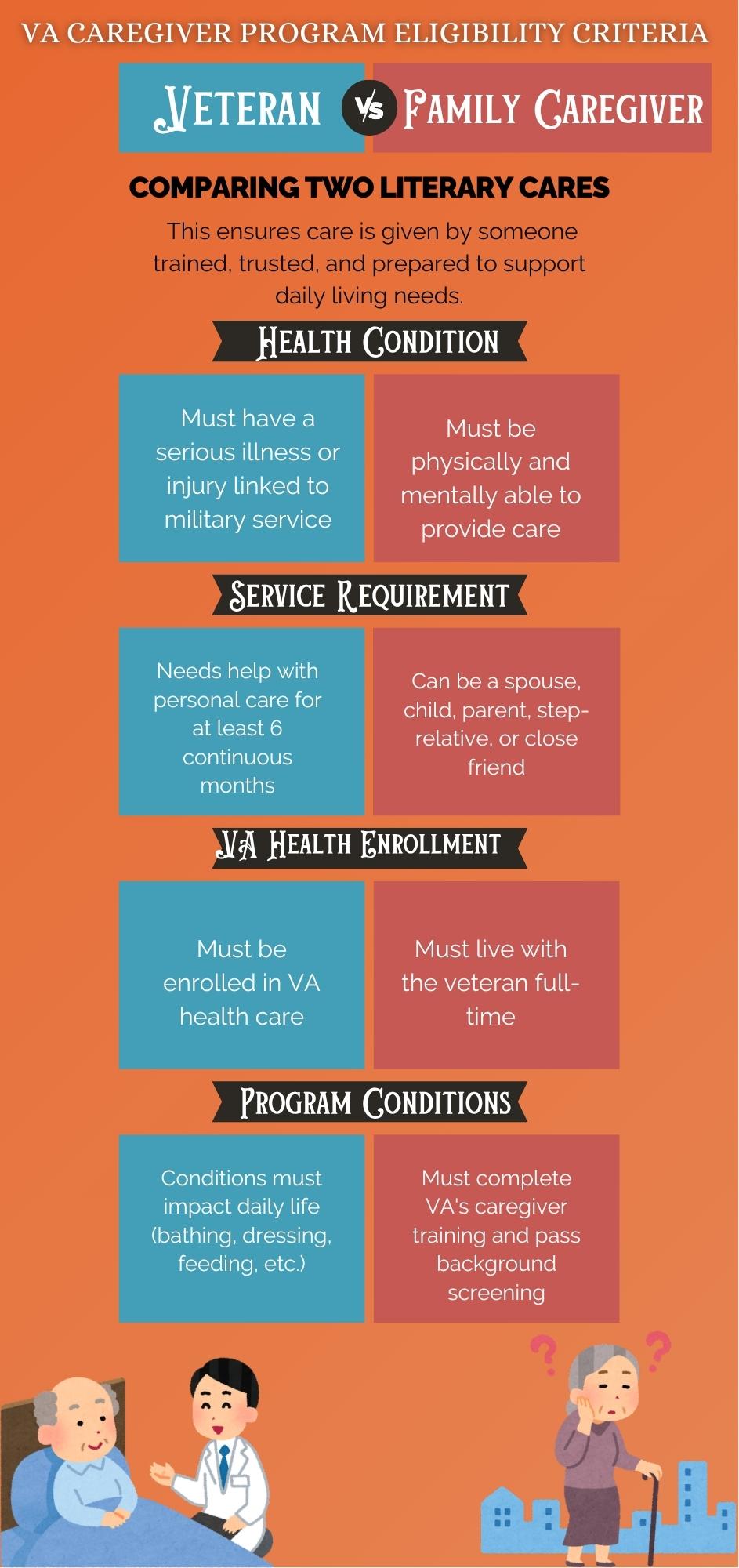
Eligibility Criteria | Veteran | Family Caregiver |
Health Condition | Must have a serious illness or injury linked to military service | Must be physically and mentally able to provide care |
Service Requirement | Injury must be from post-9/11 or pre-1975 service eras | Must be 18 years or older |
Care Need | Needs help with personal care for at least 6 continuous months | Can be a spouse, child, parent, step-relative, or close friend |
VA Health Enrollment | Must be enrolled in VA health care | Must live with the veteran full-time |
Program Conditions | Condition must impact daily life (bathing, dressing, feeding, etc.) | Must complete VA's caregiver training and pass background screening |
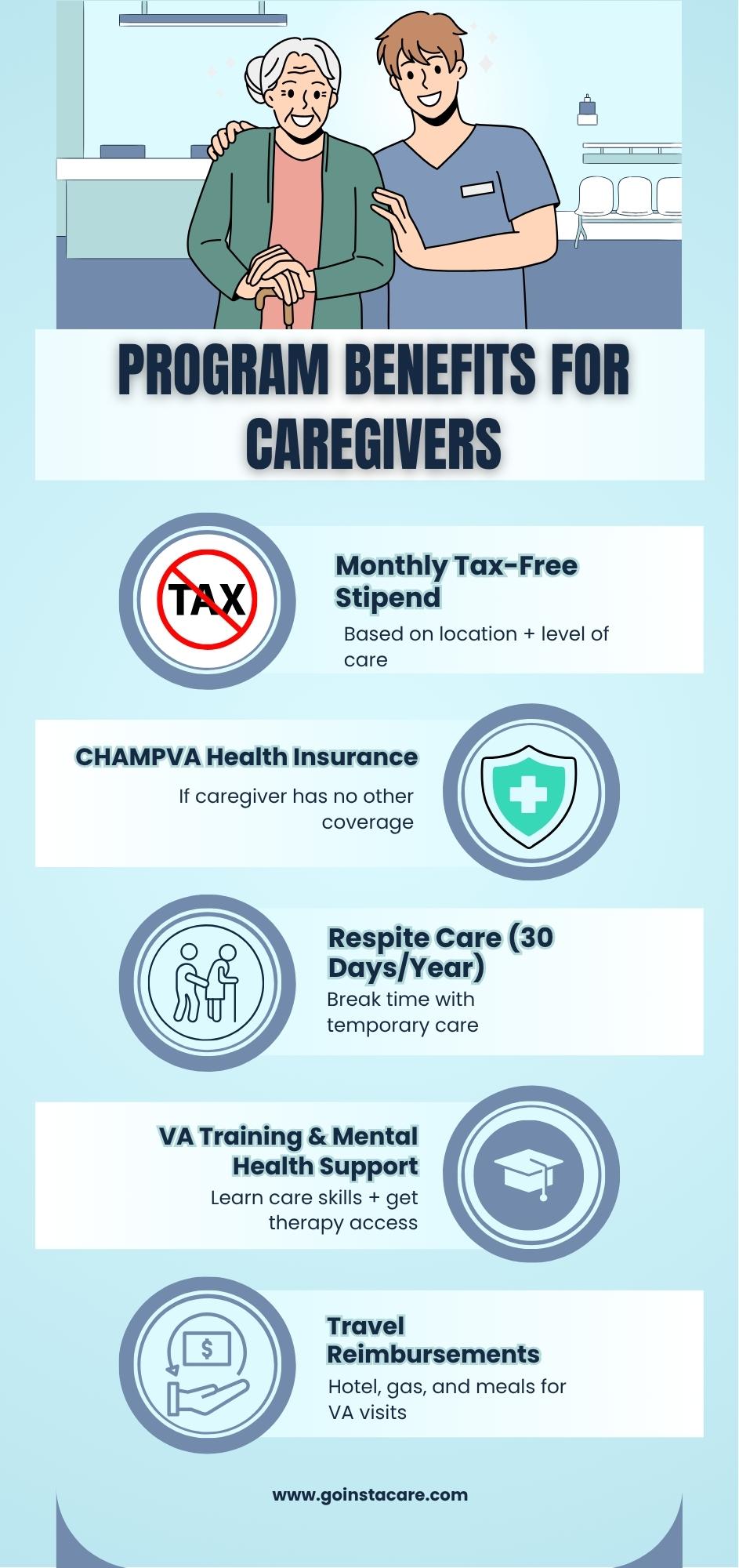
Monthly stipend: Depending on the veteran's care needs and residence level, caregivers receive a tax-free monthly reimbursement. Areas with higher costs and higher categories pay more.
CHAMPVA health coverage: A caregiver may be eligible for CHAMPVA, which covers medical visits, prescription drugs, and mental health treatments, if they do not have any other insurance.
Respite care: To provide caregivers a much-needed break and guarantee that the veteran receives temporary care, the VA offers up to 30 days of respite care annually.
Caregiver training and support: In addition to receiving in-person and online training, approved caregivers can access mental health therapies to enhance their emotional wellness.
Travel benefits: When caregivers must accompany veterans to medical appointments, VA pays for their transportation costs, including gas, hotel, and meals if necessary.
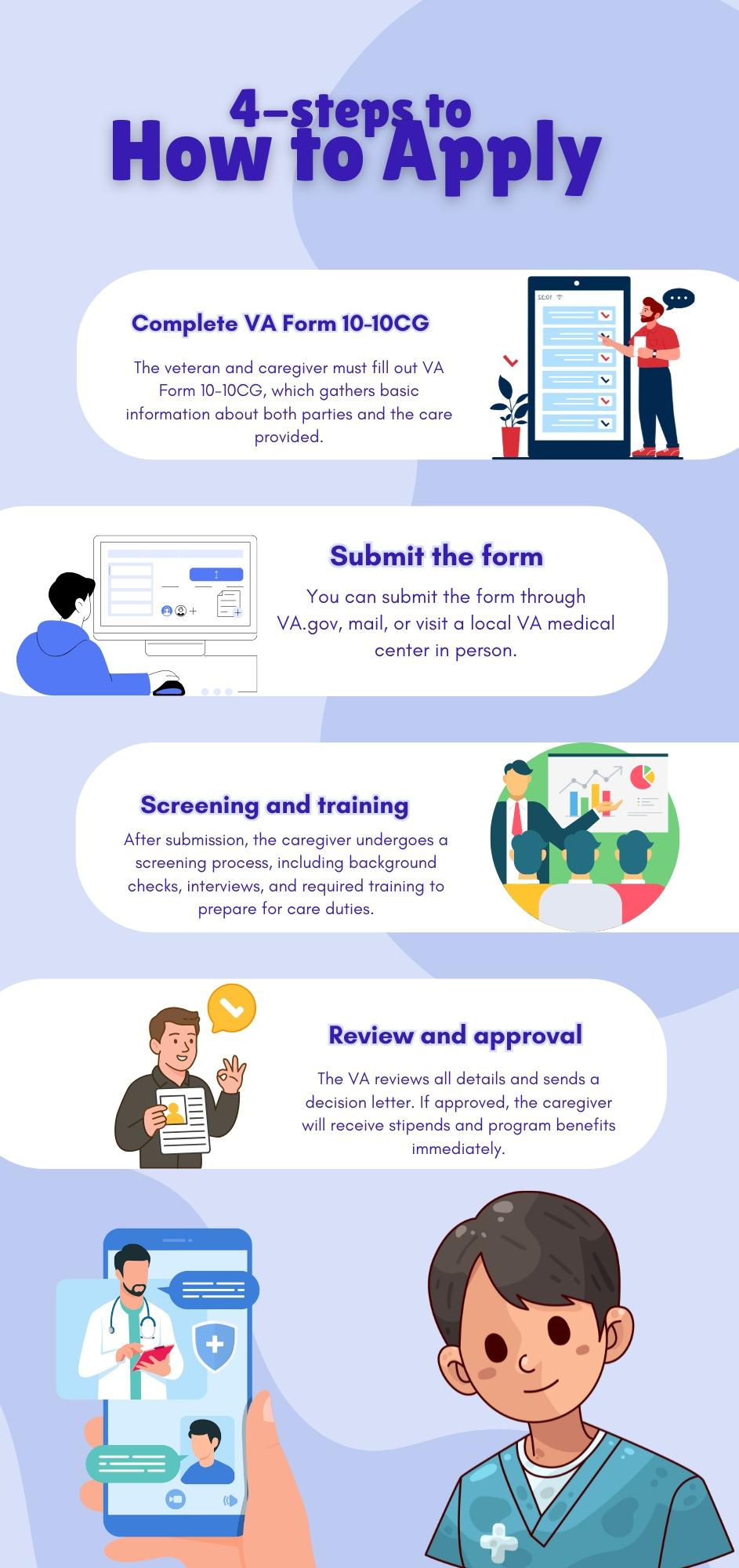
The veteran and caregiver must fill out VA Form 10-10CG, which gathers basic information about both parties and the care provided.
You can submit the form through VA.gov, mail, or visit a local VA medical center in person.
After submission, the caregiver undergoes a screening process, including background checks, interviews, and required training to prepare for care duties.
The VA reviews all details and sends a decision letter. If approved, the caregiver will receive stipends and program benefits immediately.
The VA Caregiver Program has strict rules, and not everyone who applies is accepted. A common reason for denial is that the veteran does not match the eligibility requirements. This could be because they don't have VA health care, their injury didn't happen when they were qualified, or it wasn't related to their time in the military. Another key reason is that the veteran's care needs aren't handled seriously enough. The VA says that veterans may not need much care if they can do simple things like eat, dress, and wash themselves, even if they have trouble doing them.
Sometimes, denial happens when the caregiver doesn't do what they need to do. This includes not passing the background check or not finishing the training that the VA requires. The VA still expects all candidates to meet their formal standards, no matter how much experience the caregiver has. Sometimes, not living with the veteran full-time or not having the proper paperwork can lead to rejection. Many caregivers reapply after resolving concerns, even though being turned down can be upsetting. Veterans and their families should know these common problems to make stronger applications and avoid unnecessary delays. The key to getting in is to be honest, thorough, and detailed.
To be eligible, caregivers must have finished VA training, be 18 years old, and live with a veteran with a service-related illness or injury full-time. The veteran must need daily personal care and complete military and VA healthcare enrollment requirements.
To be a family caregiver, you must be at least 18, live with the veteran full-time, and pass VA screening and training. The veteran must be enrolled in VA health care, need help with everyday activities, and have an injury related to their service.
Under the VA's Program of Comprehensive Assistance for Family Caregivers (PCAFC), spouses can be paid to care for their loved ones. Suppose the veteran designates their spouse as the Primary Family Caregiver, and both parties meet program requirements. In that case, the spouse is eligible for CHAMPVA health coverage, a monthly stipend, and other caregiver services.
Adult children can work as VA caregivers under the PCAFC. If the veteran names an adult child aged 18 or older as the primary family caregiver, they can become eligible after completing the required training and screening. They must also reside with or fully commit to living with the veteran.
The VA Caregiver Program approval process typically takes ninety days. Interviews, home visits, caregiver education, and application evaluation are all part of the process. If documentation is missing or the veteran requires more medical evaluations, delays may occur.
The VA Caregiver Program could benefit families taking care of veterans who need a lot of medical care. Monthly stipends, health benefits, training, and respite care help caregivers in real ways and give them peace of mind. This program can help with the challenges of daily care, whether you are a spouse, child, or close friend, if you qualify. You can get the most out of the process by talking to a VA official or a licensed caregiver navigator who knows much about the program's details. You can also look into reputable in-home care options for veterans by going to GoInstaCare, where help is only a few clicks away.
Cities
Houston
Dallas
Austin
San Antonio
Miami
Chicago
Find Here